DAY ONE: Truth Tales: Gendering the Violence of Displacement

Acclaimed feminist author and publisher Urvashi Butalia opens this year’s Blogathon with the hard truths we learn when we listen to survivors’ stories.

Urvashi Butalia

Featured image: ‘Carrying Home’ by artist Nilima Sheikh

People migrate for all sorts of reasons – political conflict, climate change, violent discrimination, poverty, in search of work, and so much more. Such ‘journeys’ (if one can call them that) are not always voluntary, and even when they seem ‘voluntary’ on the surface, behind that façade lies a set of circumstances that make it impossible for people to stay on in places which are settled.

Migrations differentially impact people – depending on their class, caste, location, gender, religion and so much more. And when people settle in new places, part of the struggle for survival is also a struggle to recreate a sense of home, the burden of which often falls on women.

So how do we begin to talk about this subject? And how measure, say, something like displacement in the lives of those – women – who have never really had a place to call their own? In this short piece, I cannot even attempt to answer these questions satisfactorily – in any case there are no ‘real’ or ‘comprehensive’ answers to them.  But perhaps one way of understanding how these broader realities play out on the ground is to turn to people’s lives and experiences.

Years ago, I did some research on what I call the ‘hidden histories’ of the Partition of India – the experiences of ordinary people who lived through that time.  Many of their stories have stayed with me. Here is one: several years ago, at a literature festival in Karachi, I met an 85-year old woman called Shehnaz who told her story in a halting, hesitant narrative, the gaps filled in by her children (now in their fifties and sixties).

Shehnaz had once been Gurbachan, a young sixteen-year old at the time of Partition. She and some of her friends were abducted at Partition (while trying to flee with their families) and ‘shared’ among the abductors – a fate that befell thousands of women. The story goes that her abductor then married her – again a common occurrence at the time – and like many women (on both sides of the border), she converted to his religion and became Shehnaz. By all accounts the marriage was a ‘happy’ one, although we do not really know what that means. She and her husband had five children – four daughters and a son. Many years later, they learnt that her parents had survived the attack and were somewhere near Amritsar in India. With her husband’s support, the family came to Amritsar to meet her parents.

Once there, though, the parents refused to let her return, and sent her husband back to Pakistan with their children. Shehnaz was forced to revert to being Gurbachan and was married to a widower, to whose young son she now became a mother. Meanwhile her first husband, now in Pakistan, remarried too and his wife became mother to the five children Shehnaz and he had had together.

At some point, both Gurbachan and her first husband lost their partners. She then moved to the United States with her foster son, and once there, began seeking out her family in Pakistan – she said that there hadn’t been a day in her life when she had not thought of her children. Her son helped; they advertised in Pakistani papers, and soon, miraculously, she found her children. Fifty years had passed; the youngest, who had been two and a half when they separated, was now fifty-two. When I met her, Gurbachan/Shehnaz had come to Lahore to meet her children and had decided that she now wanted to stay with them and not move back to the US.

She once again became Shehnaz. ‘This is my family,’ she said, ‘it is with them that I will live and die.’

Let me move now to another story. One of my most memorable encounters during my research was with another woman, Damyanti Sahgal, who spent many years working in the Gandhi Vanita Ashram in Jalandhar. She told a harrowing tale of travelling moneyless and alone, from Pakistan to India. Her wealthy father refused to leave his factory in Pakistan but told her she could go. But where was she to go? ‘Partition had started,’ she said, ‘I went alone, and there was rioting in Amritsar…I went alone…. Train, train. Everyone was full of fear…they kept saying put your windows up, put your windows up. Amritsar is coming and they are cutting people down there…’

Months later, after her constant search of a place to call her own, Damyanti finally found some solace in her work as part of the rescue teams sent out to find abducted women, and then in the Gandhi Vanita Ashram in Jalandhar where abducted women who had been rescued were housed, awaiting ‘rehabilitation’ or acceptance by their families. Such camps were set up in many cities, including Hoshiarpur and Karnal. Here is how Damyanti described her time:

‘The government had opened these camps, …and women like me were put in charge of the camps…. None of us was really qualified for this work; many of us were not educated. The government wanted to rehabilitate these women in every sense – our job was to make them forget their sorrow, to put new life into their veins, and to give them the means to be economically independent.’

Two stories of two different women, and so much to learn from them. Partition displaced them, pushed them into a mobility – sometimes travelling alone in uncertain and violent times – they had not known before. It exposed them to enormous violence including, in Damyanti’s case, a family who had no awareness of what she had lived through for the longest time. And yet, they survived, they made their lives. Damyanti worked with women who, like her, had been similarly uprooted and displaced – including thousands of abducted women, survivors of multiple sexual assaults. Gurbachan/Shehnaz did not belong to the same elite class as Damyanti, and she spent a lifetime searching for a place to belong, a home she could call her own, eventually finding it with her children but not knowing if she would ever be allowed to live with them in the long term.

Like these two women, there were millions of others who were similarly uprooted and displaced. Their stories lead us to the histories of the nearly hundred thousand women who were victims/survivors of sexual assault and for whom uprooting and displacement became an experience repeated multiple times: abducted, often sold from man to man, sometimes married to their abductors, sometimes ‘recovered’ from their abductors through a ‘rescue’ operation carried out by the Indian and Pakistani states who wanted to being ‘their’ women back to their ‘homes’.

The violence of Partition also contained in it – if one can say that – other forms of violence towards women and other gendered experiences that help us to understand what home, family, nation mean to women. For the millions who joined the long foot caravans (kafilas) which became people’s method of flight, the whole nature of public space changed (and therefore the notion of being settled). The street, the road, hitherto not a space they were allowed to own, suddenly became their home and all domestic tasks, hitherto carried out in the ‘safety’ of the home, now became part of this space. At another level, the desire of families to ‘protect’ their women from possible rape and conversion, meant killing them, and labelling those deaths as ‘honour’ killings, as ‘martyrdom’. The women were killed because their families felt they would not survive the long journey to escape, and yet, so many millions of women did walk those many miles to cross the border.

Even today, 75 years down the line, we know so little about the gendered dimensions of displacement and uprooting. I have mentioned only a few instances, and all of them relate to a history that is long gone. We have only just begun to scratch the surface of these stories. While we know a little about the experiences of elite and better off women, we know virtually nothing about lower caste and Dalit women – in the large kafilas for example, did caste play out as it does in everyday life? Did flight, desperation, hunger, a shared fear and insecurity, transform caste equations even if just for the moment? We need to continue to record, search and learn from our histories.

Author’s Bio

Urvashi Butalia is co-founder of Kali for Women, India’s first feminist publishing house, and Director of Zubaan, set up after Kali shut down in 2003. She writes widely on feminism and gender. Among her best-known publications is the award-winning oral history of Partition: The Other Side of Silence: Voices from the Partition of India.
DAY FIFTEEN: Does she have a voice? Do we hear her? The silencing of Indigenous women and girls experiences of violence: does it ever change?

It is widely understood that gender-based violence disproportionately impacts Indigenous populations compared to other population groups. Why are their lives not honoured or mourned or valued in the same way?

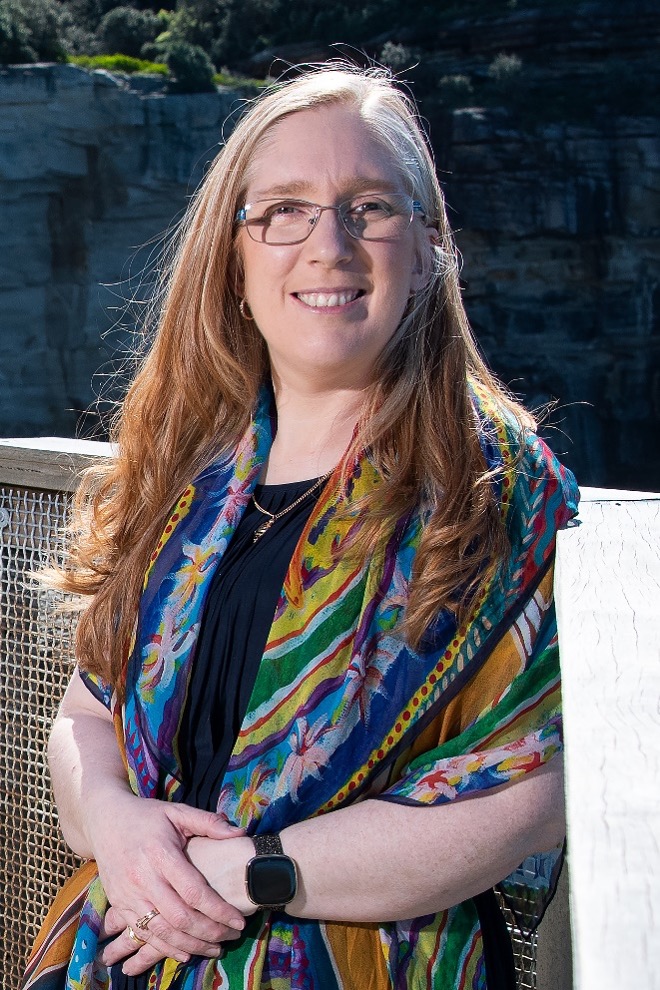
Kyllie Cripps

Aboriginal and Torres Strait Islander readers are advised that the following article contains reference to community members who have died.

It is widely understood that gender based violence disproportionately impacts Indigenous populations in far greater numbers than other population groups (AIHW 2019). Available evidence tells us that Indigenous women are more likely to be the victims of homicide and be hospitalised for injuries sustained as a result of violence (AIHW 2019, Bricknell 2020).

It is important to recognise that despite these statistics and the devastation that violence has brought to our lives and that of our communities, we have not been voiceless on this issue. There are countless examples dating back decades of Indigenous women speaking up and speaking back to the narratives constructed about our victimhood.

For example, the 1986 Women’s Business Report was the first report to ever consult Indigenous women on a national basis on issues impacting them at the time. It was a landmark report that highlighted issues related to violence, and the findings of that report still resonate with Indigenous women’s experiences today as June Oscar the Social Justice Commissioner so rightly highlights in her Wiyi Yani U Thangani Women’s Voices Securing Our Rights Securing Our Futures report released in 2020.

The problem is that in the public sphere, there have been active choices historically and contemporaneously, made about whether our stories, our voices should be heard.

It is as Professor Marcia Langton so aptly put it at the National Safety Summit in September 2021 “Nobody listens to us. They talk over the top of us”. Examples of this exist in several places. Certainly one only needs to read the powerful text by Distinguished Professor Aileen Moreton-Robinson Talkin’ up to the White Woman, now in its 21st year of publication, to see how this has played out throughout our history.

Or contemporaneously to reflect on the 2021 debates on criminalising coercive control where the voices of our women were ‘talked over the top’ even despite us making it plain that the introduction of coercive control laws could detrimentally impact our women and lead to their further incarceration (see Watego, Macoun, Singh & Strakosch 2021). We know this because we have seen the law wielded harshly on our women and we are left to repair its damage.

Taking this a step further, we have seen public vigils, marches in the streets, national displays of mourning, speeches from political leaders decrying the violence inflicted on other women but never our women.

Leaving us to ask: why are our women unworthy of this attention? Why are their lives not honoured or mourned or valued in the same way?

An example of this is the death of Hannah Clarke and her children on the 19 February 2020 – Australia mourned, and our Prime Minister Scott Morrison declared to Parliament that “There are never any excuses – there are none – or justifications for the evil that Hannah and her children experienced – never – not under any circumstances”. Yet, when Aboriginal mother Adeline Yvette Wilson-Rigney was murdered with her two children on the 20th May 2016 there was no similar displays of public outrage. In fact, of the few media articles that were published most focused on blaming Adeline for the death of her children (Cosenza 2021, Dornin 2016, Lee 2016).

This is a common experience, we see the media’s engagement with us as ‘blameworthy victims’ responsible for what has befallen us; or they refer to Indigenous women as angry, aggressive and violent black women; irrespective of context, the harms our women have and continue to endure fail to be seen.

The public fails to empathise with our situations. They fail to support us when we say this is what we need. They in effect silence us. Amy McQuire says ‘silencing often works by not only silencing voices and testimonies of black women but by replacing the ‘silence’ with disclosure that is most palatable to White Australia’. It is most evident in the reporting of what takes place in court rooms, in criminal trials across this country every day.

For example, in the criminal proceedings related to the sexual homicide of Aboriginal woman Lynette Daley, from her death in 2011 through to the conclusion of appeals in 2021 preference was given to hearing and reporting on the offenders version of events in mainstream media outlets (See Cripps 2021). The headlines during this period were nothing short of sensationalist ‘Rough Sex Death’, ‘Beach sex death – Mum of seven died after a ‘wild, drunken beach sex session’, ‘Review for sex death case’, ‘Woman had seizure after “wild sex”: Court’ (See Cripps 2021).

The devaluing of Indigenous women’s worth but also the exaggerated sexualising of our women’s lives and bodies demeans them to the public. Some might say but this case must of be an anomaly, sadly it is not. In Western Australia there is the case of Stacey Thorne who was also a victim of homicide in 2007. At the time of her death Stacey was 22 weeks pregnant. This matter has been traversing the legal system for 13 years. One element of the media reporting around this case was on the alleged offender’s characterisation of the relationship with the victim as secret, and that it was for the purpose of ‘casual sex’. This focus served to diminish and demean the victim’s reputation when she was no longer alive to say otherwise. It was also contrary to what the victim’s family victim’s family reported and knew of the relationship.

Silencing of Indigenous women has also occurred in trials when they have been charged with killing their partners after experiencing years of domestic violence. Many would remember the case of R v Kina – Robyn was an Aboriginal woman who had experienced years of domestic violence and sexual abuse from her defacto partner. On 20 January 1988 Robyn endured yet another beating but today was different – he threatened to sexually abuse her niece if she did not submit to the sex he was demanding of her. Robyn felt she had few options and she stabbed him. She was charged with his murder, she pleaded not guilty, her trial lasted less than a day. Robyn electing not to give or call evidence. She was then sentenced to life imprisonment with hard labour. Her case would later be the subject of a long campaign to have her pardoned given the miscarriage of justice that occurred on the basis of ‘problems, difficulties, misunderstandings and mishaps occurring in the communication of her instructions to her lawyers’.

Many would have hoped we had learned valuable lessons from Robyn’s case, that systems had reformed, and that Indigenous women are heard and actively represented in such cases in the present. Sadly, I cannot say that that is true. In 2015 Jody Gore was sentenced to life with a minimum non parole period of 12 years for murdering her abusive partner in Western Australia. She, like Robyn, had experienced years of abuse at the hands of her defacto partner. What was interesting in this case was that the defacto partner also had mental health issues that the State couldn’t manage and who were relying in Jody to manage despite the threat of violence towards her. When self-defence was raised at trial it was not successful. It took an extensive campaign led by Associate Professor Hannah McGlade, Jody’s family and others to have Jody released pursuant to a royal prerogative of mercy, which revoked Jody’s sentence but not her conviction (See Deathscapes 2016-2020, Douglas et al 2020).  

The institutions referred to in this article are colonial institutions that are not neutral, they are deeply implicated in the continued practice of colonialism and framing of Indigenous women stereotypically, amplifying the precariousness of our lives to the exclusion of all else. They have served to normalise the violence visited upon us. They have also defined who is a worthy victim and who is grievable.

The detachment and indifference with which these institutions engage with the violence that we endure is deplorable. It offers little by way of support to change the status quo. But that is not to say that there is not hope in our women’s stories and futures. Having had the honour and privilege to work with many women over the years, the inspiration and motivation for addressing and responding to gendered based violence is in our communities.

Author’s bio

Kyllie Cripps is a Scientia Fellow and Associate Professor in the Faculty of Law and Justice and Co-Convenor of the Gendered Violence Research Network at the University of New South Wales, Sydney. Kyllie as a Palawa woman has worked extensively over the past twenty years in the areas of family violence, sexual assault and child abuse with Indigenous communities.


DAY FOURTEEN: In search for a better tomorrow – Re-imagining home

Anubha Sinha explores the devastating impacts of domestic violence in Dokal, an Indian village and how the formation of a womens collective and action research has brought about change.

Anubha Sinha

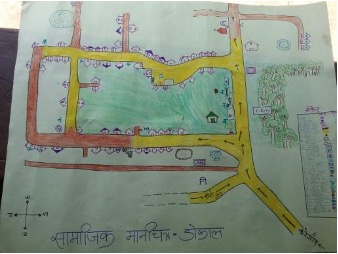
What could be a better place than one’s home? The space of love, safety and care where one gets nurtured and learns social norms. This privilege of being loved in a household is not for everyone. Over the past three years, I have learned how lives can be shaped by experiences and fears of violence coming from the intimacies one shares within the home. My perspective is based on immersive action research that I did in my M.Phil in a village called Dokal in the state of Chhattisgarh. The action research was based on the stances of domestic violence that was recurring in the village and women were suffering it quietly. The populace are the indigenous tribes of this core forest zone of central India.

The populace are the indigenous tribes of this of physical harassment, molestation, marital rape, sexual abuse, mental harassment, emotional abuse, financial crisis, humiliation, self doubt- everything gets formed with the existence of violence or in anticipation of it.

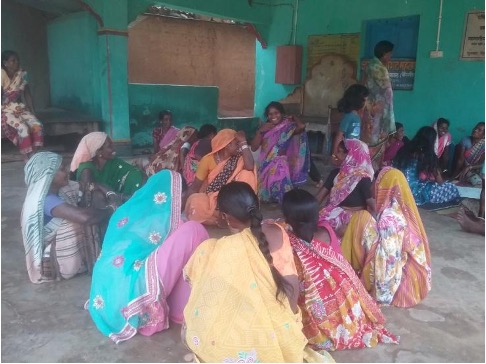
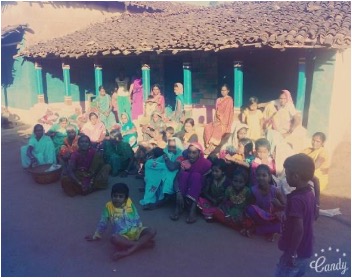
Looking at the continuous suffering of women in the village with continuous effort; together we (me and women) formed a collective of forty women called ‘Sangwaari’ (means companion or friend in Chhattisgarhi; the local language of Chhattisgarh). The collective was a place for women to share their suffering and understand the situation of their houses and together it was an effort to find a way to deal with it as it was an everyday matter. Here are few instances that led us to think about the situation of form the collective:

Incident 1

A seven member house; where two families live together. One woman who is infertile and can never carry a child lives with her husband, who steals everything she earns for consuming Mahua, an alcoholic drink made from fermented flowers of the Mahua tree (Madhuca longifolia). The other is a dominating woman with a political identity in the village. She has a husband and two children. Now, this empowered strong woman has all good faith in making others empowered too; but only outside her house. Instead of a caring and empowering relation with the woman who cannot bear a child, there is one based on disgust and humiliation. I am referring to the infertile one here as Badi Maa. She is the one with a caring heart as it craves for a child but unfortunately the reality is complicated. She bears the threat of getting killed, and is humiliated for being a useless woman. She gets abused since her husband is alcoholic and of no use. In spite of everything, she works hard to earn a bit of respect silently and lets people abuse her thinking this is fate.

Incident 2

Since her birth, Dimple (now 7 years old) has been taken as a bad omen as she is the girl child of Dulaari and Vikend. Vikend (an alcoholic) took every opportunity to beat Dulaari and sexually assault her in order to have a boy child. The marks on Dulaari’s body signifies the terror that she has against her husband and in-laws as they all held her responsible for having a girl child and abused her for not being a good wife. Dulaari is open hearted, loves to dance, have small talks, and is chirpy, but all of these make her an unconventional daughter-in-law. She does not talk to people freely now.

Incident 3

How easy it is to continuously get beaten up and fulfil the expectations of giving love at the same time? Everyday Raajbai opens her door with a smile and to learn something new, forgetting the slap and abuse of last night, but for how long? She is a worker of the panchayat (village council). She has pushed herself to come out of the cocoon just to give her girls a better life. However, it is strenuous for her to rise everyday and make a good day till the end. She is fighting for a better life with four girl children by her side and to make a statement that even if one beats her every day, she won’t stop as it is not going to give her what she deserves or desires.

There are many such stories in the villages that are being made every day. Every story here draws a picture of home coloured with the heaviness of the fear and threats that one acquires from the most intimate relations of people around. It has created self-doubt in many women.

Looking at all the instances, a collective borne out of that pain “Sangwaari” was formed to help each other in rebuilding the lives from scratch with the families they love. The collective was the space where women with such traumatic journeys could come out and get a space to share their lives and dilemmas, sort of a therapeutic place. It was the path of collective therapy that we intended to build.

The normalisation of alcohol consumption and violence after that was such that women or even men (who do not used to drink) never took a gender based violence as an issue; though they used to complain about the misbehaviours of such drunkards. Such paradoxical context several times interrupted the mode of interaction with the collective. Such normalisation creates the culture of violence.

To understand the actual scenario of the ongoing violence and its effect on domesticity, we started having focussed group discussions not only with women but with men as well. Due to severe cases of physical violence and abuse, women also took the critical step of entering the homes that were brewing mahua and broke the distillation set up of those homes as well (where mahua is brewed). Later, the discussion deepened and a conscious thought occurred regarding the changing the course of conversations in the house saying, an eye for an eye will make the world blind and we cannot respond violence with violence itself. Dokal has a group of dancing troops which is called ‘Nacha party’ consisting of men who perform folk dance with folk stories.

We took their help and asked them to be our partners in conveying the message that if change has to be made, it has to be from home.

Small steps are being taken by these strong, collective women every day, just to show her family that she can survive and, by doing this, she is discussing the wrongs of the world and her efforts to make it more liveable.

Author’s Bio

Anubha Sinha, Alumni Dr B R Ambedkar University Delhi, MPhil Development Practice (2015-2017). Her thesis is titled ‘Rethinking Violence, Understanding Domesticity: A Journey with ‘Sangwari’ in Dokal, Dhamtari, Chhattisgarh’ Currently she is a consultant, PRADAN working with women’s collectives. She can be contacted at anubha.rimmy@gmail.com

DAY TWELVE: ‘It Takes a Global Village to End Gendered Violence’ – Looking back at the ‘International Conference on Violence, Abuse and Women’s Citizenship’

Moment in the making of a global feminist anti-VAW movement – Charlotte James Robertson reflects on The Brighton conference in 1996 and how far the movement has come.

Charlotte James Robertson 

[1]: ‘It Takes a Global Village to End Gendered Violence’

‘Never Give Up’ 

In November 1996, 2,500 people from 137 countries converged on Brighton, England, for the ‘International Conference on Violence, Abuse and Women’s Citizenship’.[1] Those who attended the conference recall it as the remarkable culmination of two decades of feminist activism against gender-based violence. The Chair of the conference’s Steering Group, Jalna Hanmer, described it as ‘emotionally demanding, physically exhausting and exhilarating all at once’.[2] Al Garthwaite, pioneer of the Reclaim the Night movement, described it as ‘one of the most significant weeks in my life.’[3] The Brighton conference covered a multitude of issues effecting women and girls, including rape, sexual assault, harassment, domestic violence, child abuse, forced marriage and female genital mutilation.

International conferences are slowly becoming a possibility again but what are the benefits of this? What did the participants of the Brighton conference value about the experience and how successful was the conference at including the voices of all women working on gender-based violence?  

The Final Programme, Book of Abstracts and Final Conference Report for the International Conference of Violence, Abuse and Women’s Citizenship (1996). The slogan of the conference was ‘Never Give Up’ taken from the cartoon of a girl jumping into the air by Jacky Fleming.
‘A City Full of Women’

Angela Beausang, then chairwoman of ROKS, the National Organisation of Battered Women’s Shelters (refuges) in Sweden, recalled the conference thus: 

‘A city full of women and feminists as well, it was a dream come true. It took me a couple of days to get the hang of finding time for as much as possible… you had to plan your participation very carefully!’[5]

Beausang captured how overwhelming yet exciting it was to share a space with so many passionate women. Learning about what others had achieved gave women a renewed sense of possibility for what could be done in their home countries. As explained,

‘it is conferences like this, where networking on the global level gives women the impetus to persevere in their own communities’.[6] 

Helene Rosenbluth, Radio Documentarian

Another reason for planning participation carefully was the emotionally challenging content of papers and sessions. For example, the effect of armed conflict on women was a significant theme. Testimony from women living in the ‘Former Yugoslavia’ and Afghanistan highlighted war crimes against women, whilst many participants were moved when two women, one Palestinian and one Israeli, took to the stage to discuss their joint refuge provision project. 

An example page from the second day of the conference, demonstrating the range of countries that speakers travelled to Brighton from and the plethora of issues being discussed.
Inclusivity and Protests

The conference programme shows that this was a truly international event that included a diverse range of activist and academic voices. There were panels dedicated to discussing violence experienced by lesbian and disabled women as well as papers that considered the impact of race on experiences of gender-based violence. Patricia Connell, who was a PhD student at the time working on African-Caribbean women’s experiences of domestic violence, noted that the conference speakers and participants tried to widen the scope of the movement and to recognise the diversity of women’s positionality globally.[7] Connell recalled anti-violence advocate and criminologist Beth Richie’s paper, which called for a more contextualized and intersectional analysis of gender-based violence, as a highlight of the conference.

However, while the public memory of the conference is overall a positive one, there is also evidence that some women’s voices were marginalised. For example, there were two protests at the conference, one by a group of Black women and one by a group of disabled women, who felt their concerns were not being adequately addressed. Irish feminist activist Ailbhe Smyth also reported that there were no Black keynote speakers from Britain.[8]

Therefore, while there were discussions of issues affecting marginalised groups, it was disempowering that these were largely in the workshops rather than the keynote papers. It is also revealing that the recollections of the conference I have been able to find all come from European or North American women.

‘A Global Village’

These voices of appreciation and protestation are both important aspects of the way this conference should be remembered. Moreover, these were not binary experiences. Some women who voiced criticisms of the conference still appreciated the opportunity for debate and knowledge exchange. Challenging one another and grappling with uncomfortable issues are important aspects of creating transnational solidarity. The knowledge that there were other people campaigning around these issues could be incredibly reviving for activists who often had little recognition for their work.

Reflection on the more critical perspectives voiced is especially valuable in examining how much progress we have made on these issues since 1996. It is true that intersectionality is a key analytical approach adopted by many activists and academics working on gender-based violence in the present day.

However, LGBTQ+ people, women of colour and disabled women continue to be disproportionately affected by gender-based violence and there is still much work to be done. While the buzz of an in-person conference cannot be replicated, social media and video conferencing have made it easier for people to access and create transnational spaces of exchange. These are important tools for listening to and centring a more diverse range of voices in future projects on gender-based violence.[9]

Author’s Bio

Charlotte James Robertson is a doctoral researcher at the University of Glasgow’s Centre for Gender History. Charlotte examines the feminist movement to establish women’s refuges and other services for victims/survivors of domestic abuse. Her thesis is entitled “‘Towards Sisterhood?’ Women’s Aid in Britain and the women’s refuge movement as a transnational endeavour, 1971-1996” and is funded by the Arts and Humanities Research Council. Charlotte holds an MA in History from the University of Glasgow and an MSc in American History from the University of Edinburgh. She is the convener of the Hufton Postgraduate Reading Group. Her research interests include transnational and intersectional approaches to the history of feminism, the history of Women’s Aid and oral history. She also works part-time for the National Library of Scotland. You can tweet her @CharJamesR or get in touch: charlotte.jamesrobertson@glasgow.ac.uk 


[1] Title taken from radio documentary created by Helene Rosenbluth. ‘Active Resistance: Domestic Violence Globally’, Hungry Mind Recordings, radio documentary produced by Helene Rosenbluth. (1996). http://www.hungrymindrecordings.com/ProductListing.aspx?Id_Category=44

[2] Postcards from Brighton’, TroubleandStrife, (Summer 1997). 

[3]  Jalna Hanmer, ‘Message of Thanks’, Final Report: Violence, Abuse and Women’s Citizenship, Brighton, UK, 10-15 November 1996, ed. Val Balding, Julie Bindel and Catherine Euler, p.3.  

[4] Al Garthwaite, Postcards.

[5] Angela Beausang, Postcards.

[6] Helene Rosenbluth, ‘Active Resistance: Domestic Violence Globally’, Hungry Mind Recordings, radio documentary produced by Helene Rosenbluth. (1996). http://www.hungrymindrecordings.com/ProductListing.aspx?Id_Category=44


[7] Patricia Connell, Postcards.

[8] Ailbhe Smyth, Postcards.

[9] The women-led volunteer organisation FiLiA have recently won funding to digitise and share audio recordings from the conference https://filia.org.uk/latest-news/2021/1/7/7th-january-2021?rq=brighton

DAY NINE: Myth and reality of gender-based violence in India’s partition and thereafter 

Rachna Mehra traces the legacies of Partition-era gender-based violence and abductions on community relations and consensual inter-faith marriages in contemporary India.

Rachna Mehra

ਅੱਜ ਆਖਾਂ ਵਾਰਸ ਸ਼ਾਹ ਨੂੰ ਕਿਤੋਂ ਕਬਰਾਂ ਵਿਚੋਂ ਬੋਲ
ਤੇ ਅੱਜ ਕਿਤਾਬੇ ਇਸ਼ਕ ਦਾ ਕੋਈ ਅਗਲਾ ਵਰਕਾ ਫੋਲ
ਇਕ ਰੋਈ ਸੀ ਧੀ ਪੰਜਾਬ ਦੀ ਤੂ ਲਿਖ ਲਿਖ ਮਾਰੇ ਵੈਣ
ਅਜ ਲੱਖਾਂ ਧੀਆਂ ਰੌਂਦੀਆਂ ਤੈਨੂ ਵਾਰਸਸ਼ਾਹ ਨੂੰ ਕਹਿਣ
ਵੇ ਦਰਦਮੰਦਾਂ ਦਿਆ ਦਰਦੀਆ ਉੱਠ ਤੱਕ ਆਪਣਾ ਪੰਜਾਬ
ਅਜ ਬੇਲੇ ਲਾਸ਼ਾਂ ਵਿਛੀਆਂ ਤੇ ਲਹੂ ਦੀ ਭਰੀ ਚਨਾਬ

(To Waris Shah, I say unto today! 

Speak up from your grave!

 And in the book of love turn the next leaf,

Once, when a daughter of Punjab cried,

You filled pages with songs of lamentation

Today a million daughters are wailing

and beseeching you O Waris Shah!

O symapathiser of the heartbroken, arise and see your Punjab

Corpses are strewn on the pastures and blood is overflowing in Chenab)

On 15th August 2021 India celebrated 75 years of political independence from colonial rule but to this day the joy of freedom is marred by the tragedy of partition  (August 1947) which was presented as a fait accompli to gaining the long awaited sovereignty. The partition of India was the division of the subcontinent into two independent dominions, India and Pakistan based on religious differences. This led to one of the worst refugee crises in history, resulting in about two million deaths and an estimated 20 million people displaced along communal lines. The excerpt above from Punjabi poet Amrita Pritam’s elegy “Aaj Aakhaan Waris Shah Nu” reflects on that fateful decision which resulted in en masse displacement and gendered violence in both grotesque and insidious ways. The poem is addressed to an acclaimed Punjabi Sufi poet of the 18th century Waris Shah, and asks him to arise from his grave and bear witness to the pain of partition by adding another chapter in his book of love (written a century ago). Shah was well known for his tragic love story Heer Ranjha which symbolises eternal love and separation. Pritam’s poem recalls how Shah penned an entire saga when one daughter (Heer) cried about her misery to him, but now he needs to rise up to the occasion when a million daughters are grieving and river Chenab is overflowing with blood.

In March 1947 communal riots and the ensuing violence resulted in mass scale abduction, rape and forcible conversion of women from both communities. In September, the leaders and representatives of the government of India and Pakistan met and resolved to restore abducted persons to their original homes. Soon an Inter-Dominion Conference was held at Lahore where the two countries agreed upon a joint exercise which resulted in the ‘Abducted Persons Recovery and Restoration Act 1949’. Mridula Sarabhai, who was a frontrunner social worker in the recovery program, estimated that about 1,25,000 (0.12 million) women were missing on both sides of the border (Balakrishnan 2011). Though the Act was to remain in force for a year or so, the recoveries continued for almost a decade. The full extent of abductions remains a matter of debate. While on the one hand the forcible abduction and conversion had caused outrage and rancour; on the other the process of recovery had opened a Pandora’s Box. Many women were either pregnant or had children with their abductors and were not sure if they wanted to return or would be accepted by their families. Hence they neither had a choice in their abduction nor a say in the recovery program as both decisions were made outside their consent. 

The stories of the women as victims or men as aggressors usually come from oral testimonies narrated by family members, neighbours, social workers, leaders, administrators or reports circulated through newspapers. Other heartrending accounts come from fictional representations which brought out the dilemmas associated with partition. Jyotirmoyee Devi’s ‘Epar Ganga, Opar Ganga’, Jamila Hashmi’s ‘Exile’, Rajinder Singh Bedi’s ‘Lajwanti’Manto’s ‘Khol do’, ‘Thanda Gosht’, ‘Khuda ki Qasam’, and many other literary works brought out the predicament and effects of violence on both the victims and the aggressors.

It has been observed that antagonism based on religious differences before and since 1947 seem to exacerbate and not wane with time. With each incidence of new hostility between Hindus and Muslims, the ghost of the past is resurrected and traced to the communal riots of partition and beyond. While some fiction writers have written cathartically about the event, creative writing along with newspaper reports and political propaganda through pamphlets can also be seen as a means to produce and reproduce stereotypes both historically and in contemporary times. 

Historian Charu Gupta (2009) has emphasized the deeper historical roots to stories and beliefs that the abduction and conversion of Hindu women is a characteristic Muslim activity. She draws from diverse sources to show how a communal narrative was constructed during the public campaigns of the Shuddhi Movement in Uttar Pradesh in the 1920s. In colonial Bengal as well, the privileges associated with majority-minority status acquired communal overtones where a prejudiced portrayal of lascivious Muslim men was publicised post the 1919 Montford Reforms, which introduced self-governing institutions. P K Datta (2010) ascertains that abduction as a phenomenon and a narrative  allowed powerful binaries of antagonism and desire, permissibility and repudiation to thrive, which have left enduring legacies.

One such legacy can be seen in the hostility and jeopardy regarding consensual inter-faith marriages in India. Seven decades on from partition-era abductions, the Hindu and Muslim communities continue to be suspicious of each other and the so-called ‘Love Jihad’ (war on love) forbids interfaith marriages. There is a belief that Muslim men feign love and use seduction, deception and kidnapping as a means to convince, coerce, convert and marry Hindu women. The consent or elopement of women in such cases is disregarded because it transgresses prescriptive norms. In 2018, the Supreme Court of India restored the marriage of Hadiya and Shafin Jahan which had been annulled by Kerala High court on the plea of the girl’s parents who believed that she had been influenced and forcibly converted to Islam. The couple had to undergo 15 month long legal battle to win their conjugal rights. In another state, for instance Dakshina Karnataka, the Hindu Janajagriti Samiti (Hindu People’s Awakening Organisation) claimed that 30,000 young women had been duped by ‘Love Romeos’ (Rao 2011).

There is constant anxiety about development of amorous relationships particularly between men hailing from the Muslim community and women belonging to the Hindu community. Hence most of the cases are either fought in courts or end up in honour killing. Whether it was 1947 or it is 2021, the honour of the Hindu family, community and nation is inextricably linked with a woman’s body and any amatory desires towards Muslim men is considered illicit or a challenge to social norms which is neither forgiven nor forgotten.

References

Das Veena (2007) Life and Words: Violence and the Descent into the Ordinary, (UCLA Berkeley)

Datta P K (2010), Heterogeneities: Identity Formations in Modern India (Tulika, Delhi)

Gupta Charu (2005), Sexuality, Obscenity, Community: Women, Muslims and the Hindu Public in Colonial India (Permanent Black, Delhi)

Pritam Amrita ‘Aaj Aakhaan Waris Shah Nu’ poem

Rao Mohan, (2011), ‘Love Jihad and demographic fears’ Indian Journal of Gender Studies, 18 (3), pp.425-430.

Bio: Dr Rachna Mehra is Assistant Professor in the Urban Studies Program (SGA), Dr. B. R Ambedkar University Delhi. She completed her PhD in history from JNU and her research interests include partition studies and urban history of small towns and cities. https://aud-in.academia.edu/RachnaMehra