The Witches of Scotland Campaign aims to win pardons, memorials and apologies for the women who died in witch trials in Scotland between the 16th and 18th century.
The Witches of Scotland Campaign was set up in 2020 to highlight the terrible miscarriage of justice that was suffered by people, mostly women, between the 16th and 18th century that were accused convicted and executed as witches in Scotland. It seeks to obtain a pardon, an apology and a public memorial to commemorate all those in Scotland who were convicted or accused as witches.
Scottish lawyer Claire Mitchell QC set up the campaign. She is an advocate who specialises in appeals against miscarriages of justices. She knew that there had never been any attempt to address the wrongful convictions of women as witches. As a result she decided to campaign for a pardon for these women, to highlight the wrongs done to them and to make clear that an allegation of witchcraft as a tool of persecution was wrong then and is wrong now. She believes these women and men deserve justice.
Much of the record keeping, especially in the earlier centuries, was very poor but from what is available it is thought that the people who were accused of witchcraft 84% were women.
The “satanic panic” that spread through Europe in at this time used the allegation of witchcraft as a tool of persecution against women. Academics believe that the in Scotland approximately 5 times as many as the European average number of executions took place and it is estimated that of approximately 4000 allegations of witchcraft, 2500 people were executed as witches.
“5. Witches Gates by Tom Ewing”, credits: andrewtcrummy. Source: Creative Commons.
The Witchcraft Act 1563 came into force in Scotland when Mary, Queen of Scots was still alive, but it was her son, James VI of Scotland (and later James the first of England) who legitimised the idea that witches lived amongst us. So obsessed was he with the idea that witches and demons were real and that they preyed on men and women that in 1599 he wrote the book “Daemonologie” which was a study of magic, sorcery and witchcraft. The ruling classes, the church and the common people all believed that the devil walked amongst us and corrupted those who were not godly enough. The reason why women were more likely to be witches than men is because that it was thought that women were “weaker” and more likely to succumb to the devil’s charms. It seems that the view that women were more likely to be witches than men was a universal one.
Unfortunately, it took very little and sometimes nothing at all to be accused of being a witch.
Allegations could be made up, or a woman could fall out with a neighbour and if the neighbour or her family or animals became unwell the suspicion would fall apon the woman as having cursed her enemy. After an allegation was made the woman would be interrogated. In Scotland the preferred method of getting confessions was to keep the woman awake and use sleep deprivation until she “confessed.”
Unfortunately, many so-called confessions were obtained this way. It was not enough, however, to confess to being a witch – what was also required was that you gave up the names of the women who were part of the witches group too. This meant that if you knew someone who was accused as a witch you would fear being called a witch too. If you confessed then under the Witchcraft Act 1563 the punishment was execution. This was done by first strangling the women and then burning her body to get rid of any trace of her, so the devil did not bring her back to get revenge.
In some countries, they have apologised, pardoned and build memorials for those wrongly accused and convicted of witchcraft. Those that were convicted in the most famous witch trials, those held in Salem, Massachusetts, in the USA were all pardoned and there is a public memorial in the form of a garden where each of the 19 killed (15 women and 4 men) are remembered with their own bench-seat. In Norway there is a memorial in Finnmark to those women killed in one of the biggest witch trials in Scandinavia.
Unfortunately, gender-based violence is not a thing of the past, and women are still wrongly being accused of witchcraft in some parts of the world (See Mayur Suresh’s blogpost from last year on Witch-hunting in East India). Women and children continue to suffer harm through witchcraft allegations. It is hoped that in carrying out this campaign it also sheds light on the use of allegations of witchcraft as a tool of persecution in the modern day against women and children.
Author Zoe Venditozzi and Claire Mitchell QC host a weekly podcast which can be found on the www.witchesofscotland.com website where the allegations of witchcraft and the reasons behind the allegations are discussed as well as updates on the campaign.
We stay on the theme of child survivors of domestic violence today. Read about the innovative and creative projects young survivors in Scotland have organised to reach out to others experiencing domestic violence while mobilising support for domestic violence survivors.
Young survivors of gender-based violence are at the forefront of innovative responses to Gender Based Violence in Scotland. National young people’s participation projects like Voice Against Violence, Power Up Power Down, and Everyday Heroes have transformed Scotland’s understanding of gender based violence through young people’s perspectives. The projects’ creative, relationship-building approaches are rooted in the skills of support workers in empowering children to speak about abuse. Young survivors themselves innovate in speaking directly to people in power and reaching out to other children and young people experiencing GBV, including during Covid-19.
Voice Against Violence led this campaign, co-produced with Government, about young people’s experience of living with domestic abuse alongside their mothers.
Young survivors have worked to see children and young people recognised as victim-survivors of all forms of gender-based violence. A Voice Against Violence film was used by young survivors to critique the lack of recognition of children in legislation about domestic abuse. A key step forward was achieved in the Domestic Abuse (Scotland) Act 2018 to finally recognise that the perpetrators’ ongoing psychological, physical, sexual and financial abuse adversely affects children as well as women.
Super Listener, designed by the children involved in Power Up, Power down, to set out what children want from the adults who work with them. Now available in nine languages through Improving Justice in Child Contact. Slide the arrows left and right for English (left) and German (right).
Key messages are consistent across projects: young people don’t know how to seek support, support is inadequate, training is needed and specialist workers are invaluable. Young survivors have taken action on this, using fabulous innovative and creative methods: websites by young sexual violence survivors for support and information, training videos and resources like Super Listener for professionals and a national online platform currently being co-developed (That’s Not OK) to take forward survivor’s recommendations to Government.
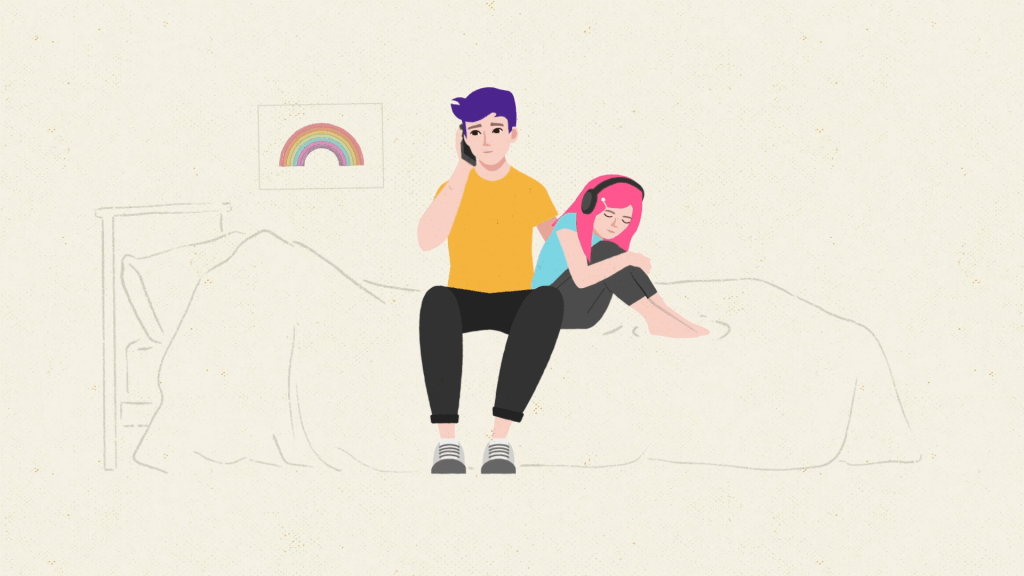
Still from You are not alone!, an animation designed by young people affected by domestic abuse for young people affected by domestic abuse. Watch different language versions from the Improving Justice in Child Contact media channel.
When COVID-19 hit, and evidence began to build about the ways in which the pandemic helped perpetrators of domestic abuse to harm women and children, Yello! a group of young advisers to Improving Justice in Child Contact (IJCC), felt that
we had to do at least something small to help out – or at least let someone out there know that they’re not alone and what they’re going through will pass. [1]
Yello! wanted to make sure that children and young people knew that there was help and how they could get to it. They worked on two animations (“You are not alone” and “If home is not safe”) and supported partners across the five countries of IJCC to tailor animations for their own languages and contexts.
Locally, young experts from AWARE, Angus Women’s Aid’s Young Expert group, created their own film about what young people affected by domestic abuse might be feeling and the questions they would be asking during COVID. The film signposts sources of help, to make sure that young people affected by domestic abuse – in their own relationships or alongside their mother – know, even in COVID, that “You are not alone”.
A key message from all these projects is that the justice response to young survivors needs improvement – in particular for children and young people’s views to be given due weight and for the perpetrator, not the woman or child survivor, to be held accountable. Everyday Heroes’ call for action expressed through displays in Parliament and creative dialogue with key decision-makers resulted in a pledge for collaborative action by Ministers.
Child contact remains a key area of concern – one being considered by the Improving Justice in Child Contact project including Yello!, its young advisers. Evidence from young survivors indicates that domestic abuse continues even if a mother and child are able to separate from a perpetrator. Child[1] contact can be defined as communication, such as phone calls or spending time, with a parent that the child does not usually live with, and its type and frequency can often be set by the Courts. Child contact is often used by perpetrators to continue to harm mothers and children. COVID-19 has provided perpetrators with additional opportunities to enhance their abuse.[2]
“Don’t dismiss us – we experienced it, and we know what we’re talking about.”
From Yello!’s evidence to the Justice Committee
In Scotland, Yello! have been instrumental in the development of the Children (Scotland) Act 2020, meeting with the Minister, submitting written evidence, and taking part in person in a session with the Justice Committee. One young woman worked with Scottish Women’s Aid to write a case study of her experience of the child contact system – with the aim of giving decision-makers a glimpse of what it is like for a young person not to be listened to, and to be told to spend time with someone she feels unsafe with.
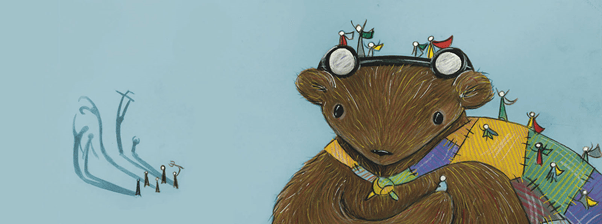
Yello!, the young advisers to Improving Justice in Child Contact, dressed up as ghosts to meet the Scottish Minister for Community Safety in Parliament. Their key message was that young people affected by domestic abuse feel invisible in court processes that decide child contact.
Internationally, IJCC have inspired partner organisations and the young people they work with to reach out creatively to share their experiences and to meet directly with people in power. For example, young people working with the IJCC partners in Portugal have been invited to meet directly with judiciary and other key stakeholders. Maria, a young person working with the IJCC partner in Romania, has written a blog, including poetry, about her experiences:
It was only one wish I have had,
I asked not to see him again
And it is such a sombre thing
You demand that I must visit him.
I read and a tear slipped my face
Because in danger you have put me
You told me I need to stay with him
As if it was a little thing.
Note to my judge ‘Maria’, 13 years old, working with the Romanian partner in the IJCC project, writing about the experience of reading the child contact court order
Young survivors of abuse have transformed policy and practice responses in Scotland through participation – and are inspiring young people internationally with what progress is possible. Such innovation needs resources and the support of competent adults to fully harness the wonderful power, talent, expertise and passion of young survivors.
“I think projects like ours are important because not that many children and young people have a say in their lives, because people think we are too young to know better.”
[1] There is a large academic literature on the impact of domestic abuse on children and the particular issues around child contact such as: Katz, E. (2016). Beyond the Physical Incident Model: How Children Living with Domestic Violence are Harmed by and Resist Regimes of Coercive Control. Child Abuse Review 25(1), 46–59. Callaghan, J., Alexander J., Sixsmith, J and Fellin, L. (2018). Beyond “Witnessing”: Children’s Experiences of Coercive Control in Domestic Violence and Abuse. Journal of Interpersonal Violence, 33(10), 1551–1581 Holt, S. (2017). Domestic Violence and the Paradox of Post-Separation Mothering. British Journal of Social Work 47 (7), 2049–2067; Mackay, K. (2018). The approach in Scotland to child contact disputes involving allegations of domestic abuse. Journal of Social Welfare and Family Law 40(4), 477-495. Morrison, F, Tisdall, E.K.M., and Callaghan, J., (2020), Manipulation and Domestic Abuse in Contested Contact – Threats to Children’s Participation Rights. Family Court Review, 58 (2), 403-416.
This blog was written by Dr Ruth Friskney and Dr Claire Houghton from the University of Edinburgh. Ruth is a Research Fellow on the Improving Justice in Child Contact project (funded through the European Union’s Rights, Equality and Citizenship Programme 2014-2020), working to improve participation in child contact processes for children affected by domestic abuse. Claire is a Lecturer in Social Policy and Qualitative Research working to improve young people’s impact on gender equality and gender-based violence policy, through Voice Against Violence (ESRC/Scottish Government funded), Everyday Heroes (Scottish Government) and the new ESRC UK project CAFADA. In writing this blog Claire and Ruth have drawn on the inspirational and creative work of the young people leading and taking part in the projects described in this blog, as well as the organisational partners: with thanks to them all.
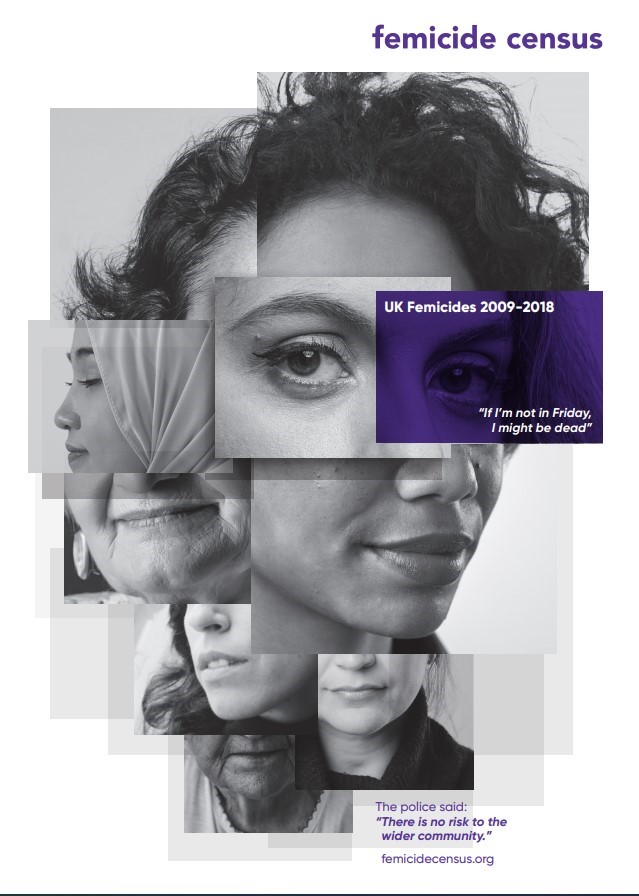
1,425 dead women over ten years is an average of 142 a year, though in fact the range was from 124 women in 2016 to 168 women in 2010; a woman dead at the hands of a man on average every 2.5 days. The majority, 888 women (62%)’ were killed by a current or former partner, meaning that for ten years, a woman was killed by a current or former partner every 4 days. The report also addresses the suspicious deaths of another 117 women, for which, owing to various reasons addressed in the report, a suspect could not be legally held responsible.
Femicide, the killing of women and girls because they are female, is not a specific offence in the UK.
The subheading of the Femicide Census is, “If I’m Not In On Friday, I Might Be Dead”. These are the words of Judith Nibbs who said this to colleagues as she left work in April 2014. She did not go to work on the Friday in question. She was murdered by her husband.
It’s true that there were a far greater number of men killed over those same years: 3,796[1] males aged 16 and over. But women are disproportionately victimised, comprising approximately 36% of victims but only 8% of those convicted[2] in the year ending March 2019. Between 2009 and 2018, annually between 4% and 8%[3]of men were killed by a current or former partner compared to our finding of 62% of women who were killed by men. Men are also much more likely to be killed by a same sex partner. There are sex differences in histories of abuse between couples where intimate partner homicide ends the relationship, women killed by male partners or ex-exes have almost always suffered months of years of abuse from him prior to their death, while men killed by female partners are usually those who have been inflicting abuse. There are also differences in methods of killing, sexually motivated killings and use of sexual violence, and overkilling.
Men kill women because they can and because they decide to
Men’s violence against women is often framed as a loss of control. Indeed, this is available as a partial defence to murder. But men’s fatal violence against women is much more about control, than the loss of it, particularly, but not only, when we’relooking at intimate partner femicide. Of the 62% (no. 888) of women who were killed by a partner or former partner, at least 378 (43%) were known to have separated from or to have taken steps to separate from the man who killed her. The majority of them, 89% (338) were killed in the first-year post separation and 142 (38%) in the first month. This finding ties closely with Jane Moncton Smith’s 8-stage model of domestic homicide, where four of the eight stages: coercive control, trigger, change in thinking and planning, relate to men increasing their control not losing it.
It is not only women who are partners of abusive men who are controlled, and whose liberty is restricted by abusive men, – it is all women – in the routine choices we make, in the ways that we’re judged and whether we do or don’t comply.
Men’s violence against women is a critical tool of patriarchy.
Women are killed by husbands, partners, lovers, exes of all these, by men whose advances they reject, by their sons, so-called friends, neighbours, maintenance men, burglars and sexual predators as well as men who get off on women’s pain and humiliation, be they women they know or women they don’t.
Rape convictions have fallen to a record low, to the extent that feminist campaigners suggest that rape is as good as decriminalised. Yet stereotypes about women’s false allegations rather than men’s false protestations of innocence, and juries’ false ‘not guilty’ verdicts are those which dominate popular consciousness.
So-called ‘gender neutral’ responses to domestic and sexual violence, including prostitution, are anything but. Ignoring the sex-specific nature of women’s victimisation hides disproportionality. The Femicide Census team are very clear that statutory services and the criminal justice system could make a difference by doing their jobs properly and implementing existing laws and policies. At the same time an inquiry into institutional sexism and the state apparatus would surely reveal a system stacked against women.
However, without a clear and ambitious strategy that addresses the individual, relational, institutional, cultural and cross-cultural factors that create a conducive context for men’s violence against women, we fear that men’s violence against women, girls and children will not be eradicated. Approaches that see incidents of men’s fatal violence against women as isolated incidents and that do not recognise that some members of the community – women, by virtue of our sex – are at risk of victimisation by men that is disproportionate and different in nature to any violence we inflict, are doomed to reinforce the structural sex inequalities of patriarchal societies. The Femicide Census is a call to action and a commemoration of our sisters.
Karen Ingala Smith is a co-founder and Director of the UK Femicide Census. She set up the website Counting Dead Women (CDW) in 2012, now replicated across the world. She is Chief Executive of nia, an East London charity providing services for women, girls and children who have been subjected sexual and domestic violence, including prostitution. Karen is also a doctoral candidate at the University of Durham. Karen was awarded the Positive Role Model for Gender at the 2014 National Diversity Awards.
Her social media handles are @k_ingalasmith @femicidecensus @countdeadwomen
What is a safe space for non-binary and trans people in a pandemic? This post explores the ways in which ‘design’ as a discipline can respond to the systemic oppression(s) faced by the marginalized Trans Binary and Trans Non-Binary identities, a crisis that has been amplified during the COVID-19 pandemic.
Picture above: ‘Trespassing the Binary’ from the series ‘Unblocked: Beyond the Gender Normative’. Medium: Digital. Reproduced by permission of author/artist
Non-Binary Existences and Negotiations in a Pandemic-Ridden Binary World
Natasha Chandhock
Gender-Space Identities and the World as Binary
We understand ‘identity’ as an intrinsic part of our being, something we assert in different capacities, given our comfort, safety and surroundings. This forms part of the environment we interact with, be it the rhythmic harmonies within natural environments or the pulsating ticking of a clock. In the same breath, gender and space too interact with one another, producing experiences that are different for different social identities, depending on their standing in the world around us. For instance, certain public spaces become sites of male dominance and are instrumental in defining the levels of safety for non-male identities.
This post, while engaging with some of the reasons around the rise of domestic violence, will primarily look into the multiple meanings and metaphors associated with home that the pandemic has made us confront.
Rukmini Sen
The COVID 19 public health crisis and the subsequent lockdown has generated discussions about the ‘shadow pandemic’ of the rise of gender based domestic violence. This post, while engaging with some of the reasons around the rise of domestic violence, will primarily look into the multiple meanings and metaphors associated with home that the pandemic has made us confront. As a part of the 16-day activism against GBV, and the UN Women theme ‘Orange the World: Fund, Respond, Prevent, Collect’ with a special focus on pandemic induced heightened domestic violence, I will briefly assess what are the multiple ways in which home has been confronted the pandemic. I see contestations around five meanings of home emerging in this crisis all of which have gender based implications and consequences.
All of us by now have been made conscious about the need to stay at home to reduce the spread of the virus. In India, which this post focuses on, the first advisory came on March 16, directing closure of schools, regulations on mass gathering, ensuring physical distancing of minimum 1 metre between tables in restaurants, postponement of examinations, avoidance of non-essential travel. It was only a matter of time before we understood that the implications of stay at home in conjunction with work from home was going to be serious for gender based household work over and above the impact of professional work space moving inside the home.
The public discourse of Stay at home meant the homeless and the urban pavement dweller were excluded from the discussion
It has also had hierarchical implications depending upon the space inside an individual home—how many rooms, how many people in each room, how many members having their own electronic gadget to connect to the world outside the home? Space, privacy, personal phones all have gendered implications and there have been specific studies about women’s inadequate access to smartphones in India, before the pandemic.
Work from home for most of urban upper middle class women in India has meant a disproportionate increase in domestic labour. Finding work life balance becomes difficult if not impossible because the increase in care work, in addition to the professional work all from the confines of the home. Middle class professional households were without assistance from paid domestic helps for at least the first two months of the lockdown and this impacted on women’s lives in manifold ways.
Traveling to the workplace is an important liberating journey for most women, including college going women students.
These sites, however gendered in themselves, still create the possibilities of travel, self time, friendships, conversations—away from caste-kinship determined existence within the home. While this situation is experienced by professional service sector women, the pandemic has increased the gender gap in employment. According to Ashwini Deshpande women employed in the pre-lockdown phase were 23.5 percentage points less likely than men to be employed post-lockdown.
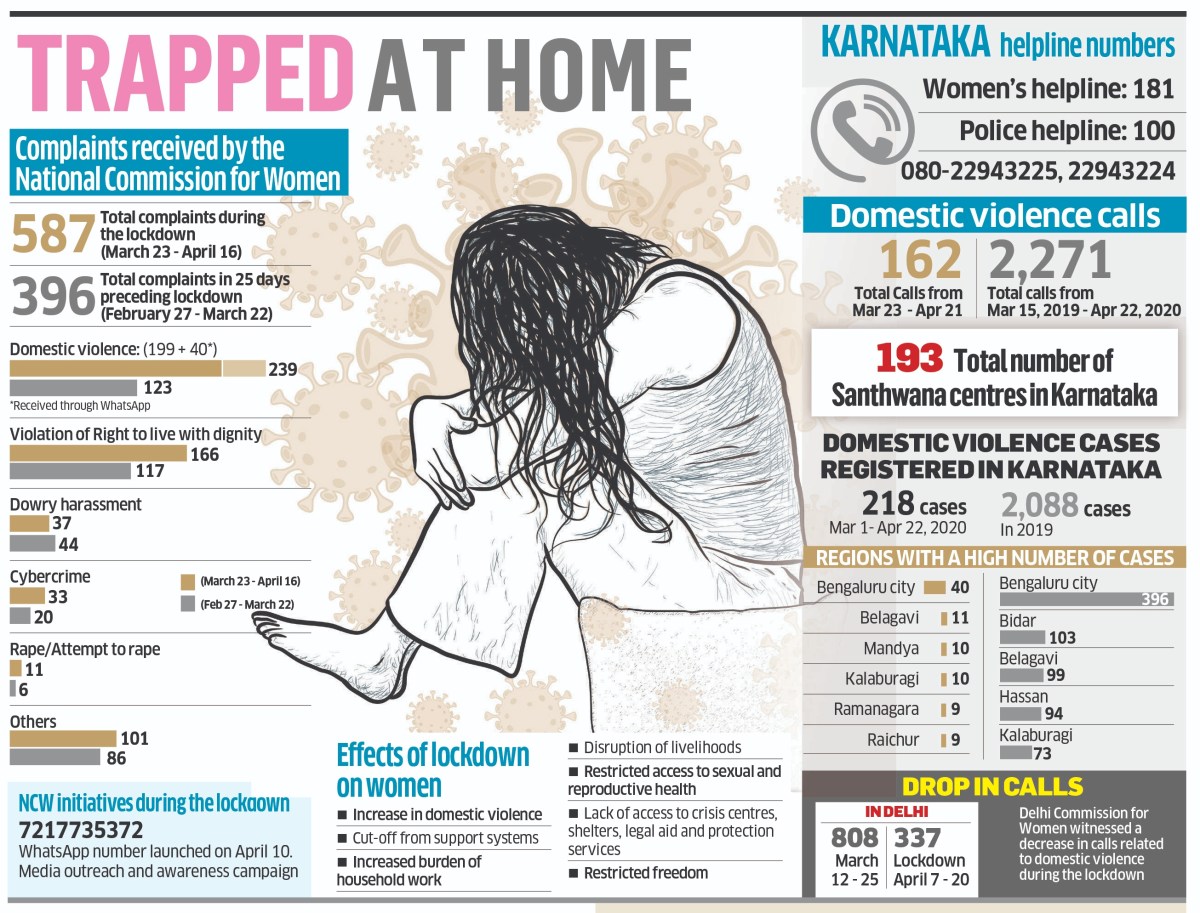
A third type of discussion around the home has happened in regard to violence within the home or domestic violence. It is necessary to remember that the stay at home, work from home advisories and experiences were clearly creating a condition for increase in domestic violence. According to National Commission for Women, domestic violence could have increased by 2.5 times during the lockdown. Some of the reasons for physical as well as verbal abuse as reported are ‘not managing resources properly’, ‘not serving food on time’, and also ‘not being able to procure rations/relief material’.
Specifically, in Tamil Nadu the reasons for increase in violence within the home were arguments arising out of sharing household work, suspicion over time spent on social media, unemployment resulting in a cash crunch at home etc. One of the main strategies for tackling COVID 19 -related rises in domestic violence has been to increase helpline services by various women’s rights, child rights and sexuality rights organisations in different Indian cities and a WhatsApp helpline number set up by the National Commission for Women. However, finding the opportunity to report cases with most members of the household also indoors has become even more difficult.
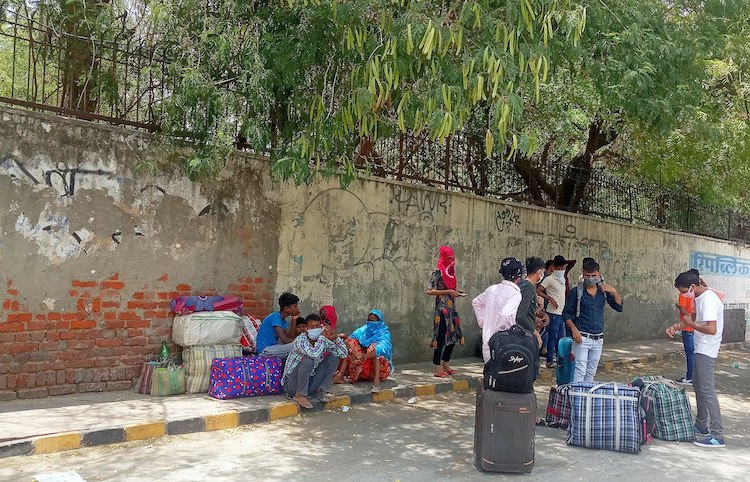
Indian migrant workers during the COVID 19 pandemic. Source: Wikimedia Commons
Images of migrant workers—a bulk of whom were women with childrenwalking back home, travelling unimaginable distances by foot due to the sudden announcement of nation wide lockdown, are now global. What this clearly demonstrated is that big cities do not become homes for migrant labourers, they come there to work, mostly as construction workers and short term migrant workers face a complete sense of precarity if there is no daily work in the city. It is impossible to survive in the metropolis, to pay rent, buy food without wages. Seasonal migration for construction, migration in the city for sex work or bar dancer, migration due to agricultural purposes are to be understood as conditions where the worker comes back home when the work ends or goes to another place in search of work. Thousands of migrant workers walking back several days to reach home—where they could at least find food and the security of other members of the community —signify which is really shelter.
Finally, the anxiety and hope of home coming for many students who stay in halls of residence away from their parents, or in rented apartments in cities where they work, within or outside the country, away from their original natal or marital homes. Travelling back home for a certain class of people, takes a flight or an AC train to ‘come’ home/country of original residence has been disrupted and shaken up in ways that has never happened in the recent past. People of all genders are affected by this, but for women students or professional single women, the isolation during these months and its deep psychological impact are sure to have far reaching consequences.
The pandemic crisis opened up a sociological insight to the gendered site of the home as contested between the metaphors of caged, sheltered, violent and secure.
Rukmini Sen is Professor of Sociology, School of Liberal Studies, Dr B R Ambedkar University Delhi. You can contact her at rukmini@aud.ac.in





 16 Days Blogathon