Day Sixteen | Women, gender-based violence, and resistance in Kashmir

On 5 August 2019, the Indian government annulled Kashmir’s semi-autonomous status and split Indian-administered Kashmir into two federally-administered territories.

Seema Kazi

On 5 August 2019, the Indian government annulled Kashmir’s semi-autonomous status and split Indian-administered Kashmir into two federally-administered territories.  Astonishingly, the promotion of women’s rights was invoked as one of the discourses to justify the revocation of Kashmiri autonomy, whilst at the same time there have been widespread reports of gender-based violence by Indian troops. 

In the run up to the abrogation, the central government mobilised a million troops across the territory of Kashmir in parallel with the unlawful arrest of over 4,000 civilians (especially young boys), widespread use of torture, sexual molestation and harassment of Kashmiri women, together with a climate of extraordinary repression against the local population. Curbs on the media have restricted public access to information on Kashmir.

In addition to these measures, the central government imposed a crippling communications blackout: internet, landline and mobile services were cut off; Kashmiris could no longer stay in touch with each other or know what was happening to them, or indeed about them in Kashmir, or in the world at large. Landline and mobile services have since been partially restored but the ban on the internet continues. 

whats happening in kashmir

Day Fourteen |Gender-based violence: a glimpse of feminist dilemmas in the academy

Cat Wayland, Kamya Choudhary and Radhika Govinda

Feminist cartoon day 14

Artwork by Samia Singh and used with permission and produced as part of the Teaching Feminisms, Transforming Lives Project, a collaboration between Ambedkar University and the University of Edinburgh

The above image is a preview of a (web)comic focused on feminist struggles in the academy, that is currently under development. The (web)comic features 24 pages of beautiful original artwork by illustrators Samia Singh based in Punjab, India, and Shazleen Khan, in London, UK. It is based on roundtable conversations and panel discussions that took place at Ambedkar University Delhi, India in December 2017 and at the University of Edinburgh, Scotland in February 2018 as part of the ongoing Teaching Feminisms, Transforming Lives Project

Continue reading “Day Fourteen |Gender-based violence: a glimpse of feminist dilemmas in the academy”

Day Thirteen | Making connections: Gender-based violence and women’s workforce participation

Sumangala Damodaran

As early as 1818, a group of British women weavers, or ‘Lancashire girls’ were brought to India to train women workers or ‘introduce factory methods of work’ in the Bowreah mill in Hooghly in Bengal. In her captivating account of the presence of women in India’s industrial sector, historian Samita Sen quotes an account by Janet Harvey Kelman, who wrote one of the earliest and most remarkable accounts of Indian labour, and according to whom women were associated with the ‘tragedy’ that surrounded the ‘first efforts to introduce modern mill industry into India’. The British women were released from a prison on an island in the Atlantic into the custody of a certain McAllister, who was the manager of the mill. It is believed that all succumbed later to an epidemic in India.

The presence of women in the industrial labour force in India, particularly in the jute mills of Bengal, has thus been acknowledged from the beginnings of factory labour in India. Not only were women part of the industrial workforce, they also were the subject of numerous debates and controversies around their presence, especially between the introduction of the Factories Act in 1881 that was to regulate the conditions of industrial employment and the First World War.

Expectedly, the debates centred around the supposed contradiction between women’s sexual and reproductive roles in their families and as workers. The anxieties expressed about women’s participation in industrial work and the fear at what this presence outside the home and the family meant was, in this case, mediated by the colonial discourse around the usefulness of the female colonized subject. The debates also encompassed genuine concerns for women’s working conditions and safety in the industrial sector.

More than a century and a quarter later, the Female Workforce Participation Rate (FWPR) in India fell to 26% in 2018 and is seen, alarmingly, to have declined continuously over almost three decades. If we consider the region of South Asia, the pattern is mixed; in some countries, such as Nepal, the figures are quite high, whereas in Pakistan and India, they are declining, in India’s case alarmingly. This is particularly so  when compared to the global level, where women’s global labour force participation rate of around 48 per cent in 2018.

If women are participating less and less in what is conventionally considered ‘work’ or what contributes to the output of the economy, both as paid and unpaid workers, could it have something to do with gender-based violence which is a major contributor to the resilience of patriarchy? As with the ‘tragedy’ of women’s employment from the example of the ‘Lancashire girls’ and their Indian counterparts in the mills of Bengal, how does patriarchy’s continuous reiteration of the contradiction between women’s reproductive and productive or ‘visibly productive’ roles relate to the threat of violence?

It is acknowledged in academic work as well as in policy initiatives that actual violence and the fear of it affects the extent to which women participate in political and social processes. How does the violence that women face within and outside households, in communities and in workplaces impact women’s participation in, access to and exit from work and the workplace?

These are questions that need to be examined from the actual experiences of women with work as well as of violence and it is necessary to develop analytical frames that look at both simultaneously as fundamentally underpinning women’s lives and existence. The literatures that exist around the two axes, of work on the one hand and violence on the other, tend to be mostly mutually exclusive. Violence as an active variable tends to figure only tangentially in analyses of work and the understandings of gender based violence tend to address the structural features of women’s lives as workers only in a limited way.

Gendered analyses of work point out how the complexities of women’s existence and the invisibility of their labour results in complex negotiations between reproductive labour and both paid and unpaid ‘productive’ labour. The threat of violence within the family and from social networks is often seen to keep women out of the labour market or confine them to sectors where their work is considered more acceptable, or remains invisible.

Economic and political conditions within countries, like slumps or political upheavals, are also seen to have social impacts that typically raise the risk and incidence of violence against women. Further, even if, as in many countries in South Asia, the FWPR is very low and also falling, at the same time, there are newer sectors – particularly in services – where women are being employed and seen to be ‘visible’, often having to transgress patriarchal restrictions within families and communities.

The insights provided from actual experiences of work and workplaces could be useful to understand the multifaceted dimensions of gender-based violence. Further, the lens of violence and the dispositions within individuals, families and communities towards women’s work thus could generate rich material that allows for a nuanced understanding of the gendered dimensions of work.

Sumangala Damodaran is a Professor of Economics, Development Studies and Popular Music Studies at Ambedkar University Delhi. As a development economist, her research and publications fall broadly within the rubric of industrial and labour studies. She is also a singer and composer.

Photo reproduced from Fibre2Fashion

Day Thirteen | Witch-branding in Eastern India

Mayur Suresh

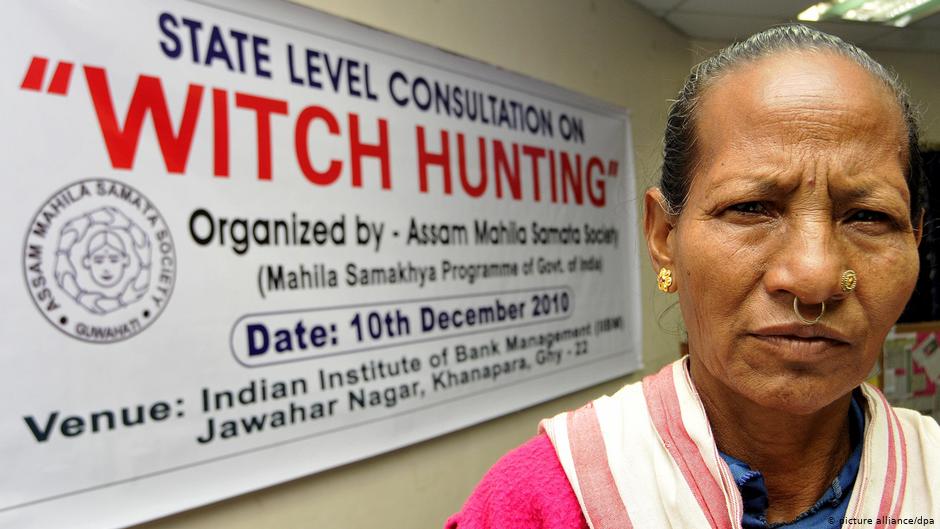
witch-huntingImage reproduced from DW

Witchcraft-related beliefs result in violence against women in parts of India, as in other regions of the world. Allegations of witchcraft lead to violence against women, including social boycotts, public humiliation, banishment, torture and lynching. As noted by Philip Alston, the UN Special Rapporteur on Extrajudicial Executions, being accused of witchcraft “is tantamount to receiving a death sentence.” 

In India, witchcraft-related violence against women is more ubiquitous than official statistics suggest. In November this year, an 81-year-old woman, who was accused of witchcraft by other residents of her village, had her face blackened, was garlanded with shoes and forced to walk through her village. In September of this year, a boy hacked his aunt to death, as he thought she was a witch. While men have also been the target of violence following witchcraft allegations, anecdotal evidence suggests that witchcraft accusations are made mostly against women.

The state of Jharkhand has recorded the highest number of witchcraft-related deaths in India. According to official statistics, in the year 2016-17, 19 women were killed on the allegation that they were witches, with 523 women being killed on witchcraft accusations between 2001 and 2016. These statistics reveal a fraction of the problem because they only represent those cases where ‘witchcraft’ is mentioned in the police records as a motive for murder, and they only record the murder of ‘witches’ – leaving the vast majority of violence that results from witchcraft allegations uncounted. 

Jharkhand has enacted a law that criminalises the identification of someone as a witch. Additionally, the law criminalises the rituals performed by an ojha or a witch doctor who the community believes can identify and ‘cure’ witches. However, both anecdotal and statistical evidence suggests that implementation is poor, even when a ‘witch’ has been murdered or assaulted. 

Earlier this year, I conducted preliminary fieldwork in Jharkhand where I met governmental and community-based organisations that engaged people on issues of witchcraft, as well as those who had personal experiences of being accused of witchcraft. A common story runs through many narratives that I came across during this fieldwork. An adversity befalls a family: an illness, an inability to bear children, crop failure or the death or illness of livestock. The family goes to an ojha (who is always a man) to deal with the problem. The ojha may tell the family ‘black magic’ has been performed on the family by a witch and they need to counter-act it. The family then performs a ritual in order to ward off the ‘black magic’. In the event the adversity persists, the ojha might tell the family how to identify the ‘witch’. Often this ‘witch’ will not be named, but rather the ojha will give clues to identify the ‘witch’ – for example, “Next to a pipal tree in your village there is a house with a door that points north. This witch lives around there.” 

After a person is identified, the public accusations begin. Threats are made against the ‘witches’ – warning of dire consequences if the witchcraft is not stopped. Rumours spread and soon other members of the community make similar accusations, claiming that their own illnesses or misfortunes are because of the ‘witch’. What follows is ever-increasing acts of humiliation and violence against the person by the rest of her village.

Witch-branding is therefore not a single act of naming, but is instead a process, where a person is gradually identified as a witch, with more and more people accusing them, accompanied by escalating forms of violence. The initial naming thus has devastating consequences. In addition, witchcraft allegations always take place within communities; often involving an entire village (both men and women) against a few (largely female) individuals. The victims and the perpetrators are usually of the same caste or tribal community, and are very often related – as one person told me, witch-branding is a type of domestic violence, where a family persecutes a few individuals within it. 

It became clear that the women who had personal experiences of being accused of witchcraft often did not know where the accusations originated from. As “everyone knew that [they] were witches,” the stories that were told about them took the form of communal accusations, and no one person could be identified as the accuser. Effectively, these were experienced as anonymous accusations that could neither be rebutted or rationalised. Whereas in other contexts, this form of communal knowledge might be celebrated, here it constitutes a direct threat to the lives and safety of women. 

Incidentally, the people who perpetrate violence against ‘witches’ think of themselves as the victims and the ‘witches’ as the perpetrators. According to a legal NGO in Jharkhand, the accused murderers often confessed to their crimes as they believed they were acting in self-defence. I was also told that people accused of killing ‘witches’ often expressed incredulity at being arrested and prosecuted for murder, “as witches had to be killed.”

Attempts have been made to identify socio-economic indicators of ‘witches’ that sets them apart from their communities. My ethnographic interlocutors, however, resisted attempts to draw such causal connections. They said that ‘witches’ are often as rich or as poor as their accusers, and they often have the same educational level as well. ‘Witches’ can be married, unmarried or widowed; they can have children or be childless. According to one community worker,

“if it is a poor woman who is called a witch, they will say she used black magic because she is jealous of the wealth of others […] if it is a rich woman, then she does it to keep others poor.” 

What remains constant is that ‘witches’ are mostly women. Witchcraft therefore shows us how gender can be experienced as a threat and how a discourse can be built around gender to justify that feeling of threat.


Mayur Suresh is a Future of Change India Research Fellow at the Faculty of Law, UNSW, Sydney and a Lecturer in Law at SOAS University of London. His research seeks to bring an anthropological perspective to the study of legal processes. He is currently finishing a book titled ‘Terrorists’ on Trial: Life and Law in Delhi’s Courts. This blog comes out of a new research project on witch-branding laws in Jharkhand.

Day Nine | Fighting against Disablist Gender Based Violence: A Double Dose of Discrimination

Caroline Bradbury-Jones and Sonali Shah 

Disability, Gender

Disability and violence are global human rights issues that cut across gender, race, age, sexuality, geographical, religious, socio-economic and cultural boundaries. They are socially produced and culturally constructed, and can manifest at different or multiple, generational locations over a person’s life-course (childhood, youth, adulthood and older age). Disability and violence have a bi-directional relationship in that the onset of impairment can be caused by being exposed to violence, or violent actions by a perpetrator can be stimulated by a victim’s impairment.

While both were once considered to be private problems hidden from public view, increasingly they are recognised as issues that call for public attention and intervention. Moreover, both are gendered, and both begin early in life. Here, we focus on what we term ‘disablist gender-based violence’, that is, violence that is specific to being disabled and that is targeted at women and girls because they are women and girls. It is, in effect, a double dose of discrimination.

Across the globe, the risk of violence for children with impairments is up to four times greater than their non-disabled contemporaries. Violence against disabled children tends to be more severe than for non-disabled children, while severity is correlated with the impairment type. They are likely to experience more than one type of violence across their lifetime starting from an early age.

From infanthood, disabled people are continuously reminded of their ‘difference’ and ‘otherness’ in society. There is now indubitable evidence that there are considerable gendered risks that lead to disablist gender-based violence. Accounting for gender, significantly more disabled girls than disabled boys are likely to experience sexual abuse, while the opposite is true for physical abuse. 

The high proportion of disabled women and girls exposed to and experiencing violence during their lives is associated with a number of factors, starting with the societal contention that the life of a disabled child is a wrongful life and an economic burden to the family and society. The objectification and manipulation of the disabled female body have been suggested to create opportunities for violence.

Disablist gender-based violence includes actions that simultaneously increase the powerfulness of the perpetrators and the powerlessness of the disabled women and girls. Although disabled women and girls can experience the same types of abuse as their non-disabled contemporaries – physical, sexual and emotional – they are likely to be subjected to additional abuse triggered by the objectification and manipulation we mentioned earlier. Moreover, abuse may be perpetrated by people who are supposed to ‘care’ for them, such as personal assistants or carers in institutions, parents and health care workers.

Into adulthood, over half of all disabled women have experienced physical abuse, compared with one third of non-disabled women. Nearly 80% of disabled women have been victims of psychological and physical violence, and are at a greater risk of sexual abuse than non-disabled women. Traditionally, as a group, disabled women and girls have been exposed to disempowering messages about their reproductive choices from early childhood, for example having limited exposure to sexual knowledge and opportunities while growing up. 

This arises from them being excluded from the cultural spaces where such exchanges take place or being constrained by high levels of surveillance. Disabled women have been discouraged and sometimes physically prevented from exercising their reproductive capacities and becoming parents. They are subject to social infantilisation, being conceptualised as weak, passive and dependent. The disabled female body has not been seen as beautiful or sexual, but as fragile, weak and asexual. Moreover, the disabled female has historically been objectified asexually by media, medical and legal discourses; conceptualised as undesirable sexual partners or mothers. 

The fact that disabled women and girls may have to depend on others for basic personal and social needs, not only places them at greater risk of abuse compared to non-disabled females, but also reduces opportunities to disclose. Professionals may not necessarily recognise scars of disabled child abuse and misdiagnose them as being related to the child’s impairment. Such diagnostic overshadowing can thwart opportunities for child protection and support and exacerbate marginalisation and risk to disabled women and girls. Moreover, limited violence prevention support and intervention for disabled females at different points of their life can leave them feeling disempowered and doubting their rights to protection and support. 

In conclusion, gender-based violence perpetrated against women and girls is a major human rights issue that blights the lives of millions worldwide. This risk is greater for disabled women and girls and is less likely to be recognised among policy makers and health service providers. Disabled women and girls are more likely to encounter barriers to support and protection for a number of reasons, connected to the overall pattern of disablism in society.

The evidence suggests that indicators of violence can be overlooked by practitioners who see the disability first, rather than the woman or girl as a person. The reality is that many disabled women have intersectional identities – they may identify as homosexual, identify as transgender, are of minority ethnic or religious background, and are of different ages – which contributes to unique experiences of oppression and disadvantage.

Across the globe, there is a dearth of voices and experiences of disabled women and girls in mainstream research, policy and practice in relation to violence, victimisation, protection and prevention. The inclusion of these hidden voices will not only help achieve the goal “nothing about us without us”. It will also raise an awareness of the need to include disablist violence in official definitions of gender-based violence and child abuse. 

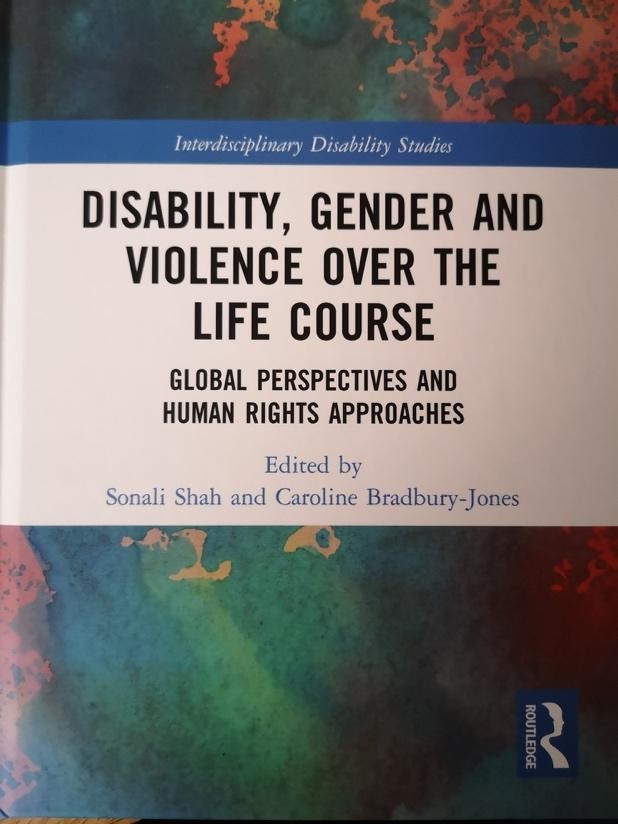
The issues covered in this blog are addressed more fully in our book: Disability, Gender and Violence over the Life Course: Global Perspectives and Human Rights Approaches. Shah, S. & Bradbury-Jones, C. (2018), Routledge, London. 


Caroline Bradbury-Jones is a registered nurse, midwife and health visitor. Her research interests lie broadly within the scope of addressing inequalities and more specifically are focused on issues of family violence and child abuse and neglect. She has led or been actively involved in securing funding for a number of research projects relevant to these areas. She has undertaken research or engaged in scholarly activities with a number of countries including Japan, New Zealand, Denmark, Germany and Finland. Caroline leads the Risk, Abuse and Violence research programme at the University of Birmingham. 

Sonali Shah is a Research Fellow in the School of Nursing at the University of Birmingham. She is funded by a Burdett Trust award to undertake a qualitative study ‘Eternal: UK healthcare of women with Cerebral Palsy across the female life cycle’. The purpose is to address the gap in existing understandings about growing older with Cerebral Palsy, and women’s health, and to highlight the health and healthcare experiences of disabled women in general, and women with CP in particular. The proposed outcome is to develop an educational tool for nurses, midwives and allied healthcare practitioners to understand the embodied changes experienced by girls and women with Cerebral Palsy across the life course (from menarche to menopause), and how to overcome structural and cultural barriers to healthcare services, environments and treatments, particularly in relation to reproductive and sexual health.