DAY TWELVE: A ‘National Disgrace?’: Notes from a history of domestic violence in Australia

Three Australian researchers are working to understand the significant changes over time in public discourse, legal frameworks and activism to combat domestic violence

Ann Curthoys, Catherine Kevin and Zora Simic

Since at least 2015 in Australia, domestic violence has been a highly visible issue when bereaved survivor of domestic violence, Rosie Batty, was appointed Australian of the Year, and the Royal Commission into Family Violence in the state of Victoria was launched. The Commission’s March 2016 report recommended a multi-faceted approach which prioritises advocating for cultural change around violence. Historical understanding is an essential facet of this cultural change.

We are three historians researching the first national history of domestic violence against women. We begin our project in the mid-nineteenth century when marital cruelty began to feature in changes to separation and divorce laws across the Australian colonies (starting with South Australia in 1857) and we will end with the current ‘shadow pandemic’.

As the feminist historians who first opened up this topic to historical investigation in the 1980s recognised, the prevalence of domestic and family violence is impossible to quantify in both the past and the present given it’s a mostly behind closed doors phenomenon and associated with shame and secrecy.

Silences haunt histories of gendered violence. Yet what is striking is that across the 170-year-period, the most common form of domestic violence – men’s violence against their female partners – has always been visible in some form, including in public discussion about whether it was (and is) a peculiarly ‘national disgrace’.

In the nineteenth-century, the widely used terms ‘wife-beater’ and ‘wife-beating’ placed the stress on the ‘blow’ or the ‘wallop’, and the excessive drinking of the assumed working-class perpetrator or ‘husband’. Sometimes there was recognition that violence could occur in more ‘respectable’ families, and commentators pondered whether ‘wife abuse’ was more rampant in the colonies, or whether, as one 1870 editorial declared, that it was a ‘scandal to all English lands’.

Men wrote about other men under the auspices of condemning ‘wife-beating’ as an uncivilised practice, and a taint on any colonizing and civilising claims – but with scant recognition of the violence of colonialism itself, including against Indigenous women.

Image above: Mary Leunig (1992). [Domestic violence]. Source: https://trove.nla.gov.au/work/179890465?keyword=mary%20leunig. Reproduced with permission.

The terms ‘wife-beating’ and ‘wife-beater’ remained in common usage well into the twentieth-century, maintaining an emphasis on physical violence and the stereotypical ‘wife-beater’, a category which by the post-war period included the ‘migrant wife-beater’. But for some recently arrived migrants from Europe, ‘wife-beating’ appeared distinctively common in Australia – as one German woman told a reporter in 1953, ‘I am often surprised by what Australian women have to bear’.

In Australia, as in the UK and elsewhere, it was women who had experienced gendered violence who brought it to the attention of the Women’s Liberation movement in the early 1970s. Australian feminists were amongst the first to develop the term ‘domestic violence’, inaugurating an enormously generative cultural shift in comprehending its causes, prevalence and features, as well as an entire sector dedicated to addressing it. Yet from its inception, ‘domestic violence’ has been an evolving and contested term, including among feminists. At the first national conference on domestic violence in 1985, refuge worker Dawn Rowan referred to the ‘Criminal assault of women in their homes (euphemistically called domestic violence)’, while Vivien Johnson lamented that the ‘spurious neutrality of “domestic violence”’ distanced the issue and avoided the critique of marriage contained in ‘wife bashing.’

Another speaker at the 1985 Conference, Beverley Ridgeway, represented the ‘Aboriginal women’s viewpoint’. She argued that while on the surface, domestic violence within the Aboriginal community appeared to ‘resemble that within the non-Aboriginal community’, it could not be interpreted or responded to in the same way. As it was an issue, she argued, ‘which traditionally did not exist we can only assume it was another destructive element perpetrated on us by the non-Aboriginal community’. The support she sought was assistance to reduce domestic violence in a ‘manner which is appropriate to us.’ By the 1990s, a clear preference emerged within Aboriginal and Torres Strait Islander communities for the term ‘family violence’, encompassing that it does extend family and kinship relations.

For decades now, various data has shown that First Nations women experience family violence at alarmingly higher rates than average.

For at least as long, Indigenous women have drawn attention to the extent of the problem and offered powerful intersectional analyses concerning the consequences of colonisation and the intergenerational trauma that has resulted.

As a recent open letter by Associate Professor Hannah McGlade, Professor Bronwyn Carlson, and Dr Marlene Longbottom made clear, the lack of outrage about the victimisation of Aboriginal women and children signals the ongoing normalisation of this violence. In current discussions surrounding the development of a new National Plan to Reduce Violence against Women and their Children, First Nations women have called for their own separate National Plan, led by them, as opposed to being included as ‘afterthoughts’ in processes which have thus far failed to deliver.

Australia now faces a paradox that while there has been a significant increase in public awareness of and scholarly knowledge about domestic violence, there has been no reduction in the rates of domestic, family, and sexual violence, even while overall rates of violence have fallen. One of our central tasks as historians is to help account for this situation by taking a long view. We need to understand the significant changes over time in public discourse, legal frameworks, and activism to combat domestic violence as well as just how and why domestic violence has wreaked such enormous damage on women, children, and the society as a whole from the 19th century to the present.

Authors’ Bios

Professor Ann Curthoys (Sydney University) has researched, taught, and published on many aspects of Australian history, and also on questions of feminism, cultural studies, and historical writing and theory. Associate Professor Catherine Kevin (Flinders University) teaches and researches in the fields of Australian history and feminist history, particularly Indigenous-settler relations, the politics and experience of the reproductive body and gendered violence. Dr Zora Simic (UNSW) teaches and researches past and present feminisms, especially but not only Australian; twentieth century Australian history, especially gender history and migration history; and histories of sexuality. This research is part of 2021-2024: ARC Special Research Initiative (SRI) SR200200460, ‘A History of Domestic Violence in Australia, 1850-2020’

DAY TEN: Gender-based violence in the archives: Curating the past without perpetuating harm

Kirsty Stewart writes about the role of the archivist and the problems of taking a neutral voice in curation when many stories are underpinned by gendered violence and silencing womens’ voices.

Kirsty M Stewart

Featured image: “The old style archives” by ʎɔ. is licensed under CC BY-SA 2.0

It has long been a part of archival training that archivists bear a neutral voice in describing records in catalogues for their users. Recently, that notion has been actively dispelled as the predominantly white, middle-class profession realises that it brings to bear a white, middle-class perspective on describing, arranging and even collecting archives.

Two examples of this are the following accounts relating to the Gaelic community in the Outer Hebrides in the 1800s in which gender-based violence has been perpetuated or altered, perhaps even sanitised, as they make their way through history. Women have had their names erased (sometimes thankfully) but also their voices – their dissent or distress ignored in favour of a good story or song.

The accounts come from the notebooks of the nineteenth-century Scottish folklorist and antiquarian Dr Alexander Archibald Carmichael (1832 – 1912), which are inscribed in UNESCO’s Memory of the World Register. Held at the University of Edinburgh, this archive contains priceless pieces of Scottish folklore and oral tradition. Perhaps even more precious are the accompanying notes detailing the individuals who recounted or were recounted in charms, songs and stories.

“Màiri Bhòidheach” [Beautiful Mary]: ‘…she could never bear to hear the song’ One jarring example concerns the song “Màiri Bhoidheach”, a highly regarded example of a Gaelic song about unrequited love between a man and a woman. In a notebook from 1877, Carmichael reveals the real story behind the song, which heard in North Uist in the Outer Hebrides. It was written by the local schoolmaster, Alexander Stewart (1764-1821), in the 1890s about Mary MacQueen (1783-1860), the minister’s daughter.

(Archives reference GB 237 Coll-97/CW108/47)

“Mairi Bhoidheach”
was the daught[er] of Rev. Alan MacCuinn
son of Rev. Donul MacCuinn, Taigh
earry. Song composed by Alexander
Stewart a schoolmaster. Kept the
school at Baileanloch – the only one
in N. Uist at the time. Stewart was
alleged to have used some familiarity
with some of his female pupils which
whether founded or unfounded caused
a feeling against him & he left. The
children of the best people in N. Uist at-
tended his school Miss Mary MacCuinn
(Nic Cuinn) was one in his school, and she
took sl such a dislike to the man that
she could never bear to hear the song. She
died some some [sic] 15 years ago or so – aged
She was a very tall handsome portly
woman of mild benevolent disposition.
   Stewart left Uist about the year 1800.

Stewart had a reputation for ‘familiarity with some of his female pupils’. He had moved on because of ill-feeling against him, ‘whether founded or unfounded’, Carmichael’s informant had added. Mary’s physical appearance and character are noted as if to validate the song. It had entered local lore that Mary ‘took such a dislike to the man that she could never bear to hear the song’. Yet this did not stop the performance of Màiri Bhòidheach in her own community and many others for decades to come. How many other pupils might have squirmed or felt relieved that the song was not about them?

This example raises uncomfortable questions for those of us who curate records. Songs and stories about the abuse of vulnerable girls can be preserved as entertainment but to erase them might falsify history.

Alexander Stewart has been remembered as the composer of a beautiful love-song. Mary MacQueen’s story, her hatred of the song and what it truly meant, is little more than a quiet note in the archives.[1]

 “…with much quiet humour”

In another entry ‘Eòlas na Budha’ (charm for jaundice), this time from 1883, another young woman’s distress became the object of derision.

Carmichael noted down a long-standing story from South Uist. Angus MacEachen (c.1810-1890), a  herd, was called to treat the daughter of Roderick MacMillan ([fl. c.1850]), a neighbouring farmer. Aged 18 or 19, the girl in this story was, Carmichael noted, ‘a stout portly good looking girl’. Angus made a great show of heating a red hot poker, asked her mother to bare the girl’s back and then had everyone leave the girl’s room. He led her to believe that he was going to put the hot poker on her bare back. But at the moment she expected it, he placed a cold piece of iron on her back instead, to her great distress. ‘She roared and roared and screamed causing her mother and all the people in the house to rush into the room’.[2] (Archives reference GB 237 Coll-97/CW87/11)

In the published version[3], Carmichael writes that the young woman’s “mother and sisters burst open the door, calling on Mary Mother to rescue the maltreated girl, and on Calumcille[4] to redress her wrongs”. Yet the last word belonged to Angus MacEachen himself, who “told of this and similar cases with much humour, but without a smile on his lips, though his eyes sparked, and his countenance glowed with evident appreciation of the scenes.”

Once again, this young woman is identifiable, if not by name in either the notebook or publication by her relatives. That this is how she was ‘cured’ would be known in the community and with Angus’s reputation for curing may have been used as a dramatic example of his abilities. It also has the air of a cautionary tale for other girls/women. This young woman’s lack of choice or control, the indignity and cruel humour embedded in the tale (‘the cure’) would probably have been felt by her for many years.

Curation

So, what can the archivist do about these stories and the ways they have been preserved?

We cannot shy away from the wrongs perpetrated on Mary MacQueen or on Nic Ille Mhaoil [MacMillan’s daughter] but we can bear witness to them and change how they are represented.

In addressing concerns regarding bias or material which could be upsetting to others, we are starting to develop trigger warnings for catalogued material. We are trying to identify the unnamed if it seems possible –in the case of the young woman from South Uist, through her relations. We are trying to use language which is less biased and more empowering, whether it is through using the language the people represented would use themselves or whether it is considering what, as in this instance, the young women involved would think. The perpetuation of acts of violence on women and girls through their re-telling can be de-sanitised by less ‘neutral’ catalogue descriptions giving these women and girls a voice their history should have had all along.

Author’s Bio

Kirsty M Stewart is the New College Collections Curator and School of Scottish Studies Archivist, Centre for Research Collections, University of Edinburgh. Her undergraduate degrees is in Gaelic Studies from the University of Aberdeen and her postgraduate qualification is in Archival Studies from University College Dublin. She has been an archivist for nearly 25 years.


[1] Read the original notebook entry: https://images.is.ed.ac.uk/luna/servlet/s/fpxnm9 ; catalogue entry (ref. Coll-97/CW108/47, University of Edinburgh): https://archives.collections.ed.ac.uk/repositories/2/archival_objects/142484

[2]Read the original notebook entry: https://images.is.ed.ac.uk/luna/servlet/s/t65tfp https://images.is.ed.ac.uk/luna/servlet/s/1ose88 and https://images.is.ed.ac.uk/luna/servlet/s/yca30v ; Catalogue entry reference: https://archives.collections.ed.ac.uk/repositories/2/archival_objects/141706

[3] Carmichael, Alexander Archibald, Carmina Gadelica Ortha nan Gàidheal, volume II, Edinburgh (1900), pp 12-13.

[4] Calumcille is also known as Colm Cille or St Columba: https://en.wikipedia.org/wiki/Columba

DAY SEVEN: When Bessie Guthrie met the Women’s Liberation Movement

Writer and Director Catherine Dwyer reflects on the Women’s Liberation Movement and the making of her film, Brazen Hussies.

Catherine Dwyer

Featured image: Bessie Guthrie: Fighter for Underprivileged Girls, Tribune 2 Oct 1973

I first came across the story of Bessie Guthrie and her campaigns for child welfare reforms in an essay by Suzanne Bellamy about MeJane, a Sydney Women’s Liberation Newspaper that ran from 1971-1974. I found it in a book called Things that Liberate An Australian Feminist Wunderkammer (2013) edited by Alison Bartlett and Margaret Henderson. The book is a collection of essays by various women centered around objects from the Women’s Liberation Movement. It became an object in my own ‘Wunderkammer’, acquired during the five years I spent researching and making the documentary film, Brazen Hussies.

Image above: Things that Liberate An Australian Feminist Wunderkammer, edited by Alison Bartlett and Margaret Henderson (2013, Cambridge Scholars Publishing)

In Suzanne’s essay I discovered the hilarious story of Vera Figner, a 19th century Russian revolutionary, whose name was used as MeJane’s ‘Publisher’. As a result, Vera Figner was later found to be a “New South Wales Person of Interest” in ASIO’s surveillance on the Women’s Liberation Movement. This story made it into the film where we also combined ASIO surveillance footage with the pop song ‘Girl Watcher’ by the O’Kaysions – putting an ironic twist on the sexist pastime of ogling women.

‘Girl Watcher’ ASIO Spy story featuring Vera Figner in Brazen Hussies (Film Camp, 2020)

But it was difficult to capture all of the facets of the women’s movement in one 90 minute film, and one of my favourite stories ended up on the cutting room floor. It was the story of Bessie Guthrie’s arrival one day at the MeJane Headquarters. She was armed with folders of documents from her one-woman crusade for child welfare reform that she had amassed over 20 years. She announced to the MeJane collective of radical feminists “I’ve been waiting for you girls all my life.”

Image Details: Bessie Guthrie at Sydney Women’s Liberation House, 1974. Photo by Anne Roberts courtesy of Mitchell Library, State Library of New South Wales and Tribune / SEARCH Foundation

One of the most significant campaigns [from MeJane] in terms of its success and coverage came in the wake of the arrival of the grand dame Bessie Guthrie … She was in her 60s when she arrived, a tall, elegant woman who came with piles of folders about her campaigns for child welfare reform. It was an astonishing amount of work and took us time to really process.

Suzanne Bellamy, during her interview for Brazen Hussies

Bessie was a local Glebe woman, concerned about the plight of runaway teenage girls and their horrific treatment in state institutions. She would often take them in, her home becoming a makeshift halfway house for runaways.

She fashioned this campaign through MeJane and she gradually allowed us to explore her material and shape it, and then to access what we had, which was the power of numbers. And so we had really important demonstrations outside the Bidura children’s prison in Glebe in which women climbed up on the roof.

Suzanne Bellamy
Image details: Women’s liberationists storm the roof at the Bidura Shelter for Girls in Glebe on International Women’s Day 8 March 1974. Courtesy of Australian History Museum at Macquarie University [Image 42000127]

With the power of numbers, they were also able to attract the attention of ABC journalist Peter Manning, who reported an exposé on the abuse of girls in state care and the barbaric act of forced virginity testing. It was in watching this report that I was struck by how absolutely horrific the treatment of these girls was.

Video: Parramatta Girls Home and Hay Institute for Girls – This Day Tonight (1973)

In a report for the ABC on the Paramatta Girls Home in 1973, Peter Manning discussed the ‘exposure to moral danger’ laws which could be used against girls up until the age of 18:

Annual reports of the child welfare department state that no young men or boys are ever picked up on the charge of exposure to moral danger. It is the section of the Child Welfare Act used exclusively on girls … They are made to scrub the floors of the shelter on their knees every day, ordered to wear a uniform, and they are given a medical examination.

The medical exam included a pelvic examination to determine whether or not they were ‘virginal’. For this white, middleclass, Australian millennial -at least-the idea that the state could compel teenage girls to be physically violated to assess whether they were virgins or not, sounds like something from medieval times, rather than a common occurrence in 1970s Australia. A pelvic examination is not at all a scientifically sound means of testing ‘virginity’.

Image details: Protest at the Parramatta Girls Home, December 9th, 1974. Photo by Anne Roberts courtesy of Mitchell Library, State Library of New South Wales and Tribune / SEARCH Foundation

The exposure to moral danger law was designed to ‘protect’ teenage girls from having sex out of wedlock, but the punishment was far worse than the crime. Only recently the 2014 The Royal Commission into child sexual abuse in institutions revealed horrific stories of physical, sexual and mental abuse of the girls who were taken into state care and put into homes such as Parramatta Girls Home.

Just like the criminalization of abortion, the lack of financial support for single mothers and the pressure on them to give their babies up for adoption, the ‘exposure to moral danger’ law was all part of the gendered violence that controlled women’s bodies, and subjugated them under a patriarchal society. Exposure to moral danger was a crime only committed by poor, often Aboriginal, young women, for no other reason than being born female.

Images Details: Bessie Guthrie (second from right) with members of Women’s Liberation, photo by Pat Fiske in Cauldron vol. 1, no.1, September 1974

Because of Bessie Guthrie’s collaboration with the Women’s Liberation movement, a group of women also made a short film exposing the plight of girls charged with exposure to moral danger. Home, made by Leonie Crennan, Margot Knox, Barbara Levy, Robynne Murphy and Susan Varga features testimony by Toni Wilson, a young woman who spent much of her adolescence in girls homes. The film shows a reenactment of legs going into stirrups from the patient’s point of view. She recounted the following:

The doctor sticks his finger up you. So you can imagine the effect that would have on a thirteen year old child. And a virgin at that. And the doctor saying you know when I resisted purely out of embarrassment, ‘Oh if you don’t lie still we’ll take you to Parramatta and tie you down.’ Completely misinterpreting my attitude, that’s what shits me. An air of defence is just born of fear and bewilderment and you’re penalised for it.

After the episode of This Day Tonight aired compulsory virginity testing was stopped virtually overnight. Eventually the charge of ‘Exposure to moral danger’ was also dropped.

For more information about the “Exposure to Moral Danger” laws and the girls institutions listen to Ann Arnold’s award winning ABC radio documentary from 2009, Exposed to Moral Danger.

For more info on Brazen Hussies:

Web: brazenhussies.com.au
Facebook: brazenhussiesfilm
Twitter: Brazen_Hussies
Instagram: brazenhussiesfilm

Author bio:

Catherine Dwyer is the Writer and Director of Brazen Hussies– an historical dive into the Australian Women’s Liberation Movement 1965-1975. She was inspired to make the film during her time as an Associate Producer on Mary Dore’s She’s Beautiful When She’s Angry (2014) – about the Women’s Movement in the United States. During this experience she realized how little she knew of her own country’s feminist history and how easily it was being forgotten. Catherine was nominated for an Australian Director’s Guild Award for Brazen Hussies as well as an AACTA award for Best Direction.  Brazen Hussies was nominated for the 2020 AIDC and AACTA Awards for “Best Feature Documentary” and is listed as one of The Guardian’s top 10 Australian films of 2020.

DAY SIX: At the centre and yet forgotten: Violence against women in Oral Narratives

Tanuja Kothial discusses the portrayal of marginalised women and gendered violence in oral narratives and Hindu epic literature.

Tanuja Kothiyal

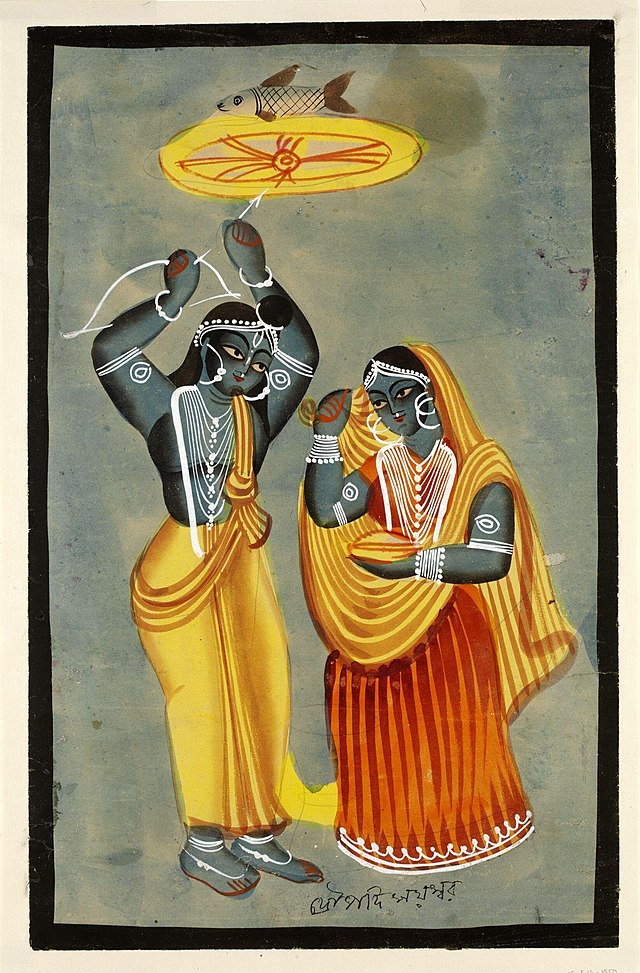
Featured image above: “Arjuna shooting at the eye of a fish to obtain Draupadi in marriage” source: Wikimedia Commons

Every year I teach a course in Oral Epic traditions in India, aiming to explore the processes through which identities shape up in the performance of traditions among different communities. In the course of teaching, we usually conclude that oral epics provide space to identities which are elided over in the written sources controlled by the dominant groups. However, what we come to see is that hierarchy and dominance remain embedded even in the most marginalized of traditions.

In most oral narratives, often belonging to marginalized groups, portrayal of women and of gendered violence remains caught in stereotypical frames: either benevolent goddesses, mothers, wives who protect families or wronged women, often located outside of marital structures, who become the cause and means of destruction of societal harmony.

Women’s lives are often rendered meaningful through their devotion towards men in their families like that of Sadu Mata in the Devnarayan epic, the mother in the Anananmar epic or Damayanti in the Dhola epic. When denied motherhood or marital spaces, or located outside of familial spaces, women unleash their wrath upon the world and destroy it, like Kannagi from Cilappatikaram, Jaimati from Devnarayan epic, Deval from Pabuji epic, Tankal from Annanmar or Bela from Alha. Then there is the ‘free’ woman, invariably tribal, lower caste or working-class, who is often depicted as ‘loose’, lascivious and sexually available. In the epic traditions all these women are at the receiving end of cycles of gendered and sexual violence irrespective of their social locations.

Among the multitudes of narratives drawing upon the Hindu epic literatures we often find references to women like Menaka, Rambha, Shakuntala, Ahilya, Satyavati, Kunti, Draupadi, among many others subjected to lustful gaze of men, violated and then subjected to a life of guilt and suffering for abandoning children born out of violence. Sometimes, they are erased out of narratives like in the oral epic of Pabuji, where his mother is depicted as a heavenly nymph who vanished when a promise was broken. Alternate readings of the epic suggest the possibility of the mother having been a tribal woman whose identity was erased to create an upper caste identity for the Rajput deity Pabuji.

In several oral narratives we find similar references to forced marriages to tribal or lower caste women, as part of protection treaties. Daughters and sisters were often used as collateral in political treaties. In narratives from Rajputana, women are portrayed as willing participants in the ritual suicides by fire.

Though we do get some references to women refusing to follow men to death, the fear of sexual violence as well as a life of hardship and neglect in absence of any rights outside of marriage, could well have motivated women to seek death over life.

In some narratives where marginalized groups seek revenge it is through inflicting sexual violence upon women, and yet in other narratives it is the danger of sexual violence towards women that is used to justify suppression of lower caste communities.

While the Mahabharata contains numerous references to sexual conquests of the Pandavas, in the Bhili Bharat, an epic of the Dungri Bhils of Gujarat, an episode depicts the rape of Draupadi by the Naga king of the netherworld to spite her husband Arjuna after tying him up. Only in some rare narratives, often referring to goddess traditions, do women faced with sexual violence retaliate, like the Charani goddess Avad of western India who, angered by a king’s insistent marriage proposal, shifted the course of a river rendering his kingdom a desert. In rare instances like in the Bhili Bharat, they emerge as possessors of wisdom and knowledge, as gurus, witches and goddesses, who navigate the events in the face of collective lack of wisdom among the men.

Thus, while we expect oral traditions, which provide voice to marginal communities and groups, to create space for women’s voices, even in these traditions women’s locations remain marginal and mostly with respect to the male figures.

Women’s marginality is ‘invisibilised’ even in the narratives of marginality. The only manner in which they become visible is as ‘bodies’ whose violation or preservation provides cause and context to the actions of men.

Women characters do not escape the cycles of gendered sexual violence. Dominance as well as retaliation to it takes the form of sexual violence upon women’s bodies, imagery of whose brutalization further perpetuates cycles of violence. Women exercise no control over these cycles of violence, irrespective of the side they are located on, as violence is unleashed upon other women to protect their bodies. Women’s bodies are placed at the centre of narratives and yet remain marginal.

Author’s bio:

Tanuja Kothiyal is Professor of History in the School of Liberal Studies, Dr. B. R. Ambedkar University Delhi. She is the author of Nomadic Narratives: A history of mobility and identity in the Great Indian Desert (Cambridge University Press, 2016) and co-edited a book ‘South Asian Borderlands: Mobility, History, Affect, CUP 2021) Her recent research project https://www.saltindiahistory.com/people will be published in 2022.

DAY FOUR: Bringing back hope

In working towards a domestic and family violence free Australia, Muslim Women Australia (MWA) use faith as a tool for empowerment.

Maha Krayem Abdo OAM

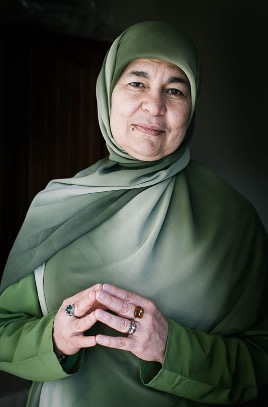
Featured image: Photograph of Maha Krayem Abdo OAM

Imagine you are a gardener, and you love spring. You are sowing the seeds to enjoy your garden in spring and maybe summer. You select the right seed and plant that can give you that satisfaction when the right season comes. But we also know we have autumn and winter, so we have to plan how and when to use different seeds and plants for a different purpose.  

Muslim Women Australia (MWA) is that garden, and I am bestowed and entrusted with a position of the gardener by my seniors. Together we plan, develop and implement the ways we can make a difference, just like how gardeners plan for different seasons.  

Together we are making a garden where people who want to enjoy peaceful retreat visit us, those who want a safe space visit us, those need some shade that can take their mind off the heat of stressful life visit us. 

Since its establishment in 1983, MWA has led the way in centring the needs of Culturally and Linguistically Diverse (CALD) and faith-based communities, advocating for holistic, culturally and religiously competent, community led and trauma-informed practice. In working towards a domestic and family violence (DFV) free Australia, MWA’s highly experienced and professional staff, highlight the healing and therapeutic nature of utilising faith as a tool for empowerment, with a client-centred focus to maintain a client’s dignity at every stage of support. 

Background 

Early on in the work of MWA, it was identified that while support and counselling could be provided to women and their children dealing with DFV, the issue of accommodation needed a more permanent solution. Thus in 1988 the first ever Muslim women refuge was established, the Muslim Women’s Support Centre (MWSC), which operated for over 25 years. 

This unique service was the first of its kind to be set up in Australia that catered specifically to the cultural and religious needs of Australian Muslim Women. The Centre provided clients with crisis accommodation, support to women and children escaping domestic violence, experiencing homelessness, marital disharmony, financial and other hardships. 

It gave women the autonomy to choose how to deal with their issues, by facilitating safe and neutral spaces for mediation and family restoration, where there was no continued risk of physical harm; as well as to provide a service that was culturally and religiously inclusive.  

MWA made a conscious decision to deal with DFV effectively by involving the whole community.

DFV is not simply a woman’s problem. The community must be involved and aware that no violence in any form or shape can be tolerated. The responsibility of dealing with DFV lies with every member of the community, including men.

A collaborative coordinated community approach to dealing with DFV was developed. 

The main focus of the MWSC was with providing women with choices and in empowering them with information and skills to enable them to make decisions. Muslim women had no access to appropriately tailored services which took into account their religious and cultural needs. They were now being provided with choices and options from which to make a decision which responded to needs appropriately, not what someone else perceived their needs to be.  

An integrated, holistic co-case management model was developed throughout the 25 years of operation. MWSC established collaborative partnerships with the police, the local courts, government departments, local hospitals, schools and other DFV service providers as part of ongoing improvement processes to streamline referral processes and to facilitate better access. 

After 25 years of operation, the changes from the NSW Government State Reforms saw an end to the MWSC as a specialist homelessness service. However, the best practice model used throughout its operation, its foundational principles and the sincerity and integrity of the experienced caseworkers for over two decades made an impact across the sector.  

MWA’s Linking Hearts Multicultural Family Violence and Homelessness Support Service is an actualisation and continuation of this history. When we connect heart to heart, and deal with causes, not just symptoms, real healing, connection and understanding can happen. 

Sowing Seeds of Hope 

Learning, understanding, and acknowledging the personal experiences of women informs a people-centred program design by bringing awareness of the impact of trauma as well as the complex paths to healing and recovery.

Therefore, our contribution to knowledge is an elaborative explanation of using culturally and religiously informed faith-based practice using trauma-informed expertise and experience. 

We cannot change the past, but we can certainly change the present for the future, and to do that we need to come together, we need to sincerely gather to recognize there needs to be healing. 

By enabling change to take place in all aspects of our lives, where hope is embedded in our framework, in our interaction with one another and most importantly, in the sector itself, through reforms, regulations, beginning the change within the sector, by the sector, for the health and wellbeing of women, children and society at large. 

We must begin from a place of sincerity, translating into words, then into action, while recognising the importance of transformation, just like the varying blooms of the garden. We allow people to evolve in their own colours and ways, supporting people to be who they are.    

Without healing, there is no hope. If we continue to sow the seeds of hope, they will be passed on and allow for growth and healing.  

The garden shows us that hope is clear, knowing that together we will walk the path of healing, with the hope of change taking place. 

We are all gardeners, aiming to grow, and showing that an individual is part of the community. Just like the garden itself, the different parts interact with one another. The individual as part of the community demonstrates that we rely on each other, for certainty, in being safe. 

For change is real, and reality is hope, and hope in uncertainty creates that change that we all look for.

Author Bio

Maha Krayem Abdo OAM is a passionate advocate for social justice and uses the common language of faith to bring healing and hope to people of all backgrounds. She serves as the CEO of Muslim Women Australia (MWA), a representative body for Muslim women working to enrich humanity, advocating for equality and the rights of all women, through authentic leadership based on Islamic principles.