Day Four | #MeToo and the work of ending men’s violence against women

Karen Boyle is a professor at a striking UK university. This blog was submitted on 21st November.
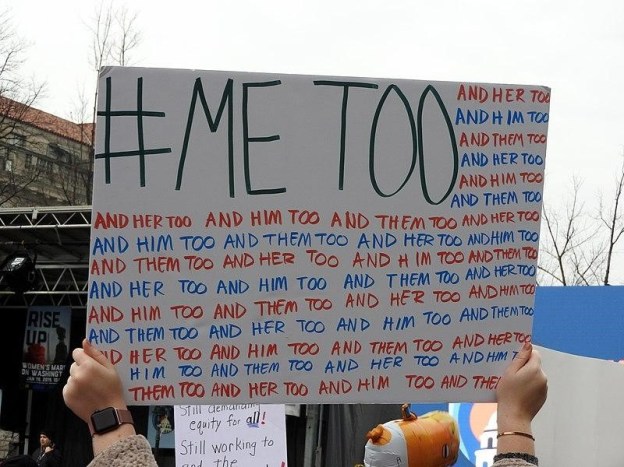
MeToo2

‘ME TOO and her too and them too and him too’ by Cyndy Sims Parr and used under a Creative Commons licence

On 15 October 2017, actress Alyssa Milano tweeted: 

Me Too. 

Suggested by a friend: “If all the women who have been sexually harassed or assaulted wrote “Me Too” as a status, we might give people a sense of the magnitude of the problem. 

(@AlyssaMilano, 15 October, 2017) 

Within 24 hours, 12 million Facebook posts using the hashtag were written or shared; within 48 hours, the hashtag had been shared nearly a million times on Twitter. 

In some ways, #MeToo exemplified the feminist possibilities of social media: each new post joined an existing conversation and allowed us to build a picture of what they had in common. This was not a million miles away from the consciousness-raising groups of the Women’s Liberation Movement, where women shared their experiences – including of sexual violence – in order to build an analysis of what they shared in a patriarchal society. But, where consciousness-raising typically took place in small, closed groups, #MeToo brought with it a more politically diverse and potentially global audience. 

However, I want to sound a note of caution about the way #MeToo is now increasingly referred to as a movement. To do this, I want to think about the relationship between #MeToo as a hashtag and Tarana Burke’s Me Too, founded in 2006. Burke founded the Me Too movement in response to a young woman’s disclosure of sexual abuse. At the time, Burke shut the young woman’s testimony down as quickly as she could. Yet, part of the reason for Burke’s reluctance was that the young woman’s testimony echoed her own experiences. For Burke, Me Too was (and is) about the pain and difficulty of recognition and solidarity, and the work this knowledge demands of us. 

When Milano tweeted #MeToo, she was not aware of Burke’s work. After the tweet went viral, Burke’s work was publicly acknowledged, following a by now well-established pattern of Black feminist mobilisation online. However, Burke notes that the mainstream acknowledgement has been limited: 

While it’s true that I have been widely recognized as the “founder” of the movement – there is virtually no mention of my leadership. Like I just discovered something 12 years ago and in 2017 it suddenly gained value. #metooMVMT #metoo 

(@TaranaBurke, 21 February 2018) 

Burke has consistently differentiated between the act of speaking out and the work that must follow on from that acknowledgement of personal experience in order to effect change. The media emphasis on Burke-as-founder obscures this, not least by emphasising her own personal story as a survivor. 

In my research on the media coverage of the Harvey Weinstein case, I have similarly found that the decades of feminist activism and research on sexual harassment and abuse preceding October 2017 have largely been ignored. Not only have spokespeople for organisations like Burke’s been largely missing from mainstream accounts, where feminism has featured it has too often been as a site of suspicion because of the (in)actions of prominent, individual feminists. 

What I want to emphasise, then, is the importance of understanding #MeToo not only as a social media trend, but as a mainstream news story. #MeToo was a response to a mainstream news story with Hollywood at its centre, so it is hardly surprising that #MeToo in turn became a major news story for global media outlets. Equally unsurprising has been the emphasis placed on the experiences of economically and racially privileged US women in this coverage. But this is a critique of the media, not of a movement, or even of the individuals using the hashtag on social media.

Louise Armstrong, who has written about media coverage of child sexual abuse testimony, argues that for the media “the personal is the personal” – and this can stop us seeing the bigger picture. There is also the risk that it makes stories about violence the stories only of the victim/survivors, as though the perpetrators somehow had nothing to do with it.

Even in the #MeToo era, men in public life have not been routinely asked if they perpetrated sexual violence, though after #MeToo went viral, there was a period where women in the public eye were almost routinely asked in interviews if they had a #MeToo story. This relentless focus on personal trauma compromised victim/survivors’ abilities to choose whether/how to tell their own stories, but also downplayed the expertise amassed by feminist organisations and researchers who have been listening to survivors for decades.

The feminist slogan “the personal is political” doesn’t mean that telling personal stories publicly is always or necessarily politically progressive – nor does it place an obligation on survivors to speak out. Unlike the women in consciousness-raising groups, those sharing #MeToo on social media since autumn 2017 haven’t necessarily had very much else in common, including how they make sense of their experiences of sexual harassment and abuse. This is only surprising if we think of victim/survivors as a homogenous group. 

Of course, some women (and men) have been galvanised to political action by #MeToo, but a diverse group of people posting #MeToo do not necessarily constitute a movement. A movement, as Tarana Burke says, is work. Emotional work is part of this, but not all of it: the work this generates then includes advocacy, support, campaigning, policy development, research. This work takes time, and can be obscured by a focus on one-off statements.

For all of these reasons, I refer to #MeToo as a moment rather than a movement. As the women of the Tufnell Park Women’s Liberation Workshop wrote in the inaugural edition of Shrew in 1970:

We can be so written about and give so many interviews that we can be deceived into thinking that there is a movement when all we’re doing is dealing with the press and TV. (Tufnell Park Women’s Liberation Workshop 1970: 4)

Of course, dealing with the press and TV matter. But we should not allow the media to define our movements to end men’s sexual harassment and abuse of women.

Karen Boyle is Professor of Feminist Media Studies at the University of Strathclyde (@Unistrathclyde) in Glasgow, Scotland. She is the author of #MeToo, Weinstein and Feminism (Palgrave, 2019) and Director of Strathclyde’s Applied Gender Studies programme.


Day Four | #MeToo at Two

Bianca Fileborn and Rachel Loney-Howes 

#MeToo.png


#MeToo exploded onto social media in October 2017, exposing and taking down some powerful men in the entertainment industry, and sparking conversations about the prevalence of sexual violence and what can be done in response. Two years on, however, what has the movement achieved? And what more needs to be done to address the cultural, political and legal dimensions that enable sexual violence to occur? In this blog, we address some of the key impacts of #MeToo two years on, and consider how we might go about the long, grinding process of change. 

When the #MeToo movement emerged on social media in October 2017, it almost broke the internet. Within 24 hours, the hashtag had been used over 12 million times, with survivors of sexual harassment and assault from around the world speaking out about their experiences, while others used it to express their solidarity and support. As we pass the two-year anniversary of the hashtag, what, if anything, has the movement changed? And what still needs to be achieved?  

In terms of the initial successes of the online version of #MeToo, in addition to the widespread use of the original hashtag, it was also translated into a variety of different languages, used in over 80 countries, and used a means for mobilising more specific local feminist agendas. In Argentina, for example, the #MeToo movement provided local activists with an opportunity to mobilise on the issue of abortion. The hashtag also generated some legal changes and investigations. Countries such as France, for example, made catcalling (street harassment) a crime in August 2018, with on-the-spot fines issued to offenders by police. The Australian Human Rights Commission also announced they would conduct an inquiry into workplace sexual harassment in June 2018

One of the key successes of the movement was that it provided survivors with a new platform to speak out about their experiences of sexual violence. Twitter, Facebook and other forms of social media created new opportunities to collectively speak out about violence from multiple different geographic, political and cultural perspectives. It is well known that survivors’ experiences are routinely undermined or denied legitimacy in the criminal justice system, as well as by the general public. Too often, survivors are blamed for causing the violence, with many accused of lying or having ‘regretted’ consensual sex. 

The sheer scale and response to #MeToo, however, gave survivors a powerful framework for speaking out, as well as offering recognition and validation in a way that official criminal justice mechanisms regularly fail to provide. While there are issues relating to whose experience is seen on social media and subsequently who is then recognised as a legitimate survivor, at a macro level the #MeToo movement provided survivors with an unprecedented opportunity to share their stories. 

While the hashtag movement provided an important outlet to give voice to (some) survivor’s experiences, it is more difficult to know what has been achieved in terms of tangible structural and social change. Certainly, there were multiple public calls to address the structural causes of sexual harassment and violence, as well address the barriers for survivors accessing legal representation (for example, #TimesUp). However, in some instances, initiatives and organisations set up in response to #MeToo have come under scrutiny. Measuring social change is always difficult, and one of the key problems with the #MeToo movement is that it lacked (or lacks) clear goals, leadership, or indeed a united message. 

Not long after the movement exploded online, it emerged that the term “Me Too” was in fact first coined by Tarana Burke, an African-American activist who has dedicated her life to supporting and advocating for sexual assault survivors. The revelation that #MeToo was in fact a movement spearheaded initially by a woman of colour generated a significant amount of backlash, and opened up a dialogue about the all-too-frequent erasure of the advocacy work of women of colour in the area of sexual violence, as well their experiences of gender-based violence. 

From the outset, the movement was accused – as the feminist movement has been historically – of focusing too heavily on the experiences of young, cis-gendered, able bodied, white, middle class, heterosexual women. There were (and remain) serious questions as to whether and how women and survivors from marginalised groups might benefit from #MeToo. The oversight of the work of women of colour, such as Tarana Burke, and the plethora of women of colour around the world who have been working tirelessly supporting survivors and lobbying for funding increasing and social change, illustrates that the public face of anti-sexual harassment and violence remains that of privileged white women. 

While creating space for survivors to speak out is undoubtedly important in many respects, it is less clear whether the widespread discussion generated by #MeToo has been fruitful in shifting attitudes and behaviours. Although this type of change is slow-burning – and it’s unlikely that any single activist movement will generate the social, cultural and structural shifts required to end sexual violence – the evidence so far suggests that #MeToo has had limited success in this regard. As Australian masculinities scholar Associate Professor Michael Flood notes, studies in the UK and the US were conducted in 2018 to capture the effect of the #MeToo movement on men’s knowledge about #MeToo, their attitudes towards gender inequality, inappropriate behaviours, and their willingness to listen to and believe women. Results were mixed, and inconclusive at best

Concerningly, #MeToo was also subject to significant backlash and polarisation – something we’ve seen in response to second and third-wave feminism before. The movement was accused of going “too far” inciting a witch hunt against powerful men. Others have criticised the movement for placing experiences of sexual harassment on par with survivors experiences of sexual assault and rape. Canadian legal scholar Dr Heidi Matthews has further suggested that the movement has generated a sex panic – or at least lumped risky (but wanted and consensual) sexual practices in the realm of sexual violence. 

We argue however that rather than buying into the backlash, we should take the opportunity #MeToo has generated to broaden our understanding of what sexual violence is, and to engage in more productive conversations about consent, pleasure and heteronormative masculine entitlement. Ultimately, this is what will help to drive change and work towards the prevention of sexual violence in all its forms.

Dr Bianca Fileborn is a Lecturer in Criminology, School of Social & Political Sciences, University of Melbourne. Her work examines the intersections of sexual violence, space/place, culture and identity. Bianca is the author of Reclaiming the Night-Time Economy: Unwanted Sexual Attention in Pubs and Clubs (Palgrave), and co-editor of #MeToo and the Politics of Social Change.
Dr Rachel Loney-Howes is a Lecturer in Criminology, School of Health and Society, University of Wollongong. Her work explores the use of digital media for anti-sexual violence activism. Rachel is the author of the forthcoming book Online Anti-Rape Activism: The Politics of the Personal in the Age of Digital Media, and co-editor of #MeToo and the Politics of Social Change.  


Day Three | Unintended consequences of domestic violence law

Heather Nancarrow

Unintended consequences

Women are increasingly ensnared in the criminal justice system as a result of domestic violence laws that were designed to protect women from men’s violence. This is especially the case for Aboriginal and Torres Strait Islander women.

 The enormity of this problem is captured by the Queensland Domestic and Family Violence Death Review and Advisory Board, which reported that 44.5 percent of female adult victims, and nearly all Aboriginal family violence victims, had been identified by police as a respondent to a domestic violence protection order application on at least one occasion. That is, victims of domestic and family violence had been construed as perpetrators, prior to their domestic violence-related death.   

Understanding how and why law that was originally designed to protect women from men’s violence is being used against them – and what to do about it – is the subject of my book, Unintended consequences of domestic violence law: Gendered aspirations and racialised realities, which was published in October.  The limitations of the law as a site for justice and empowerment for women has long been the subject of feminist critique internationally (see, for example, the work of Carol Smart, Kathleen Ferraro, and Leigh Goodmark) and here in Australia (such as Rosemary Hunter’s book,  Jane Wangmann’s doctoral dissertation and my journal article). 

A key feminist concern is male power in law’s structure and processes, with debates centred on whether women should be treated the same as men, or differently. Others are equally concerned, or more so, about white power in the law (see, for example, The Aboriginal and Torres Strait Islander Women’s Task Force on Violence Report, as well as Hillary Potter’s Battle Cries and Beth E. Richie’s Arrested Justice), particularly where law’s structures and processes reflect neo-colonial power.

My research, using Queensland as a case study, addresses both concerns and pays attention to the intersections of gender, race and class in the cases of 185 people within four groups, roughly equal in number: Indigenous men, non-Indigenous men, Indigenous women and non-Indigenous women. (Note that ‘Indigenous’ is the term used in police and court records.) Each person in the research sample had been charged on at least one occasion with breaching a domestic violence order (DVO). Here is a sketch of what I found. 


Coercive control and resistance

Although not explicitly framed as such, Queensland’s domestic violence law was originally intended to address an ongoing pattern of coercive control perpetrated by men against their intimate female partners (see chapter 3 of Nancarrow 2019). The law recognised non-physical abuse as tactics of control and assumed a particular kind of victim: a subjugated, powerless woman. Therefore, it gave the state (in other words, the police and the courts) powers to make civil DVOs without requiring the consent of the victim, and made the breach of a DVO a criminal offence.

The law is being appropriately applied in regard to the majority of the men in the sample, though less so for the Indigenous men. That is, most of the men had been charged with breaching a DVO on one or more occasions due to coercive controlling abuse. Their abuse was aimed at general, ongoing control of their partner: an attack on their “autonomy, liberty and equality”.


Fights, dispute resolution and chaos

But the law is not being applied according to its original intent when women are charged with breaches of DVOs.  Nearly all of the women in the sample had been charged on one or more occasions with breaching a DVO due to fights: physical and verbal abuse in the absence of an ongoing pattern of coercive control. This was also true for some of the men, especially the Indigenous men. 

Further, some of the fights that the Indigenous women and men engaged in were characteristic of contemporary forms of traditional Aboriginal dispute resolution (see Marcia Langton’s chapter in Being Black: Aboriginal cultures in ‘settled’ Australia). This is a process traditionally regulated by cultural rules and boundaries, but which may now manifest as less structured and potentially more dangerous due to colonial interference and associated trauma. 

For about one-third (35%) of the Indigenous women, and 5% of the non-Indigenous women, fights (and related DVO breach charges) occurred in a context of “chaos” – a description frequently used by service providers and police prosecutors that I interviewed to help understand why Indigenous men and women were over-represented in DVO breach data. “Chaos context violence” (see Nancarrow 2019, chapter 7) typically involves a cluster of attributes including (but not limited to) extreme dysfunction arising from acquired brain injury, for example; trauma or poor mental health; and substance addiction. 


Implications for theory and practice

Policy analysis must take account of the patriarchal and racist structures in which domestic and family violence occurs, and it must distinguish between coercive control and fights. Giving the state power to make DVOs without the consent of the victim is sound logic for cases of coercive control, but it is not sound for cases involving fights. Nevertheless, fights can be distressing, harmful and lethal, and alternative strategies are needed to address them. Restorative justice practices and couples counselling may be appropriate in such cases.

The logic of state power over victim choice in cases of chaos context violence is not only unsound, it is unjust. To some extent, it reflects the deployment of exceptional state power to punish people for behaviour resulting from violence perpetrated on them by the state. Ending chaos context violence ultimately requires structural reform to address racial and socio-economic inequality; at an individual level, it may involve therapeutic intervention and support.


Risks inherent in a paradigm shift

A paradigm shift in current mainstream responses to intimate partner violence, which distinguishes between coercive control and fights is needed, but there are significant risks associated with such a shift. Further development of knowledge and skills to assess and distinguish between coercive control and fights is needed for any approach. We cannot risk a return to the days when coercive control was dismissed as an argument, or a fight. Nor should we facilitate the criminalisation of women (especially Indigenous women) and some men (especially Indigenous men), whose use of violence is not an expression of patriarchal coercive control, but an expression of powerlessness in a society where power and resources are distributed unevenly along gendered and racialised lines.  

My research represents challenges to orthodoxy within current domestic violence theory and practice. It calls for reconceptualising types of violence to take account of gendered and racialised contexts in which it occurs. I argue that the criminal justice system is not only ineffective in many cases, but it is unjust. Though there are undoubtedly challenges of achieving the recognition of women’s agency in fights; a victims’ choice in engaging agents of the criminal justice system; and unequivocal state sanctions against patriarchal coercive control of women, this nonetheless is what we must work towards.


Heather Nancarrow has a PhD in Criminology and Criminal Justice and has held many state and national leadership roles in regard to policy on the prevention of violence against women. She is currently the CEO of Australia’s National Research Organisation for Women’s Safety, an Adjunct Associate Professor at UNSW Sydney and an Adjunct Research Fellow, Griffith Criminology Institute, Griffith University. Her work has been recognised with several awards including the “Queenslander of the Year Community Spirit Award” in 2009; “Honours in recognition of outstanding leadership of the National Council to Reduce Violence against Women and their Children and advancing strategic implementation of the National Plan” awarded by Victim Support Australia in 2012, and in 2010 she was named a Rotary International Paul Harris Fellow.

Day Three | We, the Women Warriors, are Unstoppable!

Shalu Nigam

Shalu NigamImage reproduced with the  permission of Shalu Nigam

After a long wait, the National Crime Record Bureau of India has recently published its report pertaining to crimes in India  in 2017. According to this report, 104,551 cases have been filed under section 498A IPC, a criminal law dealing with `cruelty’ against married women by their husbands and in-laws. A further 7,466 cases have been registered under section 304B, which pertains to dowry deaths, while 10,189 cases have been registered under the Dowry Prohibition Act, a law that bans the giving and taking of dowry. In addition, 5,282 cases have been registered for abetment of suicide among women and 616 cases have been registered under the Protection of Women Against Domestic Violence Act, for breaching the civil orders granted under this law in favor of the victims of domestic violence.

The NCRB report further indicates that the conviction rate was as low as 9.5% under section 498A cases in 2016, but which rose to 15.9% in 2017. In cases pertaining to dowry deaths, the conviction rate is 41.1% in 2017. These figures indicate that majority of women who knock on the doors of the court are not receiving justice. Compounding this, violent men are being acquitted by the courts. 

This data shows that a large number of women are not safe in their own homes. They are being physically and psychologically assaulted, verbally and emotionally tortured, discriminated, sexually harassed, murdered, forced to commit suicide and attacked in numerous ways. Serious complaints of violence are normalised and trivialised, framed as ‘disputes’ or `ego tussles’. Myths and misogyny operate in  society and the courtrooms alike to deny justice to women survivors of violence.


The role of the Supreme Court 

 Despite the fact that a large number of women are approaching the police and the courts with their complaints of violence within homes, police are rarely arresting violent men and the courts are failing to hold them accountable. In some instances, the courts are actually making the problem worse. For example, in 2014, the Supreme Court decided the matter of Arnesh Kumar v State of Bihar. It delivered a sweeping statement that section 498A, a criminal law provision relating to domestic violence, is being ‘misused and abused by disgruntled women’ and directed for the dilution of the provisions relating to the arrest and bail of accused persons. 

Then, in 2017, in Rajesh Sharma v State of UP the Supreme Court passed a directive to police and magistrates that no arrests were to be made or coercive actions taken without ascertaining the veracity of the complaints lodged under section 498A. It suggested the formulation of Family Welfare Committees to scrutinise every complaint of domestic violence to ensure that no ‘false cases’ were registered. Without examining the on-the-ground realities, the court concluded that the law is misused by ‘vengeful’ women, and saw men as victims of this ‘cruel’ law. While himpathising (a term coined by Kate Manne) with the accused persons, the bench remarked that there was “violation of human rights of innocents”. In contrast, no compassion is shown towards the women who are abused, abandoned, burned, murdered, killed, raped and brutalised.

However, after protest by several women’s organizations and petitions filed in the Supreme Court, the Court heard the matter of Social Action Forum for Manav Adhikar v Union of India in 2018. It ordered the Family Welfare Committees be done away with, while retaining the provision relating to arrest and bail for the accused persons. Even earlier, the Law Commission and several other state institutions too, have recommended the dilution of the domestic violence laws.

The legal system provides a platform for women to raise their concerns; however, there is a lack of commitment in implementation. Over the years, concerted actions have been taken by state actors to dilute the provisions of law. The system is being manipulated to serve the logic of the patriarchy, protecting the interest of the dominant group while reinforcing the prevailing biased stereotypical norms. The state more broadly is treating domestic violence as a social crime and using manipulative tools –including mandatory mediation – designed to compel women to arrive at a ‘compromise’ or ‘settlement’ with the accused persons without any assurance for their safety (and that of their children), and without punishing the abusive men. In many other cases pertaining to domestic violence, dowry deaths and suicide by married women, the courts have granted immunity to violent men by placing weight on the principle of ‘family harmony’, and in the process, disregarding the constitutional rights of women as citizens.


We, the Women, are Warriors and We Will Persist!

Yet the survivors, who may be seen as powerless and vulnerable, through their sheer grit, are demanding justice, breaking the codes of prolonged imposed silence, shaking the system and forcing it to respond. They are not feminists or experts but they are everyday women who, with their own sense of justice, and with scant resources or little support, are seeking a violence-free life for themselves and their children. They are fighting battles not only against abusive men but also against the patriarchal structures within homes, misogyny in courts, and androcentric culture and sexism in society. In doing so, they are reclaiming ownership of their lives with persistence, courage and resilience.

The law is currently implemented in a way that means complainants are being revictimised in the process. Despite this, women are using the law to reclaim their rights and resist violence. Those who are registering their complaints are negotiating their rights and contesting their claims while challenging the stubborn patriarchy. While writing their own stories of emancipation, they are shifting the inegalitarian structure within families, creating democratic spaces within society and –  in fighting to seek freedom, or aazadi, from violence – they are demanding the recognition of their dignity. 

For the state, as well as national and international organisations working on the issue of violence, it is essential to focus on women’s autonomy and agency in a patriarchal society and to provide support measures that help them to attain socio-economic self-sufficiency while countering ingrained misogyny. Many women are compelled to stay and bear violence because they lack any other options. There is therefore a  need to create a mechanism whereby women can access support that is specific to their circumstances. Until then, through their tough persistent legal and social battles, the simple message women are giving is this: “We, the women warriors, are unstoppable; unless violence is eliminated, we will persist”. 


Shalu Nigam (@ShaluNigam) is an advocate, researcher and an activist working at the intersection of gender, law, governance and human rights issues. She is currently practicing at the courts in Delhi and is associated with the People’s Union for Civil Liberties, Delhi, Indian Social Institute, Delhi, as well as the Centre for Women’s Development Studies, Delhi. She was awarded a Senior Fellowship by the Indian Council for Social Science Research, Delhi. She has published several books, the recent one is Women and Domestic Violence in India: A Quest for Justice. She has been a regular contributor to countercurrents.org and has published her essays in journals such as the Indian Journal of Gender Studies, South Asia Journal, Social Action, International Journal of Gender and Women’s Studies, Women’s Link, Legal News and Views among others. You can read some of  her work here and here


Day Two | Abusive Language and Violence Against Women in the Public Sphere

Jennifer M. Piscopo, Occidental College, USA

Strongmen across the globe are ascending to the position of president or prime minister. Sexist and racist rhetoric is part of their brand, which followers find authentic and even unifying. Male political leaders who use swaggering masculinity to cultivate support express the growing global backlash to diversity, inclusion, and multiculturalism. When powerful men use their platforms to abuse women, they send the message that abuse is okay. It also makes abusing women an integral part of a right-wing agenda.  

Boris Johnson, the Prime Minister of the United Kingdom, has an impressive track record of demeaning women. He has called women Members of Parliament (MPs) by their husband’s names and described women journalists and athletes in terms of their bodies – he once described female volleyball players “glistening wet otters”, for instance. 

Across the Atlantic, US President Donald Trump uses adjectives like “fat” and “ugly” to demean women who have spoken out against him. He rallies crowds to chant “lock her up” in reference to his former rival, Democratic presidential candidate Hillary Clinton. Brazilian president Jair Bolsonaro once told a congresswoman she was not “worth” raping, saying that she “didn’t deserve it”. 

Jennifer PiscopoLock Her Up” by James McNellis, 2017.

These leaders often reserve their most vitriolic comments for women of colour – attacks that often merge gender and race. Trump told four women Members of Congress – all of whom criticised his policies and his person – to “go back and help fix the totally broken and crime infested places from which they came”. Three of them were born in the United States, while the fourth – Somali refugee Ilhan Omar – was painted by Trump and other critics as a Jew-hater. Similarly, Johnson has spouted racialised descriptions of Muslim women, variously portraying them as objects and criminals. 

These incidents are not isolated. When powerful men deliver abuse, the attacks receive media coverage. But many women with public profiles – from activists to athletes – receive hateful messages daily. The senders are not usually powerful men, but everyday people. 

A study examining 152 leading British women in politics, business, entertainment, the media, and sports estimated that each received about 200 sexually-explicit tweets a day. In another study of nearly 600 women journalists, 63 percent reported being threatened and harassed on-line and 26 percent reported physical assaults. Amnesty International documents various quantitative and qualitative studies, all demonstrating that high-profile women on Twitter endure significant levels of abuse.


Abusive language as political violence against women

Abusive language is a form of violence against women. Much of it may happen online, but virtual harms cause actual damage. Hateful messages and death threats cause stress and trauma. Victims experience diminished self-esteem and an inability to focus and to complete their work. They fear for their safety and for their family’s safety, and they face disruption to their routines caused as a result of increased security. Many leave Twitter. In Britain, female MPs received such profane attacks that they received police protection.

But this language affects many more than just the immediate victims: it also tells the larger audience of women and girls to stay out of public life. Mona Lena Krook and Juliana Restrepo Sanín call these “message crimes.” Whether world leaders or everyday jerks, abusers want women in public life to shut up and go away. 

Since abusive language aims to diminish women’s influence over politics, policy, and the public debate, these attacks are forms of political violence. In my research with Elin Bjarnegård and Gabrielle Bardall, we argue that political violence is gendered in three ways: in its motive, in its form, and in its impact. The abusive language aimed at women in public life has all three elements. 

In terms of motive, attackers are driven by hate towards women in public, not hate towards public figures irrespective of gender. The rates at which women and men endure abuse are simply not the same: visible women receive disproportionate amounts of abuse when compared to visible men. In terms of form, attackers use gendered language, including threats of sexual harm and sexual assault. 

In terms of impact, the victims extend beyond the women targeted. They signal to other women and girls the costs of a public profile. And women and girls have received this message. A respected U.S. survey firm found that 70 percent of women, and 83 percent of young women, identified online harassment as a major problem, compared to just 54 percent of men and 55 percent of young men. Indeed, programs that train women candidates now include lessons that prepare women to handle abuse. Their tips include immediately reporting the abuse to authorities, using humour to diffuse the situation, and writing op-eds to call attention to the problem. 


Stopping abusive language 

Documenting and denouncing abusive language have not stemmed the attacks against publicly-visible women. The anonymity of online platforms combined with social media companies’ commitment to free speech means that attackers behave with impunity. Abusers even become leaders of powerful countries. 

The vicious and sexist abuse of women in public life has become so normalised that solutions focus not on holding perpetrators accountable, but on helping women cope. In the candidate training program, women politicians are told to be brave. A British MP, herself standing down because of online abuse, recommended that women MPs create circles of support

The women and girls of the world deserve better solutions. When the #MeToo movement brought down prominent men like Harvey Weinstein, the effects reverberated across the globe. Sexual harassment suddenly bore real consequences, even for powerful men. Likewise, voters must reject male political leaders who bully those weaker than them, especially women and racial and ethnic minorities. In the current political climate, protecting women from abuse cannot be divorced from resisting the right-wing forces that reject diversity and inclusion more broadly.   


Jennifer M. Piscopo (@Jennpiscopo) is an Associate Professor of Politics at Occidental College in Los Angeles, California. Her research on women’s political participation and representation has appeared in over 15 academic journals. With Susan Franceschet and Mona Lena Krook, she co-edited The Impact of Gender Quotas (Oxford University Press, 2012). An international speaker and consultant, she has collaborated with international organizations such as UN Women, the Inter-Parliamentary Union, and the Carter Center. Her op-eds have appeared in The Washington Post, The New York Times, and The Los Angeles Times, among other outlets.