Day Fifteen | Gender Violence in Conflict and Peace Processes: The Neglect of LGBT Security

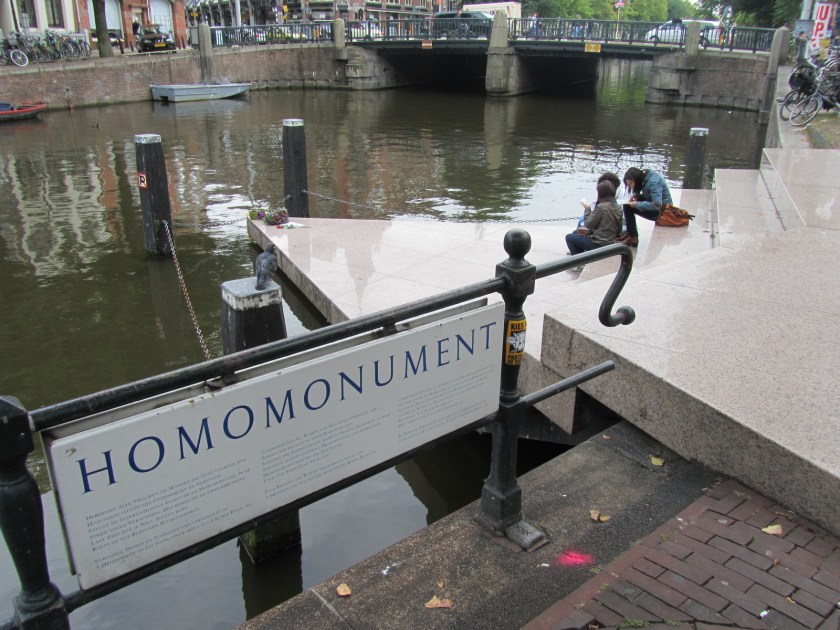
photo credit: Paul2 [CC BY-SA 3.0 (https://creativecommons.org/licenses/by-sa/3.0)%5D, from Wikimedia Commons
Written by Prof Christine Bell

Recently I visited the ‘Homomonument’ memorial in Amsterdam which commemorates the many gay and lesbian people persecuted by the Nazis.  Estimates of those killed in Nazi concentration camps range from 5000 to 15000.  In most countries this dimension of the holocaust went unacknowledged, and gay men were even rearrested sometimes on the basis of Nazi evidence.  It was only in 2002 that Germany apologised and pardoned those convicted in that period, but only in 2017 did it pardon gay men convicted under Nazi era laws more generally.  Standing at the monument served as a reminder also that in times of conflict, LGBT communities are often targeted in violent attacks in particular ways. Furthermore, awareness is now increasing that peace processes and post-conflict environments, almost without exception, fail to address LGBT security or consider what peace would look like for LGBT people.

During these 16 Days of Activism against Gender-based Violence, it is worth highlighting how  persecution of LGBT people is often bound up with conflict violence in a myriad of ways and LGBT communities often make distinctive and important contributions to peace processes.  In the early 1990s, during the conflict in Northern Ireland, I conducted some interviews with gay men and lesbian women, on police harassment for human rights research project (McVeigh, ‘Harassment – Its Part of Life Here’, 1992), which was to feed into police reforms as part of the eventual peace process.  ‘Homosexuality’ had remained illegal in Northern Ireland long after 1967, when it was legalised in the rest of the United Kingdom, in part due to the conservative social culture, and in part because of the unwillingness for the UK government to legislate for Northern Ireland even when it directly held power there. It was not until 1981 when a European Court of Human Rights case brought by a gay man, forced a change in the law (The 1861 Offences Against the Person Act). This was the law under which the poet and playwright Oscar Wilde was convicted in 1895 – coincidentally  Wilde grew up in Northern Ireland – and whose provisions still apply to make abortion illegal in Northern Ireland. A similar case before the ECHR against the Republic of Ireland in 1988, saw a law change South of the border.

The interviews made clear that, in addition to the difficulties, and often violent consequences that came with being a gay person in a very conservative society, were the specific threats that emanated from ‘the troubles’ (as Northern Ireland’s conflict was euphemistically called).  People’s sexuality was routinely used against them. For example, in instances of police harassment, sexuality  was often focused on as a ‘vulnerability’, and in particular with regard to people from Catholic/Nationalist/Republican communities, to be used to push people to become ‘informers’. Informing was in itself a lethal activity given that informers were routinely killed by the IRA.  The ‘hypermasculinised’ culture of the troubles, coupled with a conservative social climate, meant that socialising as a gay person was very difficult, although the few spaces that did exist often transcended Northern Ireland’s other class and religious divisions.   When a book was published with anonymous contributions on those from a Protestant background who did not ‘fit’ in the traditional ‘Unionist’ box allocated them, some of the most interesting accounts were from gay men (Hyndman ‘Further Afield’ 1992).  They told of lives lived in complex navigation around Northern Ireland’s sectarian divisions, its violent religious ‘interfaces’, and its rigidly and violently policed gender boundaries.  A long story could be told of the complex relationships of both Unionism/Loyalism and Nationalism/Republicanism with ‘homosexuality’ but remains to be written.

In the contemporary academic conflict literature, gender violence against gay people is rarely discussed, although this is beginning to change.  Yet it is a feature of many identity conflicts, where concepts of ‘ethno-national belonging’ often include concepts of ‘the purity of the nation’ in ways that are used to police gender boundaries and reinforce violent attitudes not just towards women but also towards LGBT people.  Many more conflicts than that in Northern Ireland have produced ‘hypermasculinised’ dimensions to conflict which has been visited on LGBT communities.

Also rare, is the addressing of any of these issues in peace processes and agreements.  In a research project – the Political Settlement Research Programme (www.politicalsettlements.org), based at the University of Edinburgh, we have collected a very broad set of peace agreements, from pre-negotiation agreements through comprehensive agreements, through to implementation agreements and coded them for the issues addressed.  This database is fully publicly available and searchable (www.peaceagreements.org).  Between 1990 and 2015 out of over 1500 peace agreements, only nine referred in any way to sexual orientation.  Six of these references are positive in the sense of providing rights, and three were negative – reinforcing prohibitions on same sex marriage for example or making ‘homosexuality’ illegal.  In 2016 the Colombian peace agreement between the FARC and the Colombian government was ground breaking in the way it addressed LGBT rights and concerns.  However, this agreement was narrowly rejected in a popular referendum, in part due to the opposition of religious groups who resisted what they saw as a ‘gender ideology’ in which LGBT rights were implicated.  In the months that followed, tweaks to the agreement were made, until a new version was adopted some months later and, among other changes, the LGBT commitments and language were significantly reduced.  Despite a well-established ‘Women, Peace and Security’ agenda underwritten by UN Security Council Resolution 1325, which mandates that peace agreements adopt a ‘gender perspective’, there has been little or no discussion of how  a gender perspective should understand and include LGBT communities and perspectives.

Yet LGBT communities and individuals are often critical to the search for peace.  Working behind the scenes in the Northern Irish peace process, it was clear to me that gay people were very significant in party structures and at the heart of the political negotiations.  Some found room within their party to be out, others did not.  How much was this contribution networked and understood as a ‘gender /gap perspective’ on the peace process?  Not much.  But there was sometimes a form of silent acknowledgement of the contribution of key gay individuals to the moderation of views within key political parties, although rarely causing a structural shift in party positions or attitudes.

Within civil society, LGBT communities were a key constituency pushing for a just peace based on equality and human rights.  LGBT groups played a significant role in the peace process on their own, and as part of broad-based equality alliances that were responsible for many of the human rights and equality provisions of the Good Friday or Belfast Agreement (although the ‘single equality Act’ promised in the peace process was never finalised).  In the years after the Agreement, there were some breakthroughs –  a major report aimed to give Lesbian and Bi-sexual women a voice in equality debates, and broke new boundaries by being launched in Stormont, the seat of the new Northern Irish Assembly, with cross party support (‘A Mighty Silence’ Marie Quiery 2002).  There is today some more space for being gay than when I was growing up, and a range of organisations now fill the spaces created by the brave but often lone spokespersons of eras before.  But progress is frustratingly slow, and life as a young LGBTI person remains challenging (a report whose release was for a time blocked by the DUP Education minister, showed that 2:3 pupils did not feel welcome in Northern Ireland’s schools). A survey of LGBT rights and experiences across Europe in 2017 found that Northern Ireland was ‘the worst place to be gay’.

While there were some equality gains from the peace process, the peace process and resultant power-sharing mechanisms, also helped bring about regressive outcomes on LGBT rights. Under power-sharing, and backed up by a socially conservative Attorney General for Northern Ireland, many progressive measures were routinely blocked or challenged.  Same sex adoption was resisted, with the (new) Attorney General also stretching the limits of his role to intervene, in line apparently with his own religious views, against same sex adoption in the European Court of Human Rights.  Same sex marriage remains prohibited, even though legalised in the rest of the UK and in Ireland. The Democratic Unionist Party (currently crucial to the current UK government remaining in power) has a track record of regressive policies including trying to ban blood donations from gay men .

A report ‘Reimaging Inclusive Security in Peace Processes: LGB&T Perspectives’, authored by Fidelma Ashe of University of Ulster, and shortly to be produced by the Political Settlement Research Programme (www.politicalsettlements.org), interestingly returns to the issue of LGBT security.  Based on research in Northern Ireland, this report reveals a situation where  LGBT communities still feel insecure.  Even new generations are affected by some of the historic distrust of institutions such as police, with respect to past actions.  It is clear that security has not been defined and implemented with LGBT experiences in mind.  The report contains useful recommendations for how the security of LGBT communities could be addressed in future peace negotiations. The report will be available in mid-December at www.politicalsettlements.org.

Christine Bell
Professor of Constitutional Law
Assistant Principal (Global Justice)
Director, Political Settlements Research Programme
University of Edinburgh
Day Fourteen | “Justice For Her”: Policing Gender-Based Violence in India

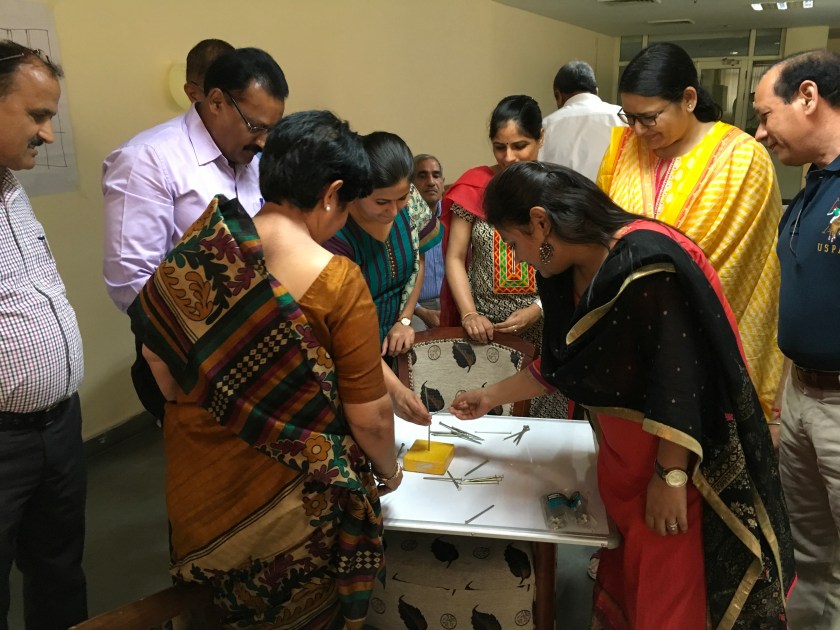
photo credit: provided by the author

Written by Dr Sunita Toor

The 10th December, 2018 marks the 70th anniversary of the Universal Declaration of Human Rights, and also the final day of 16 days of activism for eliminating violence against women. These days and campaigns highlight the importance of perseverance and persistence in the fight for women’s rights and creating a world free of violence. Quite often the fight for eliminating violence against women and girls is met with resistance as well as many voices stating that this endeavour is impossible. However, as an academic and activist I refuse to give up on the mission to make the world a safe, violence-free and empowering place for all women and girls to live. The impossible is possible. We can all contribute to this mission. Every small act, support and change contributes to the collective action of eliminating violence against women and girls.

For over three years I have been working in India and leading a project called “Justice for Her”. The project seeks to improve access to justice for women and girl victims of violence in the states of Delhi, Haryana, Madhya Pradesh and Punjab. The core two years of the project was funded by the Magna Carta Fund for Human Rights, Foreign and Commonwealth Office (https://blogs.shu.ac.uk/hkcindia). My aim is clear: I want the police to prioritise protection of, and responses to, women and girl victims of violence so that they can be fully supported at their most vulnerable time. I want justice for women and girls to be secured. I want women and girls to be safe and not fear being victimised again.

India’s “Violent” Crisis

In June this year, The Thomson Reuters Foundation poll on the most dangerous countries for women (2018), reported that India was the most dangerous country in the world for women to live in. The survey stated three key areas deemed most dangerous for women in India: risk of sexual violence & harassment against women; the danger women face from cultural, tribal and traditional practices; and thirdly, danger of human trafficking, including forced labour, sex slavery and domestic servitude. Seven years ago in the same survey, India was listed as 4th. Hence, by the methodology of this poll, the situation for women in India appears to have worsened and deemed to be more unsafe and dangerous than ever before.

There are thousands of women and girls each year that are victims of various forms of gender-based violence in India. The most readily available statistics from the National Crime Records Bureau shows more women and girls are coming forward to report their victimisation with an overall increase of 12% in 2016 from the previous year. With around 39,000 reports of rape, the majority of cases do not proceed to prosecution. However, this figure provides may only a glimpse of the ‘actual’ extent of crimes against women and girls, as the vast majority of victims do not come forward and seek help from the police. Whilst the figures demonstrate a level of willingness by female victims to come forward, there is a need to address how the police treat women complainants.

Focus on Policing

For over 15 years I have been working as an academic activist in this area and have a personal affinity with India, as I’m the daughter of 1st generation immigrants. Over the past 10 years I have been particularly concerned by the increasing media foci on gender-based violence in India and wanted to use by academic skills, activism and passion for women’s rights to undertake work in India. Several years of groundwork went into Justice For Her.

My work in India focuses specifically on this issue. I have led a ground breaking collaborative project with Indian police forces across four states. I wanted to change the experience female victims have with the police. It’s time for the police to be beacons of justice, protection and safety for female victims. I want the police to be empathetic, moral and human rights bastions of the communities they serve. This may seem a naïve and idealist endeavour, but one which I am committed to pursuing.

There needs to be dramatic change to the way in which the police respond to female victims and an ideological shift that raises the importance of policing gender-based violence. Moreover, greater emphasis needs to be placed on the role of the police in combatting and preventing gender-based violence. The police are vital stakeholders in this agenda and must be provided the resources and support to fully take on this mission.

My work is embedded in active collaboration with key stakeholders, namely the police. We had three central aims:

  • Raise the importance of policing gender-based violence in police strategy and policy;
  • Raise the status of police officers working in this area, as historically there is an array of negative stigmas attached to policing gender-based violence;
  • Create a dynamic and innovative police-training programme that is informed by a range of key stakeholders working in the field of gender-based violence across India and specifically the 4 states.

We wanted to create a project that was truly collaborative and empowering. We wanted the stakeholders, from criminal justice to civil society, to shape the training and provide their valuable insights from the grassroots of tackling and responding to gender-based violence in India. A core principle of the project was that our work was shaped by the individuals, organisations, institutions and communities where we were seeking to make a difference. We wanted to ensure that our approach and the police training programme was fit for context and purpose of improving women and girls access to justice with the mission of combatting gender-based violence.

The training programme has successfully been delivered in the four states to senior police trainers and officers working across a range of police training academies and services as well as to those with a policy and strategic remit to deal with crimes against women. The programme has empowered police officers to perform their duties more effectively, without prejudice and discrimination, and with a greater understanding of how working in partnership can improve justice for women.

The project has created a change in training police officers about gender-based violence, which focuses on empathetic, victim-centric and moral principles. This has been well documented in follow-up workshops and visits to all four states where police officers have changed their practice, strategy and responses to gender-based violence. There is some great work happening in this area and it’s being led by passionate police officers. We have contributed to a changing discourse about police strategies prioritising gender-based violence and recognising the importance of policing this area.

But more is needed, much more.

The seeds have been planted and need to be spread to over areas of India.


Dr Sunita Toor, Principal Lecturer in Criminology

Sunita Toor is an academic and women’s rights activist, on a mission to end violence against all women and girls. She is leading a dynamic and highly successful project: Justice For Her, which is committed to improving access to justice for female victims of violence in India by working with the police and the communities they serve. Her work has combined academic research, activism, advocacy, journalism and spoken word to raising awareness of gender-based violence in India and highlight the importance of us all working together to combat it.

Twitter: @suni_toor

Instagram: sunitoor

Watch the short documentary of Justice For Her: https://youtu.be/V0lW0fZkCFU


Day Six |“Bad Girls”, Everyday Sexism and Activist Campaigns in Millennial India

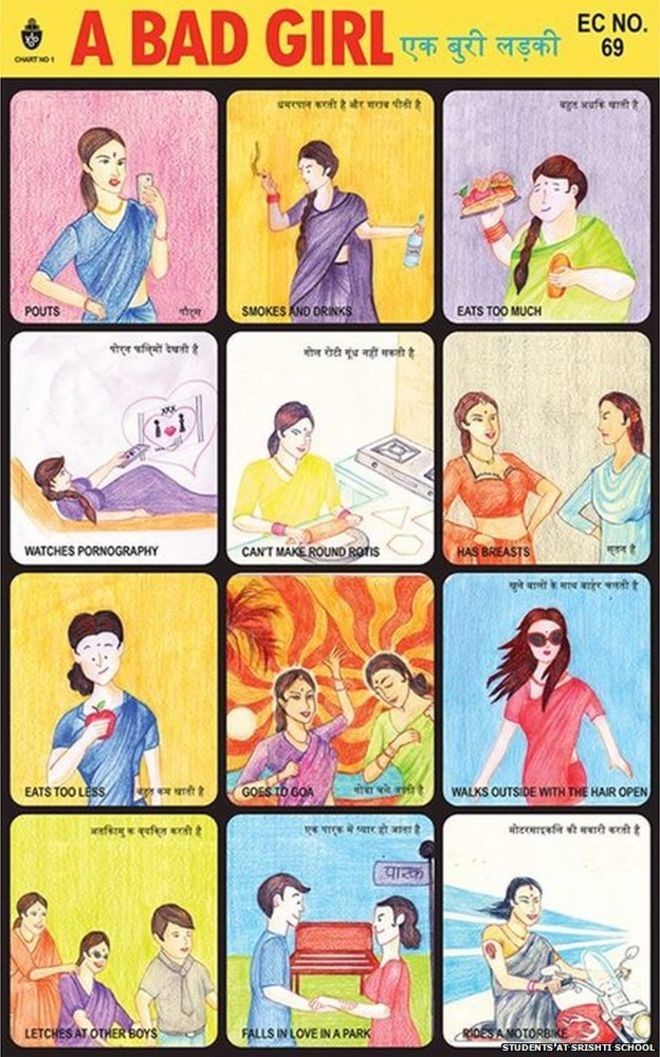
photo credit: ‘A Bad Girl’ poster, created by Srishti Institute of Art, Design and Technology’s students, is a satirical take on a classic ‘80s poster, depicting the ideal habits of good girls and boys. It went viral on social media a few years ago.

Written by Radhika Govinda

This blog post is about the agentic and sexually confident ‘bad girls’ of post-liberalisation India, ushered in with the ‘new economies of desire’: the cell-phone revolution, the Internet, and the consumer revolution, of which the nightclubs, pubs and multiplexes are emblematic (Nigam and Menon 2007). The girls are defying normative gender beliefs everywhere – online and offline, on campus, off-campus, on buses, in trains. Through activist campaigns, they claim the answer to the public safety dilemma is not to cage women but to enable them to freely and fearlessly access and occupy public spaces. In a blog-a-thon to mark 16 days of activism against gender-based violence, these ‘bad girls’ and their activist campaigns deserve a place of prominence. They compel us to ask whether we are seeing a renewal of feminist politics in India, at a time when much of the scholarship on Indian feminism is still lamenting the ‘ageing’ and fragmentation of the women’s movement (Menon 2004; Roy 2011) and sections of the international media are portraying Indian women in disturbingly neo-colonial and non-agentic ways (e.g. Purves 2012).

To address this question, I take a closer look at key protests and campaigns in 21st century India, the most prominent of which were the anti-rape protests triggered by the brutal gang-rape of a young woman in a moving bus in December 2012 in Delhi. Whilst mainstream feminist women’s groups were an important presence at the protests, neither the protests nor the protestors’ demands were led by an organised action on their part. Instead, social media enabled vast numbers of ordinary people to conduct these protests as a decentralised, leaderless movement, so much so that they were hailed as India’s Arab Spring and as marking the rise of ‘public feminism’ (Kurian 2017).

Whilst these protests were the first time there was such a massive outpouring of people online and in the streets against sexual violence, online spaces were used for non-mainstream activism on this issue, years prior. The Pink Chaddi campaign, for instance, was launched online in protest against Hindu nationalist outfit Sri Ram Sene’s attack on women at a pub in Mangalore in January 2009. The women were accused of desecrating ‘Indian culture’ by wearing Western clothes and consuming alcohol (Susan 2009). Subsequently, the Sene pledged to disrupt Valentine’s Day celebrations. The Pink Chaddi campaign enlisted 50,000 online members in a matter of days and coordinated a national collection of 2500 chaddis (underwear) which were delivered to the Sene headquarters on Valentine’s Day! This campaign was defiantly sexualised and in sharp contrast to the mainstream women’s movement, which had carefully avoided ‘expressions of sexuality as affirmative and pleasurable’, and had advocated on sexual violence primarily by seeking legislative and legal recourse to ‘protect’ women (Gupta 2016, Kapur 2015).

Campaigns since the 2012 anti-rape protests too deserve discussion. In particular, Pinjra Tod, which emerged in 2015 with hostel women protesting sexist curfews, was similar in mode of resistance and discursive register to earlier campaigns like Pink Chaddi whilst also being iterative in that it tried to address the criticisms made about the earlier campaigns’ and mainstream women’s movement’s own lack of inclusivity. Pinjra Tod has, over the years, challenged the authority of not only women’s hostels but also parents, caste-based village courts and Hindu nationalist outfits.

In today’s context, no discussion on Indian feminism is complete without addressing the List posted on Facebook by Raya Sarkar on 24 October 2017. Coming in the wake of the #MeToo movement globally, the List went viral. Within hours of it being published, 14 Delhi-based feminists issued a Statement, asking for it to be withdrawn and urging the List makers to avail of due process instead of ‘naming and shaming’ the accused. Let me be clear: my aim is not to take sides here but to argue that even though the List was not as carefully planned and executed as the other campaigns, it was similar in its DIY grammar – in not wanting to wait for the state and the mainstream women’s movement to take action. Through its use of the Internet and social media, the campaign exposed to the public eye the problem of sexual harassment. In doing so, it also exposed longstanding fissures within Indian feminism along generational, caste and class lines.

Taken together, with their call for freely and fearlessly performing their sexuality and accessing and occupying public spaces, the younger generation of feminists or the so-called ‘bad girls’ of post-liberalisation India and their campaigns have introduced new modes, sites and content of Indian feminism. Whilst none of these can be naively and uncritically celebrated, they must not be summarily dismissed as ‘coopted’ by neoliberalism (Roy 2015). It is time to acknowledge what they have to offer – a renewal of feminist politics, however messy, impure and incomplete it might be.

Dr. Radhika Govinda is a Lecturer in Sociology at the University of Edinburgh, UK. She has a keen interest in identity politics, intersectionality, and gender and development, and is the UK Lead on an ongoing North-South, UGC-UKIERI-funded research and teaching collaboration, Teaching Feminisms, Transforming Lives: Questions of Identity, Pedagogy, and Violence in India and the UK.