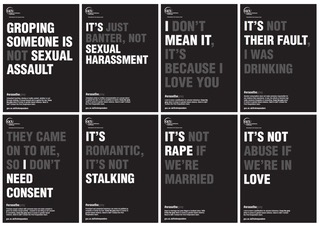
DAY ONE: Introducing the 16 Days Blogathon 2020!

Welcome to our annual blogathon to mark the global 16 Days of Activism Against Gender-Based Violence Campaign.

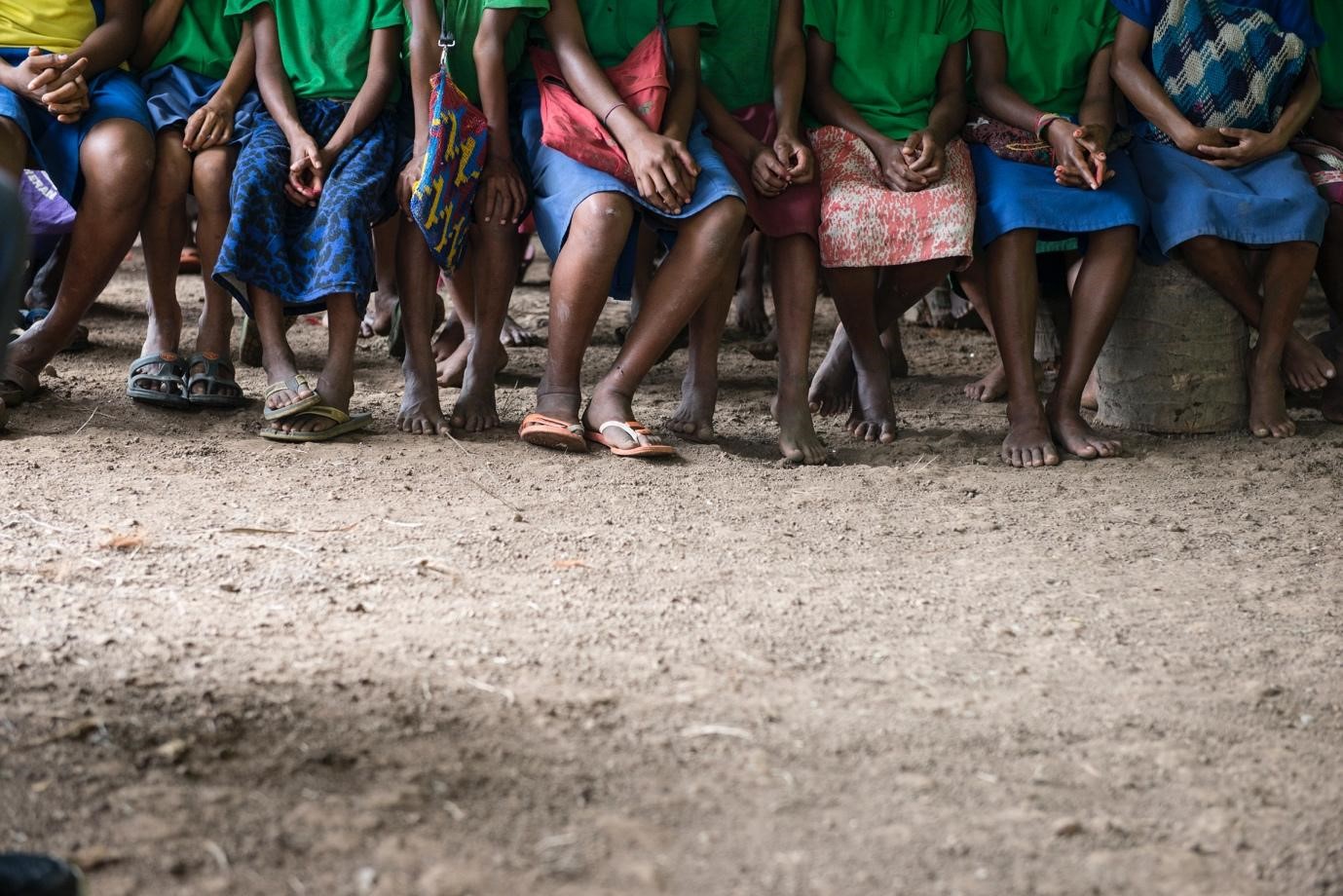
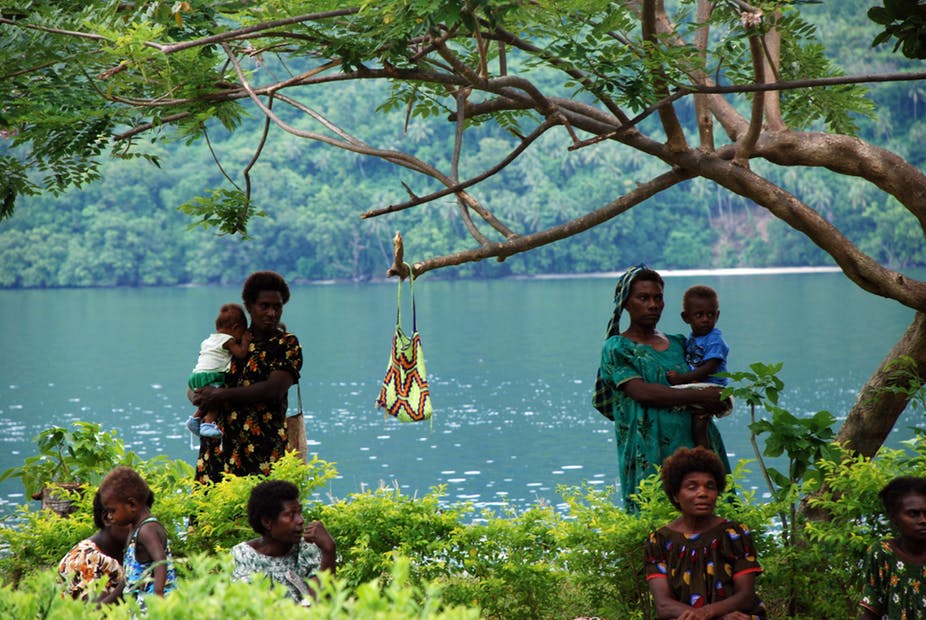
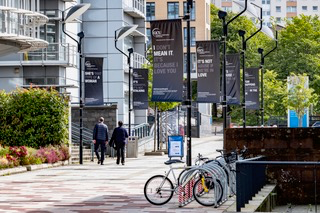
Photo: UN Women/Patrick Reoka licensed under CC BY-NC-ND 2.0

Welcome to our annual blogathon to mark the global  16 Days of Activism Against Gender-Based Violence Campaign. We are now in our fourth year of bringing together voices from civil society, academia, art, activism, and government around the world as our contribution to this ongoing struggle. The blogathon marks a continuing collaboration between GenderEd at the University of Edinburgh, the Australian Human Rights Institute at UNSW Sydney and Ambedkar University, Delhi

Gender-based violence – including domestic violence – is rooted in gender inequality, the abuse of power and harmful norms and cultural practices. One in three women worldwide experience physical or sexual violence.

We know that during times of crisis and instability, the threat of GBV increases. In 2020 the COVID-19 pandemic has had wide ranging consequences globally and has exacerbated economic and social inequalities. The pandemic and subsequent lockdowns have also thrown into sharp relief the longstanding hidden pandemic of gender based violence.  And it has underscored the grim feminist insight that ‘home’ can be a dangerous, sometimes deadly, place for women and girls – and for people with marginalised gendered identities.  As the UN Secretary General has noted:

“Accompanying the crisis has been a spike in domestic violence reporting, at exactly the time that services, including rule of law, health and shelters, are being diverted to address the pandemic.”

Gender-based violence – including domestic violence – continues to be an urgent and intractable issue that blights the lives of women and girls and diminishes their rights. Along with the writers whose work you will read over the coming days, and the more than 6,000 organisations who run 16 Days campaigns across 187 countries every year, we are united in our commitment to women’s equality and share a desire to see a world free from sexual and gender-based violence.

From Monday 25 November (the International Day for the Elimination of Violence against Women) to 10 December (Human Rights Day), we will be posting blogs that explore pressing issues in gender-based violence. 

Through their blogs, we travel from Scotland to South Korea; from Australia to South Africa via India and beyond. We see how gender-based violence exists in all spheres – from past to emerging and ongoing conflicts, historic injustices, in houses and on university campuses, in villages and cities. And increasingly, overwhelmingly, in virtual spaces. 

Our remarkable contributors look at digital violence and resistance; they interrogate the multiple meanings of home and the role of art and design based practices to rethink gendered space.  We report on ten years of ‘counting dead women’ in the UK one of the first femicide censuses in the world. And we learn about the power of art  (visual, performance, music and dance) to resist, expose and survive gender-based violence; to provoke a reckoning and to seek justice and change

As well as artists and performers, this year we have amplified student voices and we are delighted that our contributors in 2020 include current and recent students of AUD Women and Gender Studies, Social Design and Sociology, Edinburgh College of Art and SOAS,UK .

We will be posting updates on Twitter from @UoE_genderED and @HumanRightsUNSW and look forward to sharing these stories with you over the next 16 days. We hope that you will share them further.  

Opening our 2020 blogathon is Jo Clifford  – playwright, trans performer and activist – and creator of The Gospel According to Jesus, Queen of Heaven  an extraordinary piece of work which has been transforming lives – and provoking hate for ten years. She writes about the experiences faced by the Brazilian production in a country which is the most dangerous in the world for trans people.

Signed, Co-curators of the 16 Days blogathon

  • Fiona Mackay, Director genderED, University of Edinburgh
  • Louise Chappell, Director Australian Human Rights Institute, University of New South Wales
  • Rukmini Sen, Director Center for Publishing, Ambedkar University Delhi
  • Aerin Lai, student editor, University of Edinburgh
  • Jessica Shao, student editor, University of New South Wales
Closing Reflections: 16 days of blogs for 16 Days of Activism 2019

We’ve reached the end of #16daysblogathon2019! It’s December 10th, Human Rights Day and the final day of the global 16 Days of Activism 2019.

Fiona Mackay, Louise Chappell, Rukmini Sen, Caitlin Hamilton and Natasha Dyer (Co-curators)

We’ve reached the end of #16daysblogathon2019! It’s December 10th, Human Rights Day and the final day of the global 16 Days of Activism 2019 , the annual campaign that highlights the scale of gender-based violence (GBV) around the world and what is being done to stop it.

To honour this, we’ve run our third annual 16 days blogathon, a series of pieces posted every day over sixteen days from activists, academics and campaigners writing from Scotland to New South Wales, India to Northern Ireland.  The stories and statistics we’ve read have been eye-opening, worrying, urgent and hopeful for those of us working to raise awareness, and put an end to gender-based violence around the world, once and for all.

The 16 Days Blogathon is a collaboration between gender ED at the University of Edinburgh, the Australian Human Rights Institute at the University of New South Wales, and Ambedkar University in Delhi.

what have we learnt this year?

Day Sixteen |When the law against violence becomes violent

A critical question for feminists to ask when women turn to the law is whether a legal victory is always a triumph of the feminist worldview. Violence against women is ubiquitous in patriarchy.

Rachana Johri, Bindu K.C. and Krishna Menon

Resisting Violence

A critical question for feminists to ask when women turn to the law is whether a legal victory is always a triumph of the feminist worldview. Violence against women is ubiquitous in patriarchy. It pervades virtually all spheres of lives, happening most often in relational spaces. Without questioning the necessity of the law, it seems that the work of feminism must include a detailed analysis of the many moments in which women experience violence such as sexual harassment at the workplace and at educational institutions. 

Every violent act – whether it is a comment on the looks of a classmate, persistent messages from one student to another, or rape – constitute violence. Must all these be treated within a legal framework? And is ‘punishment’ the only imagination of justice? Perhaps more pertinently, does ‘punishment’ belong in a feminist approach to justice?

Continue reading “Day Sixteen |When the law against violence becomes violent”

Day Fifteen | Harnessing Community Power to Prevent Gender Based Violence: The #erasethegrey Campaign

In recent years, universities and colleges across the world have begun to take steps to address the widespread problem of gender-based violence (GBV).

Lesley McMillan

In recent years, universities and colleges across the world have begun to take steps to address the widespread problem of gender-based violence (GBV). There has been considerable attention paid to universities’ historical inaction on these issues, or where responses have been inadequate at best, and deeply harmful at worst. Research has highlighted ‘lad culture’ on campus and evidenced the high rates at which women students experience GBV. The NUS revealed 1 in 7 women students in the UK had experienced serious physical or sexual assault during their time as a student. The study also found that 12% had been subjected to stalking, and over two thirds had experienced some kind of verbal or non-verbal harassment in or around their institution, including groping, flashing and unwanted sexual comments. 

Many students may have experienced GBV before coming to university. One in three (35%) women worldwide has experienced either physical and/or sexual intimate partner violence or non-partner sexual violence in their lifetime. GBV takes many forms, including sexual harassment and intimidation; rape and sexual assault; domestic abuse; coercive and controlling behaviour; child abuse and child sexual exploitation; trafficking; forced marriage; female genital mutilation; and so called ‘honour’ crimes. These experiences, before or during a university career, may impact on someone’s ability to be fully part of the university community and can have implications for their learning experience. Given what we know about prevalence, those employed in universities and those visiting the university campus are also likely to be affected. 

Continue reading “Day Fifteen | Harnessing Community Power to Prevent Gender Based Violence: The #erasethegrey Campaign”

Day Fifteen |Understanding dowry and dowry abuse in Australia

Manjula O’Connor, Jan Breckenridge, Sara Singh and Mailin Suchting

dowry abuse
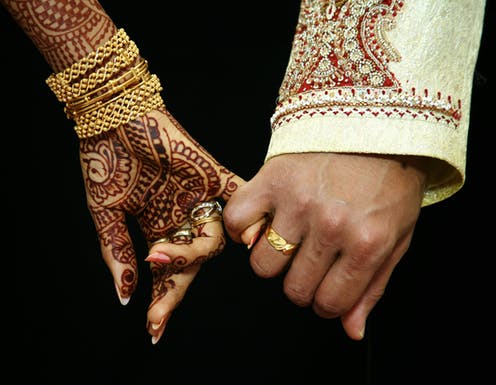
Reproduced from Shutterstock via The Conversation

The practice of dowry usually involves the giving of money, property, goods or other gifts by one family to another before, during or any time after marriage. It is a universal practice. For example, Bombay Island – now called Mumbai – was a former Portuguese outpost which was gifted to England as dowry in the marriage of Catherine of Braganza to Charles II (and was later leased to the East India Company in 1668). 

In its modern day avatar, dowry as a practice has different customary characteristics across different communities. Dowry exchange in South Asian communities is characterised by the woman’s family providing goods (including but not limited to money, jewellery, furniture and appliances) to the man and his family. In North African and Middle Eastern communities, dowry is characterised by the man’s family providing goods (predominantly in the form of money or cattle) to the female and her family.

Dowry is an ancient practice most frequently associated with India, but in reality, it is a cultural practice globally. This blog mostly addresses dowry in the South Asian context. Dowry in ancient times originated as a form of ante mortem inheritance, meant only for the bride. In modern times dowry gifts are expected by the family of the receiver as well and has become a practice that is a product of patriarchy reinforcing gender inequality. Women activists have campaigned against dowry practices in India since 1961, recognising the toxic impact of patriarchy combined with greed, and growing evidence of serious violence, murders and suicides associated with dowry in India. 

The Australasian Centre of Human Rights and Health (ACHRH) has refined the definition of dowry as ‘substantial gifts’ in the context of a marriage, where the value of gifts is out of proportion to the income of either family and causes financial distress to the giver.

what about dowry abuse?