Day Sixteen |When the law against violence becomes violent

A critical question for feminists to ask when women turn to the law is whether a legal victory is always a triumph of the feminist worldview. Violence against women is ubiquitous in patriarchy.

Rachana Johri, Bindu K.C. and Krishna Menon

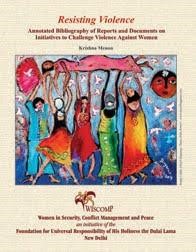
Resisting Violence

A critical question for feminists to ask when women turn to the law is whether a legal victory is always a triumph of the feminist worldview. Violence against women is ubiquitous in patriarchy. It pervades virtually all spheres of lives, happening most often in relational spaces. Without questioning the necessity of the law, it seems that the work of feminism must include a detailed analysis of the many moments in which women experience violence such as sexual harassment at the workplace and at educational institutions. 

Every violent act – whether it is a comment on the looks of a classmate, persistent messages from one student to another, or rape – constitute violence. Must all these be treated within a legal framework? And is ‘punishment’ the only imagination of justice? Perhaps more pertinently, does ‘punishment’ belong in a feminist approach to justice?

Continue reading “Day Sixteen |When the law against violence becomes violent”

Day Fifteen | Harnessing Community Power to Prevent Gender Based Violence: The #erasethegrey Campaign

In recent years, universities and colleges across the world have begun to take steps to address the widespread problem of gender-based violence (GBV).

Lesley McMillan

In recent years, universities and colleges across the world have begun to take steps to address the widespread problem of gender-based violence (GBV). There has been considerable attention paid to universities’ historical inaction on these issues, or where responses have been inadequate at best, and deeply harmful at worst. Research has highlighted ‘lad culture’ on campus and evidenced the high rates at which women students experience GBV. The NUS revealed 1 in 7 women students in the UK had experienced serious physical or sexual assault during their time as a student. The study also found that 12% had been subjected to stalking, and over two thirds had experienced some kind of verbal or non-verbal harassment in or around their institution, including groping, flashing and unwanted sexual comments. 

Many students may have experienced GBV before coming to university. One in three (35%) women worldwide has experienced either physical and/or sexual intimate partner violence or non-partner sexual violence in their lifetime. GBV takes many forms, including sexual harassment and intimidation; rape and sexual assault; domestic abuse; coercive and controlling behaviour; child abuse and child sexual exploitation; trafficking; forced marriage; female genital mutilation; and so called ‘honour’ crimes. These experiences, before or during a university career, may impact on someone’s ability to be fully part of the university community and can have implications for their learning experience. Given what we know about prevalence, those employed in universities and those visiting the university campus are also likely to be affected. 

Continue reading “Day Fifteen | Harnessing Community Power to Prevent Gender Based Violence: The #erasethegrey Campaign”

Day Fifteen |Understanding dowry and dowry abuse in Australia

Manjula O’Connor, Jan Breckenridge, Sara Singh and Mailin Suchting

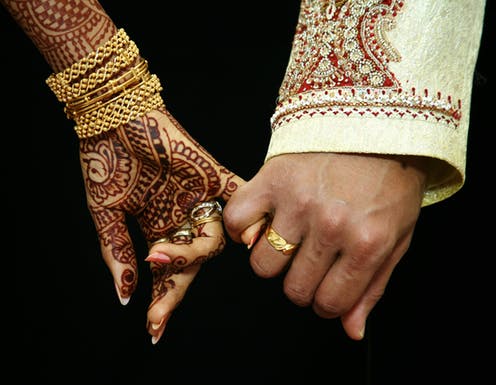
dowry abuse
Reproduced from Shutterstock via The Conversation

The practice of dowry usually involves the giving of money, property, goods or other gifts by one family to another before, during or any time after marriage. It is a universal practice. For example, Bombay Island – now called Mumbai – was a former Portuguese outpost which was gifted to England as dowry in the marriage of Catherine of Braganza to Charles II (and was later leased to the East India Company in 1668). 

In its modern day avatar, dowry as a practice has different customary characteristics across different communities. Dowry exchange in South Asian communities is characterised by the woman’s family providing goods (including but not limited to money, jewellery, furniture and appliances) to the man and his family. In North African and Middle Eastern communities, dowry is characterised by the man’s family providing goods (predominantly in the form of money or cattle) to the female and her family.

Dowry is an ancient practice most frequently associated with India, but in reality, it is a cultural practice globally. This blog mostly addresses dowry in the South Asian context. Dowry in ancient times originated as a form of ante mortem inheritance, meant only for the bride. In modern times dowry gifts are expected by the family of the receiver as well and has become a practice that is a product of patriarchy reinforcing gender inequality. Women activists have campaigned against dowry practices in India since 1961, recognising the toxic impact of patriarchy combined with greed, and growing evidence of serious violence, murders and suicides associated with dowry in India. 

The Australasian Centre of Human Rights and Health (ACHRH) has refined the definition of dowry as ‘substantial gifts’ in the context of a marriage, where the value of gifts is out of proportion to the income of either family and causes financial distress to the giver.

what about dowry abuse?

Day Fourteen |Gender-based violence: a glimpse of feminist dilemmas in the academy

Cat Wayland, Kamya Choudhary and Radhika Govinda

Feminist cartoon day 14

Artwork by Samia Singh and used with permission and produced as part of the Teaching Feminisms, Transforming Lives Project, a collaboration between Ambedkar University and the University of Edinburgh

The above image is a preview of a (web)comic focused on feminist struggles in the academy, that is currently under development. The (web)comic features 24 pages of beautiful original artwork by illustrators Samia Singh based in Punjab, India, and Shazleen Khan, in London, UK. It is based on roundtable conversations and panel discussions that took place at Ambedkar University Delhi, India in December 2017 and at the University of Edinburgh, Scotland in February 2018 as part of the ongoing Teaching Feminisms, Transforming Lives Project

Continue reading “Day Fourteen |Gender-based violence: a glimpse of feminist dilemmas in the academy”

Day Fourteen | Textile Testimonies and Gender-Based Violence

Lydia Cole

Sexual and gender-based violence (SGBV) have become topics of global focus. From #Metoo to landmark judgements in international criminal justice processes, visibility – amid promising calls for action toward justice – is often contingent on the testimony of survivors. In our haste to hear these stories, the long-term impact of demands for testimony is overlooked.

In this post, I propose an alternative site in which we might listen to and hear testimony. Specifically, I take a look at arpilleras – appliquéd wall-hangings – from Peru, featured in the Conflict Textiles collection. The term ‘arpillera’ literally means burlap or hessian, the material on which the textile is made. However, the term has become synonymous with this form of appliquéd wall-hanging.


The Conflict Textiles Collection: From Chile to Peru 

The Conflict Textiles collection is a physical and online archive of materials hosted by CAIN (Conflict Archive on the Internet) at Ulster University. Curated by Roberta Bacic and Breege Doherty, the mainstay of the collection is the Chilean arpilleras which were crafted to denounce violence under the Pinochet dictatorship. Made with the support of the Vicariate of Solidarity, arpilleras depicted the killing, disappearance, and poverty experienced under the regime, as well as acts of protest and everyday strategies of survival.

As with the collection itself, the arpillera travelled to other global contexts. Inspired by the Chilean arpilleristas (those who make arpilleras), women living through the Peruvian civil war (1980 to 2000) began to stitch the violence in their own country.

Curator Roberta Bacic uses the term “textile photograph” to describe the arpilleras; a reference to the way that they bear witness. The Peruvian arpilleras, like the Chilean pieces, testify to conflict experiences, depicting scenes of massacre, displacement and poverty, and commenting on issues related to gender-based violence.

quilt cole 1
‘Debo ser humilde y sumisa? / Should I be submissive and subservient?’, Peruvian arpillera, Anonymous, 1986, Photo: Martin Melaugh, © Conflict Textiles.

‘Debo ser humilde y sumisa?’ (Should I be submissive and subservient?) was produced in 1986 in Lima. The textile shows a gathering in a room which has two posters emblazoned on the wall. One states: “Women, value yourself!”, while the other rhetorically asks, “Should I be humble and submissive?”.

This is an emotive piece, with the figures stitched with a range of expressions: some cast their eyes and heads down, though others take a different stance: the figure in light blue appears inquisitive, while three women sat at the bottom of the textile hold a book, perhaps engaging with the themes in the posters. Above all, the arpillera depicts: ‘women who have already made a space to deal with their issues’.

Providing answer to the poster’s question, the arpillera emphatically portrays a space of agency, with suggestion of their ongoing discussion of issues related to gender, violence, and patriarchy.

quilt cole 2
Violar es un Crimen / Rape is a Crime’, Peruvian arpillera, MH, Mujeres Creativas workshop, 2008, Photo: Martin Melaugh, © Conflict Textiles.

‘Violar es un Crimen’ (Rape is a Crime) is a 2008 replica, with the original a design from the Mujeres Creativas workshops in 1985. The textile shows a protest which took place outside military command in Lima. On the right-hand side, a woman has entered the military command, angrily confronting the armed military police. All the figures wear dark colours and hold flowers, representing the cantata (the national flower of Peru). This flower is primarily found in the Andean mountains and its inclusion symbolises a connection to Ayacucho, the community for whom they protest. 

Speaking about the arpillera, Maria (a participant of the action) states:

In October 1985 many people were killed in Ayacucho and women were raped, but nobody protested. Two groups of us decided to demonstrate in front of Comando Conjunto… since the people… living in Ayacucho felt too vulnerable to do so… [Later we] decided to make an arpillera of our action to show that we do not condone such brutality.

‘Rape is a Crime’ denounces sexual violence and displacement in Ayacucho through its depiction of resistance and solidarity with those unable to make their voices heard.
quilt cole 3
‘Violencia Doméstica / Domestic Violence’, Peruvian arpillera, MH, Mujeres Creativas Workshop, 2008, Photo: Colin Peck, © Conflict Textiles.

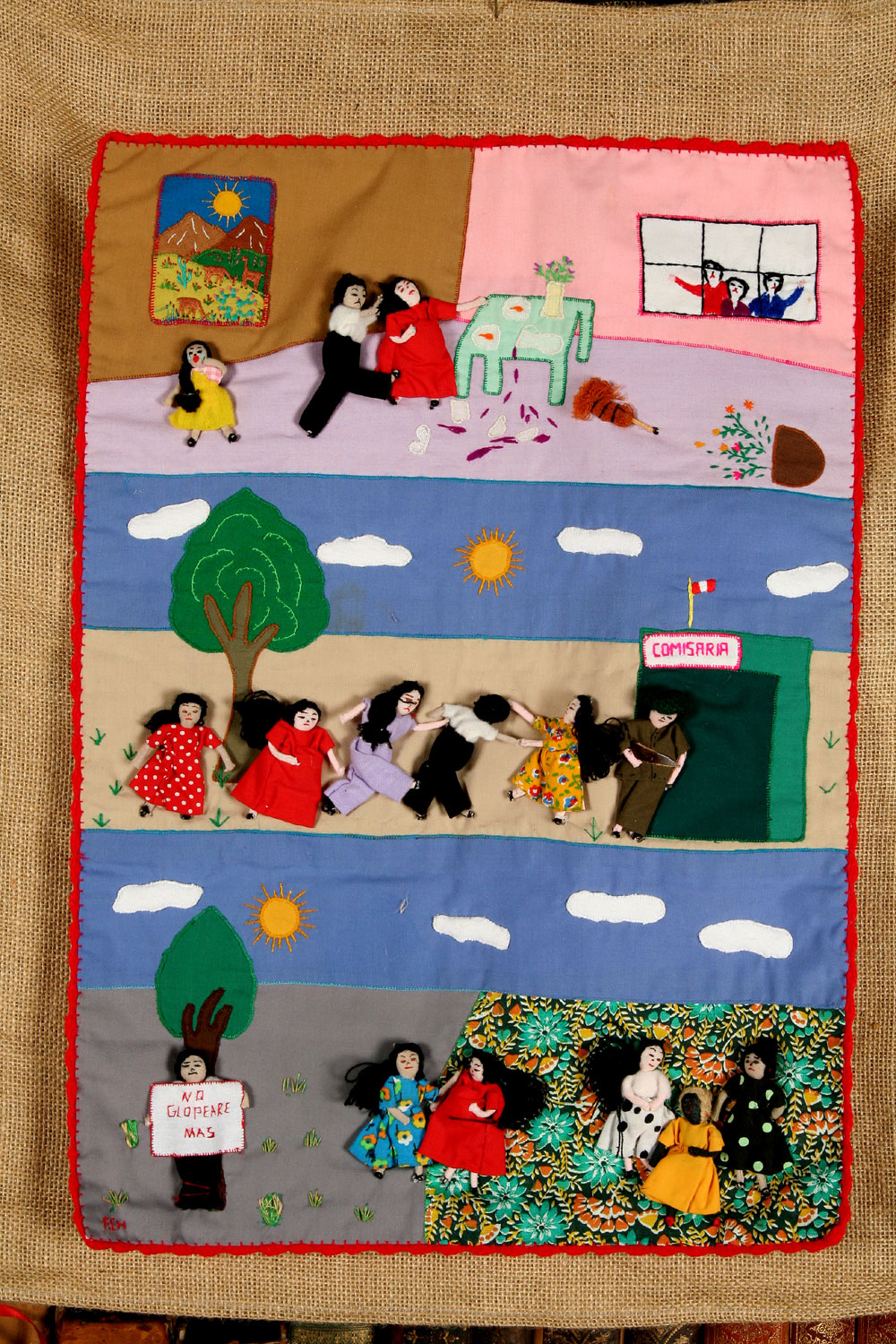
‘Violencia Doméstica’ (Domestic Violence) is another arpillera produced in the Mujeres Creativas workshops and responds to the contemporary context. The piece is divided into three sections. In the first, we are shown a scene of domestic violence within the home. The second shows the neighbours seeking justice at the local police station. Later, with the police unwilling to take further action, members of the community decide to enact their own justice. In the final panel, the man is tied to a tree and holds a sign which reads “I will not beat again”.  

Responding to the prevalence of domestic violence in Peru, the arpillera again speaks to a wider discussion among the group on issues of gender-based violence, and signals toward community action toward justice.

Conflict Textiles are therefore a promising site to learn (and unlearn) our ways of knowing SGBV. Untangling narratives of victimhood, together the arpilleras stitch a continuum of gender-based violence. As textile testimonies to a range of gender-based violence, arpilleras bring women’s voices, agency, solidarity and resistance to the fore. 


Dr Lydia Cole (@LydiaCCole) is a Postdoctoral Research Associate at Durham University on ‘The Art of Peace: Interrogating community devised arts-based peacebuilding’. Completing her doctoral research at Aberystwyth University in 2018, her research engages at the intersections of feminist international relations theory, critical peace and conflict studies, and visual, creative and participatory research methods. Lydia’s research on gendered violence and conflict textiles has been published in journals including International Feminist Journal of Politics and Critical Military Studies. She has also co-curated exhibitions including Stitched Voices / Lleisiau wedi eu Pwytho and Threads, War and Conflict.