DAY FIFTEEN: Social Action in the 80s –has anything changed?

The late 1970s and 1980s marked a time where it was no longer possible to ignore domestic violence, rape and the sexual assault of children. But is our world a safer place?

Jan Breckenridge and Mailin Suchting

Featured image: “Commemoration of International Women’s Day 2018 at United Nations Headquarters” by UN Women Gallery is licensed under CC BY-NC-ND 2.0

The late 1970s and 1980s marked a time where it was no longer possible to ignore domestic violence, rape and the sexual assault of children. The second wave of the women’s movement emerged alongside other progressive social movements including anti-war/moratorium, gay rights and environmental and anti-nuclear collective actions. 1980’s feminism felt hopeful, and we believed our actions could change our social, political and cultural worlds.

While there was no one feminism or singular political focus, there was a shared commitment to challenge domestic and sexual violence by those of us who saw ourselves as part of the ‘women’s movement’. Analysis of power and gender led to a consistency and diversity of views. In Australia, there were challenges to white middle-class feminists from Aboriginal women, women from migrant and refugee backgrounds and working-class women about their marginalisation on the basis of race, class, culture and ability.

Despite these differences there was still a sense of a woman’s community or communities that contributed to a belief that all things were possible and provided a home for a broad church of political perspectives. We remember women’s cabarets the Freda Stares tapdancing group, the Women’s Choir and a multitude of community festivals and theatre events.
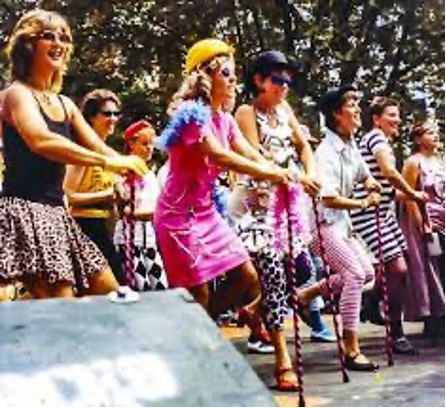
Freda Stares tapdancing group – photo from personal album of Jan Breckenridge

There were actions such as International Women’s Day marches, Reclaim the Night, Women against Rape in War and Women for Survival – Close Pine Gap.

For the first time, women loudly and with passion broke their silence about their experiences about a range of important issues, including gendered violence and abuse. The demand for equal rights was central to feminism and increasingly activists, many of whom spoke from their own lived experience, argued that men’s treatment of women was a central weapon of their subjugation. Again, opinions were divided with liberal feminists arguing that the state was central to any response and other feminist groups arguing that the state was complicit in maintaining structures, attitudes and beliefs that supported the perpetration of gendered violence and did little to address the root concerns.

Collective actions of any kind are never linear or sequential but there are certain issues which benefit from other political actions. Differences were unpacked in working class and middle-class women’s groups.

The focus on child sexual assault as we called it then, followed on from successful collective actions establishing domestic violence and rape as prevalent and serious concerns requiring a response to directly address women’s lived experiences. Women shared their experiences in consciousness raising groups and child sexual assault was raised as an issue that many women had also experienced but felt they could never disclose. When they had tried to tell many of them were not believed or pathologized.

When women started talking, they broke a silence that only gained in momentum. In 1980, The Australian Women’s Weekly, a normally conservative magazine known to reinforce traditional gender roles and stereotypes of women, invited its readership to write in and tell of any unwanted childhood sexual experiences. It was a shock when they received 30,000 responses from their female readers. Feminists in refuges, and rape crisis centres had also been capturing the childhood experiences of women in surveys and groups. This evidence was used to demand changes to legislation, service delivery and even ways of understanding CSA – aligning the impacts with the effects of trauma rather than psychiatric disorders as had previously been the case.

The results of this work were tangible with a proliferation of speakouts, women’s health centres, government policy development, community based incest services, sexual assault services within health systems and as non-government organisations, taskforces, state plans and survivor groups. All of this is documented in one of the first edited books, Crimes of Violence focussed on rape and child sexual assault in Australia.

There is no doubt that these changes established child and adult sexual assault as a serious and prevalent issue. But is our world a safer place?

Between 2013 – 2017 the Commonwealth Royal Commission into Institutional Responses to Child Sexual Abuse provided the opportunity for over 8000 survivors to tell of their experiences of child sexual abuse in institutions. Their Final Report made 409 recommendations to better protect children from institutional child sexual abuse and progress is being made to implement these. These recommendations are no doubt, important.

But survivors of child sexual abuse perpetrated in families have not experienced the same attention. Their stories remain untold publicly – despite the family being recognised as a central institution in all cultures. We now have a renewed set of social movements in the digital age including #MeToo and the public disclosures from individual advocates such as Brittany Higgins and Grace Tame, both of whom at some personal expense, have spoken publicly about their unwanted sexual experiences. Some others have produced memoirs to raise the profile of the issue.

Are we at another crossroads? To date the government’s response to these public disclosures has not inspired hope and we are still circling around silences within the institution of the family.

How many more experiences do we need to hear before silence is a thing of the past? When will speaking out put perpetrators on notice and achieve real safety for all?

Authors’ bios:

Jan Breckenridge is a Professor and Head of School of Social Sciences and the Co-Convenor of the Gendered Violence Research Network, UNSW Sydney. She has undertaken extensive work in the areas of gendered violence, with her research oriented towards maximum impact in innovative social policy development, best practice service provision and outcome measurement of effectiveness.

Mailin Suchting is the Manager of the Gendered Violence Research Network, UNSW Sydney. She has extensive practice, management and research experience in the fields of domestic and family violence, sexual assault and child protection.
DAY FOURTEEN: In search for a better tomorrow – Re-imagining home

Anubha Sinha explores the devastating impacts of domestic violence in Dokal, an Indian village and how the formation of a womens collective and action research has brought about change.

Anubha Sinha

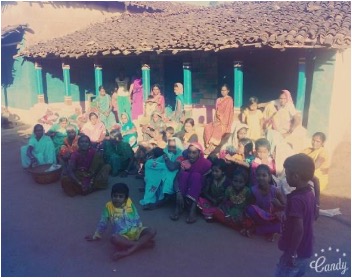
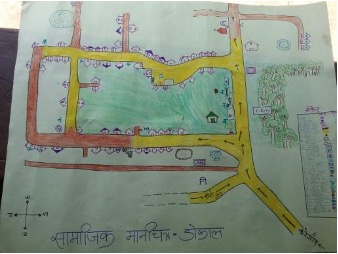
What could be a better place than one’s home? The space of love, safety and care where one gets nurtured and learns social norms. This privilege of being loved in a household is not for everyone. Over the past three years, I have learned how lives can be shaped by experiences and fears of violence coming from the intimacies one shares within the home. My perspective is based on immersive action research that I did in my M.Phil in a village called Dokal in the state of Chhattisgarh. The action research was based on the stances of domestic violence that was recurring in the village and women were suffering it quietly. The populace are the indigenous tribes of this core forest zone of central India.

The populace are the indigenous tribes of this of physical harassment, molestation, marital rape, sexual abuse, mental harassment, emotional abuse, financial crisis, humiliation, self doubt- everything gets formed with the existence of violence or in anticipation of it.

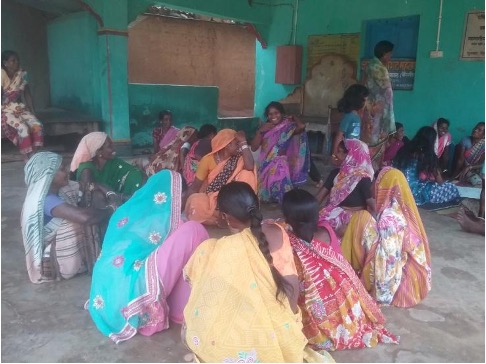
Looking at the continuous suffering of women in the village with continuous effort; together we (me and women) formed a collective of forty women called ‘Sangwaari’ (means companion or friend in Chhattisgarhi; the local language of Chhattisgarh). The collective was a place for women to share their suffering and understand the situation of their houses and together it was an effort to find a way to deal with it as it was an everyday matter. Here are few instances that led us to think about the situation of form the collective:

Incident 1

A seven member house; where two families live together. One woman who is infertile and can never carry a child lives with her husband, who steals everything she earns for consuming Mahua, an alcoholic drink made from fermented flowers of the Mahua tree (Madhuca longifolia). The other is a dominating woman with a political identity in the village. She has a husband and two children. Now, this empowered strong woman has all good faith in making others empowered too; but only outside her house. Instead of a caring and empowering relation with the woman who cannot bear a child, there is one based on disgust and humiliation. I am referring to the infertile one here as Badi Maa. She is the one with a caring heart as it craves for a child but unfortunately the reality is complicated. She bears the threat of getting killed, and is humiliated for being a useless woman. She gets abused since her husband is alcoholic and of no use. In spite of everything, she works hard to earn a bit of respect silently and lets people abuse her thinking this is fate.

Incident 2

Since her birth, Dimple (now 7 years old) has been taken as a bad omen as she is the girl child of Dulaari and Vikend. Vikend (an alcoholic) took every opportunity to beat Dulaari and sexually assault her in order to have a boy child. The marks on Dulaari’s body signifies the terror that she has against her husband and in-laws as they all held her responsible for having a girl child and abused her for not being a good wife. Dulaari is open hearted, loves to dance, have small talks, and is chirpy, but all of these make her an unconventional daughter-in-law. She does not talk to people freely now.

Incident 3

How easy it is to continuously get beaten up and fulfil the expectations of giving love at the same time? Everyday Raajbai opens her door with a smile and to learn something new, forgetting the slap and abuse of last night, but for how long? She is a worker of the panchayat (village council). She has pushed herself to come out of the cocoon just to give her girls a better life. However, it is strenuous for her to rise everyday and make a good day till the end. She is fighting for a better life with four girl children by her side and to make a statement that even if one beats her every day, she won’t stop as it is not going to give her what she deserves or desires.

There are many such stories in the villages that are being made every day. Every story here draws a picture of home coloured with the heaviness of the fear and threats that one acquires from the most intimate relations of people around. It has created self-doubt in many women.

Looking at all the instances, a collective borne out of that pain “Sangwaari” was formed to help each other in rebuilding the lives from scratch with the families they love. The collective was the space where women with such traumatic journeys could come out and get a space to share their lives and dilemmas, sort of a therapeutic place. It was the path of collective therapy that we intended to build.

The normalisation of alcohol consumption and violence after that was such that women or even men (who do not used to drink) never took a gender based violence as an issue; though they used to complain about the misbehaviours of such drunkards. Such paradoxical context several times interrupted the mode of interaction with the collective. Such normalisation creates the culture of violence.

To understand the actual scenario of the ongoing violence and its effect on domesticity, we started having focussed group discussions not only with women but with men as well. Due to severe cases of physical violence and abuse, women also took the critical step of entering the homes that were brewing mahua and broke the distillation set up of those homes as well (where mahua is brewed). Later, the discussion deepened and a conscious thought occurred regarding the changing the course of conversations in the house saying, an eye for an eye will make the world blind and we cannot respond violence with violence itself. Dokal has a group of dancing troops which is called ‘Nacha party’ consisting of men who perform folk dance with folk stories.

We took their help and asked them to be our partners in conveying the message that if change has to be made, it has to be from home.

Small steps are being taken by these strong, collective women every day, just to show her family that she can survive and, by doing this, she is discussing the wrongs of the world and her efforts to make it more liveable.

Author’s Bio

Anubha Sinha, Alumni Dr B R Ambedkar University Delhi, MPhil Development Practice (2015-2017). Her thesis is titled ‘Rethinking Violence, Understanding Domesticity: A Journey with ‘Sangwari’ in Dokal, Dhamtari, Chhattisgarh’ Currently she is a consultant, PRADAN working with women’s collectives. She can be contacted at anubha.rimmy@gmail.com

DAY FOURTEEN: Duties of care: Navigating and narrating traumatic histories

Historians often encounter traumatic and emotionally demanding stories in their research. Claire Aubin and Emily Rose Hay looks at the emotional labour that underpins such research through reflecting on the ’emotionally demanding histories group’.

Claire E. Aubin and Emily Rose Hay

Featured image: Logo of ‘Emotionally Demanding Histories Group’

We are confronted by challenges when doing any type of research. However, there are difficult decisions to make and experiences to endure when studying certain sensitive topics. We started the Emotionally Demanding Histories Group (EDHG) at the University of Edinburgh in early 2019 to provide a much-needed support network for researchers studying particularly difficult, upsetting or traumatic histories. Our own work prompted us to form this network. Emily Rose researches British child/youth homicide in the late twentieth century and Claire examines Holocaust perpetrators in the post-war US immigration process. Both topics present us with ethical and methodological dilemmas, while at the same time taking a toll on our emotional health. 

Since the inception of EDHG, historical gender-based violence has been raised repeatedly as a subject fraught with difficulties. A key concern regards victims, and how to represent their lives and the violence enacted against them. 

Recent scholarly works have placed victims of infamous gender-based violence at the centre in a deliberate move to shed sensationalist, pejorative and marginalising representations, particularly of sex workers.

Louise Wattis’ 2018 work contextualises the lives of the victims of the Yorkshire Ripper by examining their local communities. Similarly, Hallie Rubenhold’s The Five displaces the mythologies cemented around the Jack the Ripper case with a thoroughly victim-centric history.[1] 

However, creating these kinds of histories is not straightforward. Participants in EDHG often share that they don’t know how to approach writing about their victims to best preserve their dignity. This is especially the case with histories that have not previously been written about. Do we anonymise and/or provide as much contextual information about their lives as possible? How do we know what the specific victims in our research would have wanted? We have a responsibility to our subjects, but it is not always clear how to do right by them.

It bears mentioning that we are both contemporary historians working primarily on topics related to the latter half of the twentieth century. Unfortunately, gender-based violence spans historical eras and affects researchers of all time periods.

The issue of temporal ‘distance’ from our subjects arises in several ways, most frequently in terms of practical concerns. Researchers cannot determine which historical subjects would have preferred (or abhorred) anonymity when those subjects are no longer alive to speak for themselves. Conversely, secondary victims of violence or descendants of victims may still be alive to object to a researcher’s approach to narrating the experiences of their loved ones or ancestors.

While temporal distance is not necessarily an impediment to historical understanding, it plays a particularly outsized role in our navigation of ethical anxieties as we shape the afterlives of our source material. The perceived personal safety that temporal distance offers also does not mitigate the real impacts that these sources may have on us as researchers.

Since forming EDHG, the temporary and long-lasting effects of traumatic historical research are finally being discussed. Issues such as vicarious trauma (also called secondary or indirect trauma), wherein symptoms of trauma occur in an individual who interacts with traumatic information without experiencing it directly, have historically been viewed as the province of social workers and mental health professionals. However, discussions within EDHG sessions regularly include topics such as nightmares, anxiety, depression, feelings of isolation and loneliness, irritability, difficulties in interpersonal relationships, and hypervigilance — all in direct relation to traumatic research topics, and all common trauma symptoms.

These feelings are only compounded when secondary trauma occurs at an intersection with relevant personal experiences. A historian of domestic violence who has themself survived domestic violence is at once witnessing and articulating the pain of others, while simultaneously risking the perpetuation or re-embodiment of their own trauma.

The question becomes, then, how can we engage with traumatic histories in a way that does not cause further harm to researchers, but which does justice to the stories we are telling? Emotional engagement is often inescapable, particularly when the line between the ‘historical’ and the contemporary is smudged so thoroughly as to nearly cease existing. Cases such as those of Sarah Everard, Bibaa Henry and Nicole Smallman remind us as historians that the violence we research and discuss also remains a threat outwith the archives. The first step, it seems, is to acknowledge that these experiences are real; the barrier between ourselves and our research is more permeable than we have previously assumed. Only once this is both acknowledged and accepted can we begin to find practicable answers to the questions raised by our work.

Authors’ Bio

Claire E. Aubin and Emily Rose Hay are the founding co-convenors of the Emotionally Demanding Histories Group, an initiative to explore new approaches to researching traumatic and distressing historical subjects.

Claire E. Aubin is a PhD candidate at the University of Edinburgh’s School of Divinity. Her PhD dissertation, entitled ‘From Treblinka to Trenton: Holocaust Perpetrators as Immigrants to the United States,’ focuses on the comparative individual agency of Holocaust perpetrators throughout their experiences of post-war US immigration. Claire’s academic work frequently explores concepts of perpetration, collaboration, community, and justice, as well as public perceptions of these issues. She is an ECR Member of the Royal Historical Society and her research has appeared on History Hack, WW2TV,  and the AskHistorians podcast. She can be found on Twitter at @CEAubin.

Emily Rose Hay is a PhD scholar situated between the School of History, Classics and Archaeology and the School of Law at the University of Edinburgh.  Her research is interdisciplinary and examines press representations of British child and youth homicide in the late twentieth century.  She is particularly interested in local media and situating historic grief within a community context.  She is an Associate Lecturer in Criminology at the Open University, and you can tweet her @emilyrosehay.


Footnote

[1] Wattis, Louise. Revisiting the Yorkshire Ripper Murders: Histories of Gender, Violence and Victimhood. Basingstoke, Hampshire: Palgrave Macmillan, 2018; Rubenhold, Hallie. The Five: The Untold Lives of the Women Killed by Jack the Ripper. London: Doubleday, 2019.


DAY THIRTEEN: Teaching sexual and gender-based violence: learning environments and pedagogic dilemmas

What is a safe learning environment and how do we create them? Tereza Valny explores the ethical dilemmas and strategies when teaching about sexual and gender based violence in the classroom.

Tereza Valny

Content note: the following post contains references to sexual and gender-based violence

Featured image: “A Classroom” by DaveFayram is licensed under CC BY 2.0

Sexual and gender-based violence as unavoidable topics

The attention given to the systematic use of sexual and gender-based violence (SGBV) against civilians and unarmed combatants during times of war and genocide has increased since the 1990s.[1] What has become clear in the last few decades, beginning with close analyses of the case studies of Rwanda and Bosnia, is that SGBV was and is a primary tool of genocide. Rape and other forms of sexual assault are an intrinsic part of dehumanisation and are clear attempts to interfere with the continuity of life in both physical and psychological ways. SGBV has always been a part of armed conflict and, although it tends to disproportionately affect women and girls, the use of sexual violence is so embedded in acts of mass atrocity that it impacts everyone, including men, boys and individuals with diverse sexual orientations and gender identities.

As a historian who teaches extensively on the topic of genocide, my courses inevitably examine sexual violence. In addition to the aforementioned Rwanda and Bosnia, the case studies I cover include: the disappearance and murder of Indigenous women, girls and 2SLGBTQQIA people in Canada; the use of SGBV in a displacement context in Darfur and with regard to the Rohingya; and the legacies of silence surrounding SGBV after the Armenian genocide, the Holocaust, and the Cambodian genocide.[2] But covering these case studies with sexual violence as an intrinsic component creates a space for anxiety, tension and in some instances, distress. So what can we do as instructors to face these inevitable dilemmas that arise from teaching material which has the potential to traumatise and re-traumatise?

Pedagogic dilemmas

Sexual violence is an inescapable reality and it does affect our students. The overall statistics suggest there is a chance that at least 25% of the women in our classrooms have faced some form of SGBV, with transgender assault rates being even higher.[3] Sexual violence against men and boys has been harder to quantify due to under-reporting, but there are many estimates in place both globally and nationally. Therefore, as teachers in a university context, there is a probability of having a victim of SGBV in the classroom. And I do believe that I am ethically obliged to think about anticipating the needs of students affected by these dynamics.

‘Anticipating needs’ can mean different things, but a solid first step is justification. Is the content essential for a deeper historical understanding of the subject? Given how profoundly embedded SGBV is in the history of genocide and mass atrocity, the answer is straightforward. However, this does not mean that students will be unaffected by the material even after an explanation and a content note is given. This potential effectof learning about SGBV has a range of forms, including re-traumatisation.

Trauma, re-traumatisation, and vicarious trauma  

Many victims of sexual violence experience what is known as post-traumatic stress disorder (PTSD).[4] If we consider that some of our students are affected by past trauma then we should also think about the relationship between the examples of SGBV covered in class and how that might interact with their own experiences. In particular, for a victim of sexual violence, this exposure can lead to re-traumatisation (or re-experiencing, a part of PTSD). More generally, students being exposed to traumatic content can experience vicarious trauma.[5] Not everything can be accounted for, and spontaneity of reaction to SGBV material does happen, but generating an atmosphere where a tense situation can be addressed effectively is part of a strategy that can be helpful in the classroom and mainly helpful to those affected by the content. These strategies are all part of creating a safe learning environment

Creating a safe learning environment

If the content linked to sexual violence is deemed essential (as is the case with the history of genocide), then the following steps can help to facilitate a safer learning environment: content notes addressing the material’s links to SGBV; thinking about how to react to unplanned disclosure in advance; making sure rape culture is not being (even inadvertently) reinforced by the lesson plans and discussions; having a way ‘out’ for students who do not want to participate (which does not spotlight their experience); and being honest about the material covered from the start while making it clear to students why certain topics have to be covered.[6] These steps matter; in the case of victims, negative social reactions can cause re-traumatisation. If a system is in place to manage situations such as this, then some of this potential damage can be mitigated. This can also include a follow-up, in confidence and at the victim’s discretion, which lets them know what their options are once they have disclosed.[7]

These are just some of the steps that can be taken. As instructors who have made a choice to teach about SGBV, these are steps we must take.

Author’s Bio

Tereza Valny has been a teaching fellow in modern history at the University of Edinburgh since 2017. Tereza’s main current focus of research within genocide studies includes representations of trauma in various mediums. She has recently given a series of talks about landscape, violence, memory and trauma, in relation to post-genocidal spaces. Tereza also teaches several undergraduate and postgraduate courses which focus on witnessing, testimony, trauma and reconciliation related to genocidal events. Part of her recent related activities included a co-running a teaching circle in the School of History, Classics and Archaeology (at the University of Edinburgh) about ‘teaching sexual violence’ as well as organising a seminar on representations of toxic masculinity.


Footnotes

[1] I am using a comprehensive definition of sexual and gender-based violence rooted in international law (namely, the Rome Statute of 1998), because the definition covers the ‘widespread and systematic acts of SGBV as an act of genocide, a war crime and a crime against humanity’: Davies, Sara E. and True, Jacqui (2015). ‘Reframing conflict-related sexual and gender-based violence: Bringing gender analysis back in’, Security Dialogue, 46(6), 495-512, p. 495. An additional breakdown of the term SGBV, taking the definition out of the parameters of armed conflict, is provided by the Médecins sans frontières (MSF), but please note that it includes images as well as graphic descriptions of sexual violence.

[2] By ‘legacies of silence’ I am referring to a lack of survivor testimony, documentation and understanding of the role of SGBV within these genocides partly due to non-existent frameworks for survivors and witnesses.

[3] There is a range of statistical information available where you can read up on global rates and estimates, including: the ONS report for England and Wales; data on violence against women and girls from the UN Women’s report; statistics from the National Sexual Violence Resource Center (US-based); the WHO report from 2017; and because I am based in Edinburgh the Scottish government’s latest data compilation for sexual crimes recorded by the police (this does not delineate GBV).

[4] PTSD as a concept has its limits in terms of the centring of the individual in their own healing process, and what this implies (an assumption of resources). However, the term also generates an understanding of what happens to victims of trauma, therefore I have used it in this blog.

[5] There is extensive literature on these concepts, particularly in the field of psychology and social work. I have included a few of these texts: for example: Branson, D. C. (2019). ‘Vicarious trauma, themes in research, and terminology: A review of literature’, Traumatology, 25(1), 2-10; Hernandez-Wolfe, Pilar, et al (2014). ‘Vicarious Resilience, Vicarious Trauma, and Awareness of Equity in Trauma Work’, Journal of Humanistic Psychology, 55(2), 153-172; Ullmann, Sarah E. et al (2007). ‘Psychosocial correlates of PTSD symptom severity in sexual assault survivors’, Journal of Traumatic Stress, 20(5), 821-831; Michalopoulos, Lynn M. & Aparicio, Elizabeth, (2012). ‘Vicarious Trauma in Social Workers: The Role of Trauma History, Social Support, and Years of Experience’, Journal of Aggression, Maltreatment & Trauma, 21(6), 646-664; and Finklestein, Michal, et al (2015). ‘Posttraumatic Stress Disorder and Vicarious Trauma in Mental Health Professionals’, Health & Social Work, 40(2), 25-31. There are many other informative studies and a vast body of literature on this topic, but I have found these articles to present helpful frameworks for thinking about my own lesson planning.

[6] This is not a comprehensive list of strategies and mechanisms (further guidance is outlined here in the Rosey Project, part of Glasgow and Clyde Rape Crisis). Some of the strategies that I have been consulting were created with the idea of public disclosure in mind, including sensitivities to different gender identities as well as students who face a range of social barriers in relation to disclosure. The point of consensus of this varied literature is to acknowledge the disclosure and not to ignore or ‘brush it off’. Simply being aware of these mechanisms means preparedness, and by extension mitigating potential re-traumatisation. A great article that address types of disclosure in an academic setting and makes suggestions for responses is: Branch, Kathryn A. et al (2011). ‘Professors’ Experiences with Student Disclosures of Sexual Assault and Intimate Partner Violence: How “Helping” Students can Inform Teaching Practices’, Feminist Criminology, 61(1), 54-75.

[7] This obviously varies institutionally; and you may have suggestions that go beyond the institutional structures such as non-profits, community and youth organisations, and other support systems.


DAY THIRTEEN: Opening the Pandora’s Box: Dilemmas in a Course on Family Engagement

In this engaging piece, Monimalika Day writes about encountering pedagogical dilemmas and ethical decisions when listening to oral histories of GBV in the classroom.

Monimalika Day

Featured image: ‘Group of Three Girls’ by Amrita Sher-Gill, source: Wikimedia Commons

A course on families in the department of education is usually designed to enable educators to begin to understand the structures, functions and perspectives of families from various backgrounds. Discussion on developing partnerships with families often focuses on issues of trust, respect, reciprocity and responsiveness.

As a faculty in the field of education one attempts to follow the principles of critical pedagogy “read the word” and “read the world” (Shor & Freire, 1987, p.135). In India and many other parts of the world, the majority of the students in education discipline are women. As our students grapple with these concepts of respect and trust, often stories, memories and narratives of gender violence slowly begin to emerge. A range of experiences are shared, with variations in the degree of violence, the relationship with the perpetrator, the nature of oppression, the site of the violence, each a powerful testimony of dehumanization. However, this approach often challenges the instructor to move beyond the well-defined space of a syllabus and explore uncharted waters.

The instructor introduces students to some of the key terms related to engaging with families and encourages them to reflect on their experiences to make sense of the words.

Respect refers to an acknowledgement and acceptance of the boundaries that exist between persons. Boundaries are markers that simultaneously connect and distinguish one from others…When these boundaries are crossed without permission, that person feels disturbed or even violated. When boundaries are acknowledged and crossed with permission, trust and connection are supported

Shor & Freire, 1987, p. 43

As students grapple with these concepts of respect and trust, often narratives of gender violence slowly begin to emerge. A range of experiences are shared, with variations in the degree of violence, the relationship with the perpetrator, the nature of oppression, the site of the violence, each a powerful testimony of dehumanization.

Is family a safe space?

Family is often assumed to be a safe space, a nurturing environment supported by a network of trustworthy relationships and yet it is the site for many of these violent incidents. One disclosure concerned a woman in her early twenties, who had repeatedly been molested by a cousin in the extended family. Her efforts to fight this had met with failure to find someone willing to support her. An uncle who visits the family found opportunities to molest her too in her home. Issues of gender and economic security interact to create a vulnerable situation. Her circumstances are complicated by the fact that her mother is a widow and does not have a source of income. So she encourages her daughter to remain silent for fear of facing social isolation, extreme poverty and perhaps a life worse than what they have. This narrative highlights the long struggle of a woman trying to live with dignity in the family in which she is born.

Other narratives focus on the new relationships that women forge through marriage. With great anticipation, a newlywed woman travels with her husband to a secluded resort in the forests for her honeymoon. Her dreams turn into a terrible nightmare as she is tied up and raped by her husband and his friend for three days. She is shocked, dazed and unable to recall the details of this ordeal, which the judicial system demands of women like her. Upon returning to her husband’s home she manages to run away and get support from an ageing father.

However, seeking justice is a long, uncertain and tiring journey. For eight years she struggled to simply get a divorce. No action could be taken against the husband or his family as he lived abroad and managed to exploit the loopholes in the justice system. This was perhaps the most violent narrative that emerged in class. The narratives are uncomfortable both for the instructor and the students, and pose several teaching dilemmas.

The instructor and the students remained silent for a long period of time, no one moved when this story was shared. One could only hear the uncontrollable sobbing of the narrator, and sniffles of other students as they tried to desperately control their tears. It was as if a dark and heavy cloud had settled in the class, and infused a deep sense of helplessness, frustration and anger. The class was extended by an hour but no one left. As the instructor struggled to find words to end the class, the teaching assistant spontaneously began to sing and was joined by others “Ruk jana nahi too kahin haar kei, kato pei chalke milenge saare jahan se” (Do not stop when you face failure, walk on the bed of thorns to meet the world), a popular Hindi film song. Perhaps one can find a voice in the world of arts when the rational world of words fail.

Occasionally, the narratives follow one after another, as the instructor struggles to reflect on the boundaries of the classroom space and her role in facilitating learning. Neither her training, nor a long teaching career has prepared her to process these texts of violence. Critical pedagogy is guided by the principle of “Read the word and read the world.” The instructor attempts to help students make sense of the class readings by connecting it to their lived experiences.

However, sometimes, apparently simple words such as respect and trust open a pandora’s box and the answers to uncomfortable questions about human relationships cannot be found in the class readings. The overarching question that emerges in relation to the course is: Can we assume that family is a safe space? Can we assume any relationship to be safe?

Routinely the instructor refers these students to the counselling centre hoping to hide her feeling of inadequacy. Sometimes they seek counselling and at other times they do not continue therapy. However, often students return to the instructor to continue sharing their challenges and victories. Perhaps the relationship between a teacher and a student provides a safe space for such dialogues to continue as they struggle to have faith in themselves and others. The dialogues and the relationship continue even after students graduate and the frequency only fades with time.

Author’s Bio

Dr. Monimalika Day is Associate Professor, School of Education Studies, Dr B R Ambedkar University Delhi and currently Deputy Director, Centre for Publishing. She has provided technical assistance to various states in India through the Center for Early Childhood Education and Development and has supervised research projects. Her research interests focus on early stimulation, quality of early childhood programmes, preschool education, inclusion of children with disabilities, teacher education and collaboration between schools and families.