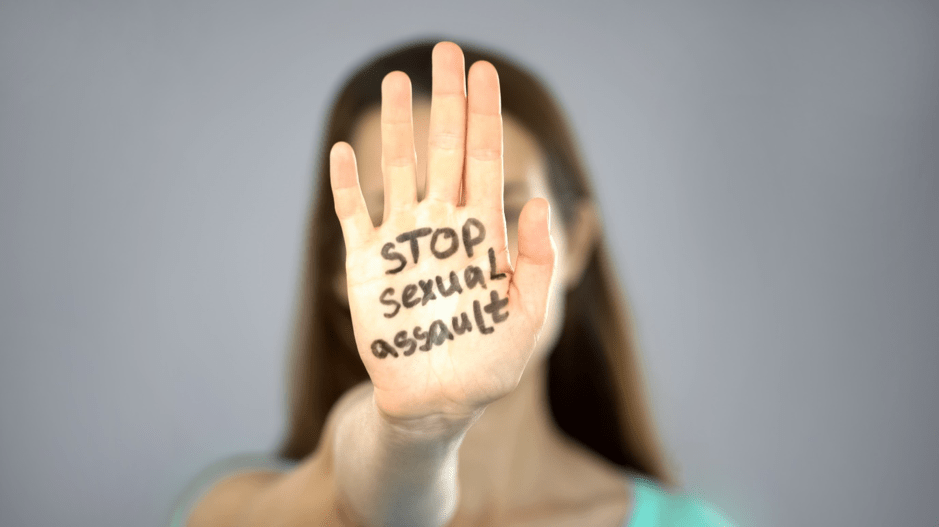
Image source: Shutterstock.
Allison Henry
Decades of inaction
Student leaders, survivors, sexual violence advocates and feminist activists have campaigned for decades to raise awareness of sexual assault and sexual harassment in Australian university settings and agitated for improved institutional responses.
The release of the first comprehensive national survey data in the landmark Australian Human Rights Commission’s 2017 Change the Course report, released just a month before the #MeToo movement exploded globally, shocked the Australian university sector into action. Over the past six years many universities and residential colleges have reviewed and refreshed their sexual violence policies and response pathways.
Yet a second survey – the National Student Safety Survey (NSSS) released in 2022 – demonstrated that this heightened institutional attention on sexual violence had failed to reduce the incidence of sexual assault and sexual harassment in Australian university settings. Furthermore, there had been no increase in student awareness of university support and complaints policies, no improvement in reporting rates, and continuing high levels of dissatisfaction with university complaint processes.
My doctoral research focused on student peer-to-peer experiences and took a system-wide structural approach to interrogate why there had been so little progress in reducing campus sexual violence over the past decade. My thesis critically examined the regulatory initiatives and oversight mechanisms adopted by various actors between 2011 and 2021, arguing that substantive progress in tackling sexual violence in Australian university settings had stalled due to a combination of factors including an over-reliance on the self-regulating university sector to lead the reform effort, as exemplified in Universities Australia’s Respect.Now.Always campaign; the failure by the national higher education regulator TEQSA to hold institutions accountable; and the indifference of governments.
My research found that the legislative and regulatory levers available in Australia’s higher education system had not been effectively activated – political disinterest and the absence of even a latent threat of genuine and enforceable institutional accountability were critical factors in allowing universities and residential colleges to adopt tokenistic responses.
Commonwealth Education Minister Jason Clare
Fortunately, one of these factors has now shifted markedly, and had ripple effects. The Albanese Labor government’s University Accord process has signalled that student and staff safety is an area of urgent concern, with the Accord Panel acknowledging in their July 2023 Interim Report that “Sexual assault and harassment on campus is affecting the wellbeing of students and staff, and their ability to succeed.”
“Our universities should be places of learning, not rape factories.”
Senator Larissa Waters
On a parallel front, parliamentarians from across the political spectrum have begun speaking out about the crisis of campus sexual violence.
The Senate Legal and Constitutional Affairs References Committee tabled a unanimous cross-party report on sexual consent laws in September 2023. The scathing report described the university sector and TEQSA’s response to sexual violence as “unacceptable” and “a shameful state of affairs”, with the committee chair Liberal Senator Paul Scarr stating in parliament that the committee “lacks confidence that the university sector as a whole will respond appropriately to the crisis without strong intervention”.
This long-overdue political interest has provided media opportunities for student leaders and advocacy groups to highlight the experiences of student survivors and push for reform.
A fresh approach
In response to the Accord Panel’s interim recommendation a cross-jurisdictional Working Group, informed by a Stakeholder Reference Group, was established to address improvements in university governance, with a particular focus on recommending immediate measures to improve student and staff safety and address gender‑based violence in university settings.
A draft action plan addressing gender-based violence in higher education has now been released for further consultation and detailed design work. Centring the voices and needs of victim-survivors, it proposes several promising accountability and transparency measures:
- a new National Student Ombudsman aimed at ensuring students have access to an effective, trauma-informed complaints mechanism;
- a new National Higher Education Code to Prevent and Respond to Gender-Based Violence, detailing expectations around critical incident management, provision of support to students and whole-of-institution data collection and transparent reporting, amongst other issues;
- the establishment of a new unit in the Department of Education to oversight the new National Code and undertake targeted compliance activities, removing these responsibilities from TEQSA;
- annual reporting by higher education providers through the Commonwealth Minister of Education to Parliament; and
- a commitment to enhance the oversight, standards and accountability of student accommodation providers regarding their gender-based violence prevention and response.
The draft action plan is open for consultation until the end of January 2024. Meanwhile, the Accord Panel’s final report is due in December. The final outcomes won’t be clear for a while, but after decades of inertia it feels like we may be on the verge of a massive shift: meaningful institutional accountability and transparency in the management and prevention of campus-based sexual violence is within reach.
Author Bio
Dr Allison Henry is a Research Fellow and Associate with the Australian Human Rights Institute at UNSW. She completed her PhD on ‘Regulatory responses to sexual assault and sexual harassment in Australian university settings’ in May 2023, for which she received the Dean’s Award for Outstanding PhD Thesis. Dr Henry was a member of the Commonwealth Department of Education’s Gender-based Violence Stakeholder Reference Group. Previously, Dr Henry was the Campaign Director of The Hunting Ground Australia Project from 2015-2018, a collaborative impact campaign that was instrumental in raising awareness of sexual violence on Australian university campuses.




 16 Days Blogathon