DAY FIVE: No justice without healing; no healing without justice: Pathways to care for sexual and gender-based violence in Somalia and DRC 

The authors from the Displacements Project draw attention to the different pathways of care that sexual violence victim-survivors take to address their needs. Focus groups were conducted across four sites in DRC and Somalia.

The Displacements Project 

Featured image credits: SIDRA from the Displacements Project website

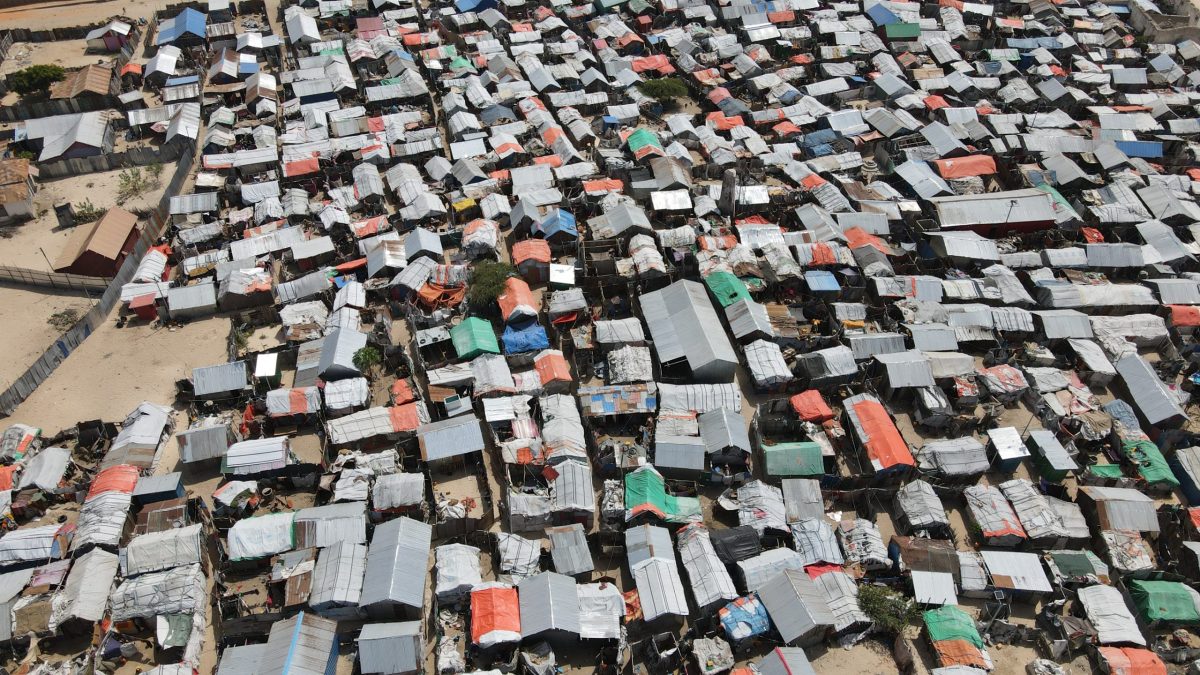
Decades of conflict in the Democratic Republic of Congo (DRC) and Somalia have displaced millions within and across borders. This has been exacerbated by natural disasters such as floods, tsunamis, droughts, famine, and even locust infestations. Internally displaced persons (IDPs) have settled in urban and rural areas, in segregated camps, or have been integrated in ‘host’ populations. These conflicts have severely eroded the state’s capacity to provide healthcare as well as administer justice and rule of law, making sexual and gender-based violence (SGBV) difficult to address holistically. In the state’s absence, people turn to alternative ‘social connections’ including international and local NGOs, indigenous healers, and community elders.  

Interested in mapping out these social connections, we conducted focus groups separated by gender across four sites in South Kivu, DRC, and five sites near Kismayo and Garowe, Somalia. We asked the participants where people go if they experience deep sadness, persistent physical pain, or SGBV.i  

Participants noted that SGBV was perpetrated at the household/domestic level by spouses or close family members; at the community level by somebody outwith the household yet known in the community; and in DRC, by armed combatants, which leads to severe physical harm, often requiring hospitalisation. In response, victims turn to different pathways to address their needs. Proximal pathways can include friends, families, or neighbours, who may witness violence, offer material and/or emotional support, although they may also be the perpetrators of violence. This discussion among women about domestic rape in Katogota, DRC demonstrates the complexity of proximal pathways: 

Woman 1: ‘You go to a friend because talking with someone frees you up and makes you feel better.  

Woman 2: ‘I think we should tell the mother who is the president of the church because at least she can’t tell everyone in the village your secret because she is wise and God-fearing.’  

Woman 3: ‘I think it’s best to turn to your parents because they will always be there with you despite your decision.’  

Woman 4: ‘A neighbour—’ 
 

[People in the group yell and interrupt and say telling a neighbour is a bad idea because they will tell everybody your secret.] 

Healthcare pathways include a spectrum from care for life-threatening injury to treatment for things such as STIs. Both DRC and Somalia have access to care for extreme violence. However, due to stigmatisation and costs, there is less uptake for ongoing health support. Through local organisations such as the Mukwege Foundation, DRC has more access to professional psychosocial support, although this is difficult to access in rural peripheries. In both countries, victims access informal emotional support through proximal pathways as well as religious or informal financial groups.  

Justice pathways are the means to seek amends or redress for SGBV harms. In the DRC, international actors are heavily involved in the justice system, yet impunity for armed combatant perpetrators is often the norm.

A woman in Kavumu, DRC made this clear by saying, ‘I would advise them to go to the state, but we know that the state will not give any help.’ In the absence of the state, when domestic or community level sexual violence occurs, informal, customary, or clan-based justice is applied.

In DRC this often means that sexual assault is addressed by family or ethnic leaders resulting in mediated marriages, which are unwelcome to the women victims. In Somalia, clan elders agree on material compensation, known as xeer in Somali, whereby wealth is transferred to families/clans, but not the victims. Participants in both countries said this gendered justice system did not lead to a sense of justice, which exacerbates mental health harm from SGBV. A woman in Kismayo made clear their exasperation with justice when reflecting on a rape case involving a young girl, which went through clan elders:  

When a case like this happens, the traditional leaders take over the case, and the case is not taken up by the rule of law agencies. This needs to change. The perpetrators must get harsh punishment so that it will be a lesson for those who are inclined to do similar horrible crimes. 

Despite the erosion of the state in DRC and Somalia, there are still state and local organisations and institutions providing health, mental health, and justice services. In Somalia, this is ad hoc, and not systematically integrated. In South Kivu, the Panzi Foundation, founded by Nobel Peace Prize winner Dr. Denis Mukwege, administers Panzi Hospital, which incorporates locally-based wraparound economic, medical, psychosocial, and justice support and advocacy, offering a model for post-conflict situations. This ‘one-stop’ model provides free trauma sensitive medical and psychosocial care to victims and families; advocates to state actors and local community leaders; gives legal aid; and provides livelihood training and start-up funding. We contend that supporting healing for SGBV victims requires similarly holistic syncing of pathways of health, mental health, and justice, which must involve the state, international, and indigenous institutions and actors. This necessitates a comprehensive understanding of local milieus, including the cultural logics behind where people actually turn to for care. It is not enough simply to address the barriers to formal systems.   


Authors’ bio 

This blog comes from the recently published article, ‘Pathways to care: IDPs seeking health support and justice for sexual and gender-based violence through social connections’. The co-authors—Clayton Boeyink, Mohamed A Ali-Salad, Esther Wanyema Baruti, Ahmed S. Bile, Jean-Benoît Falisse, Leonard Muzee Kazamwali, Said A. Mohamoud, Henry Ngongo Muganza, Denise Mapendo Mukwege, Amina Jama Mahmud—are based at the Somali Institute for Development and Research Analysis in Somalia, the Université Evangélique en Afrique/Centre d’Excellence Denis Mukwege in DRC, and the University of Edinburgh and are collaborating on a ESRC/Global Challenges Research Fund (GCRF) project aiming to help Somali and Congolese displaced people to access healthcare associated with protracted displacement, conflict, and sexual and gender-based violence (displacement.sps.ed.ac.uk/). 

A special thanks to research assistants supporting data collection in DRC: Arcene Kisanga, Naomie Amina Mirindi, and Blandine Mushagalusa Ndamuso; and in Somalia: Mohamud Adan Ahmed, Omar Yusuf Ahmed, Mohammed Fahim Bishar, Muna Mohamed Hersi, Anisa Said Kulmiye, Ahmed Mohamed Mohamoud, and Amina Mohamed Nor. 

DAY ONE: Welcome to 2022’s 16 Days Blogathon

This year’s annual blogathon brings together voices from academia, activism and the creative arts to raise awareness of this ongoing struggle. The blogathon marks a continuing collaboration between the University of Edinburgh, Dr B.R. Ambedkar University, Delhi, and the University of New South Wales.  

Featured image: From UN Women – “In focus: 16 Days of Activism against Gender-Based Violence”

Today is the International Day for the Elimination of Violence Against Women and the beginning of the 16 Days of Activism Against Gender-Based Violence  which runs from 25 November to 10 December, Human Rights Day. This year’s annual blogathon brings together voices from academia, activism and the creative arts to raise awareness of this ongoing struggle. The blogathon marks a continuing collaboration between the University of Edinburgh, Dr B.R. Ambedkar University, Delhi, and the University of New South Wales.  

Our theme this year is migration, mobilities, and displacement. This is an urgent theme, both historically and given the current moment. We are living through one of the largest and most rapid forced displacements of our times with some four million Ukrainians fleeing to neighbouring countries. This is not the only example of forced displacement: across the planet, populations are on the move in search of shelter from war, extreme climate change, and political instability. Historically, as our bloggers note, the foundational violence of settler colonialism and racialized labor regimes have violently separated people from their communities, rendering them vulnerable to harm.

Through an analysis of both violence and the reparative work of care, this year’s 16-day Blogathon explores how people endure and negotiate gender-based violence in contexts of voluntary and coerced movement.  

Our blogathon follows in the tradition begun in 1991 by activists at the first Women’s Global Leadership Institute. That decade was marked by an emphasis on gender in global development initiatives. In 1995, the UN held the Fourth World Conference on Women that adopted the Beijing Declaration with an agenda for women’s empowerment and gender equality.

Where are the conversations today, thirty years later? As we curated the blogathon, we found that our interlocutors adopted a quite different approach to gender from the discourse of the 1990s.

One of our bloggers critically notes that “in the context of displacement, gender-based violence is often conceptualised as violence against women, meaning those who are cisgender and heterosexual.” Rather than considering women as the a priori subject of gender-based violence, our blogathon show how gender-based violence is produced in a range of institutional sites and contexts.   

This year’s opening blog is by Urvashi Butalia, well-known historian and founder of the feminist publishing house, Kali for Women. She writes about India’s Partition, drawing on stories from the time to raise questions about what ‘displacement’ means when, really, you have no place at all to call your own. Gendered violence is enacted through separations of land and people. 

Indeed, many of our bloggers show how forms of settler colonialism and war have displaced people from their land and their communities, thus fracturing kinship and intergenerational strength. Equally, borders act as technologies of violence, inviting certain laboring bodies and confining and isolating others—their spouses—whose labor of social reproduction is unrecognized. Moving bodies are also read as not “belonging” at certain times of day and night, as “foreign,” or “out-of-place” in certain spaces. We investigate a range of these spaces: refugee camps, crisis pregnancy centers, homes, and domestic shelters. Our bloggers draw on narratives – either from ethnographic research, personal testimonies, or literary accounts – of sexual violence in wars, and detail the racialized, sexualized, classed, and gendered dynamics of these forms of violence.  

Our bloggers also show us how a gender analysis can expose the problematic construction of the “ideal” victim in international humanitarian and legal discourse. Such a figure is mobilized by normative ideas of gender and sexuality. Through queer and trans perspectives, the blogathon shows how homophobia and transphobia necessitate migration and the cobbling together of community-based “safe spaces.” The lived experience of violence in migrant life is thus not experienced through the individual alone but distributed through the communities that marginalized migrants belong to. Despite what some of our bloggers named as the “inevitability of rape and sexual abuse” in the refugee experience, there are now vibrant networks that situate refugee voices as leaders in international decision-making fora.  

Even amidst the violence of war and border-making are forms of public and community art that enable survivors to bear witness and create art that gives form to experience and enables healing. We explore the feminist possibilities of witnessing and seeking justice through alternative courts and hear about the public installation of clothes of survivors of sexual violence. We explore the visual landscapes of art created in the aftermath of large-scale sexual violence during war. We hear the songs and read about the characters who have experienced gender-based violence during migration.  

We hope that our curation of this year’s blogathon leaves you with a multi-lensed analysis of how gender-based violence works through patriarchy, colonialism, war, and racialized violence.

We also hope that we can give you a sense of the crucial forms of care and mutual aid through which communities stitch together the resources and kinship that are necessary to survive and thrive amidst both the violence and the possibilities of mobilities, movement, and displacement. 

Content note: posts inevitably address distressing experiences and issues around sexual and gender-based violence. We hope they also provoke, energise and at times, serve to provide hope when it seems most bleak.

The 2022 curators:

University of Edinburgh: Dr Radhika Govinda (Director), Dr Hemangini Gupta (Assoc Director and 2022 Blogathon Co-Lead), Dr Zubin Mistry (Steering Group Member and 2022 Blogathon Co-Lead) and Aerin Lai (PhD web and editorial assistant) from GENDER.ED.

Dr B R Ambedkar University Delhi: Prof. Rukmini Sen (Director, Centre for Publishing), Dr Rachna Mehra (School of Global Affairs).

University of New South Wales: Prof. Jan Breckenridge (Co-Convenor), Mailin Suchting (Manager) and Georgia Lyons (Research Assistant) for the Gendered Violence Research Network.

DAY NINE: Statues and status: Mexican women change the face of history to combat gender-based violence today

Sarah Easy discusses how Mexican women are changing the face of history to combat gender-based violence today.

Sarah Easy

Image above: The Benito Juárez Hemicycle monument, Mexico City, defaced by anti-gender-based violence protesters in 2019. Credit: Santiago

Until recently, statues of Christopher Columbus quietly watched over major cities of the world amongst other bronzed men and marble slave traders, including in Mexico City. Public monuments are now flashpoints for activist movements worldwide, including the anti-gender-based violence (anti-GBV) movement. In October of this year, the governor of Mexico City, Claudia Sheinbaum, announced that a statue of the indigenous ‘Young Lady of Amajac’ would replace the statue of Christopher Columbus toppled 2 years ago by the anti-GBV movement, renewing debate surrounding the historical representation of women.

Protest and public monuments in Mexico

The anti-GBV movement in Mexico provides fertile ground for discussion; deemed ‘the most successful women’s and feminist movement in the history of Latin America’ by Associate Professor Edmé Domínguez, yet birthed from a patriarchal society with one of the highest rates of gender-based violence worldwide.

Originating in the #MeToo phenomenon, the movement reached boiling point during the student occupation of the National Autonomous University of Mexico in October of 2019 (ongoing to this day). Mass protests of hetero, trans and non-binary women subsequently erupted under the Ni Una Menos and Aequus collectives. Judith Butler describes the movement as “a realisation of a common social good and social bond, one that recognises that what is happening to one life…is also happening for others.” This collective approach provides an alternative to more individualistic modes of western feminism.

The most visible expression of the anti-GBV movement in Mexico is the defacing and dismantling of public monuments.

“the movement is anti-patriarchal and, in one aspect anti-capitalist, that’s why one of its forms of resistance is to intervene in these representations of historical figures and facts as forms of protest”. 

Prominent feminist collective Aequus

During the anti-rape glitter protests of 2019, slogans such as ‘the State doesn’t take care of me, my friends do’ were painted across Mexico City’s iconic Angel of Independence. This lasting imagery situates women in the public sphere, giving new meaning to spaces that previously celebrated masculine ideals of war and colonial rule.          

Image above: The Angel of Independence statue, Mexico City, defaced by anti-gender-based violence protesters in 2019. Credit: Santiago Arau

In September of 2020, anti-GBV collectives Aequus, Okupa and Ni Una Menos took further radical action by occupying the National Human Rights Commission and converting the building into a shelter where over 100 women sought refuge. Activists painted over portraits of the all-male historical figures that adorned the Commission, highlighting the female human rights defenders who have been erased from history.

This form of radical visual activism has become so infamous that president Andres Manuel Lopez Obrador erected a 3 metre metallic barrier, or “macho wall of shame”, around the presidential palace in nervous anticipation of the International Women’s day March this year. Aequus Collective contends “if the State does not guarantee the security, integrity and the life of women, we should not respect figures symbolic of the State”.

Image above: Anti-gender-based violence protesters camp outside the National Palace, Mexico City, on International Women’s Day 2021. Credit: Santiago Arau

The most recent visual demonstration of the anti-GBV movement is the installation of a cardboard cut-out of a woman with a raised fist where a statue of Christopher Columbus was toppled two years ago. Activists renamed the site the ‘Glorieta de las Mujeres que Luchan’ (Women Who Fight Roundabout), painting the names of murdered women across its base. Aequus explains that “the demand not to commemorate anyone in particular is a way of expressing pain and rage in the face of violence, as well as a will to fight for the dead and disappeared.

This example of an ‘anti-monument’ rejects the official discourse of the Mexican state which denies the corruption of the justice system, propagates the impunity of rapists and silences survivors of gender-based violence.

Whether the replacement of the cut-out with a replica of ‘the Young Lady of Amajac’ is genuinely progressive or purely performative remains heatedly debated in Mexico.

Image above: Glorieta de las Mujeres que Luchan installation, Mexico City. Credit: Sarah Easy
Image above: Anti-gender-based violence protesters paint the names of murdered and disappeared women in Mexico City on International Women’s Day 2020. Credit: Santiago Arau
Statue toppling as a global phenomenon

Dating back to ancient Rome, the practice of ‘statue toppling’ forms part of ‘damnatio memoriae’ (the condemnation of memory) in which public figures were erased from official accounts. We are currently experiencing a global wave of statue toppling that intersects gender, class and race campaigns, such as the mass removal of confederate statues during the Black Lives Matter Movement. Modern activism distinguishes itself through this fixation on history, re-examining and rectifying what is remembered, by whom and for what purpose.

In October 2020 in La Paz, Bolivia, activists from the group Mujeres Creando clothed a statue of the Queen of Castile, financier of Christopher Columbus’ expedition to the Americas in 1492, in a traditional hat, aguayo and pollera (the traditional dress worn by Andean indigenous women, or ‘cholas’).

Indigenous women in Bolivia experience compounded discrimination on grounds of gender, ethnicity and class, with gender-based violence most pronounced in rural areas. Perpetrators of gender-based violence justify their crime by debasing indigenous women. Consequently, the transformation of the statue of the Queen of Castile into a chola serves to elevate the position of indigenous women in society, reflecting their active participation in business, education and politics. 

Significance: statues as symbols or vehicles for change?

The question remains: is the dismantling of the old and rebuilding of new public monuments merely symbolic or can it engender genuine change? Professor Verity Platt defines statues as ‘ideological powerhouses: physical objects that compress whole systems of authority into bodies of bronze or marble’. Similarly, Perhamus and Joldersma (2020) argue that the toppling of statues is ‘more than symbolic destruction of representations, these ‘acts of takedown’ are concrete, physically manifested interruptions’ of the established order. 

From this, we can understand the recent substitution of the statue of Christopher Columbus with the indigenous Young Lady of Armajac in Mexico as more than a passive reflection of feminist ideology, but rather, an active tool for countering machismo.

Gender-based violence knows no bounds of race or class. Judith Butler stresses that ‘violence seeks to secure the class of women as killable, dispensable; it is an attempt to define the very existence of women’s lives as something decided by men, as a masculine prerogative.’

Put simply, a man who respects women doesn’t kill them; what we need is a cultural revolution. Aequus explains that the violent and patriarchal culture in Mexico is “linked to the official version of Mexico’s history in which male historical figures and facts are elevated…due to the broad influence of the armed forces in different aspects of public life”.  The anti-GBV movement in Mexico is changing its violent culture against women by tearing down the patriarchal ideology preserved in statues, monuments, portraits and public spaces, and we should be doing the same.

Image above: Anti-gender-based violence protesters gather on International Women’s Day 2020 in Mexico City. Credit: Santiago Arau

Author’s Bio:

Sarah Easy is a human rights lawyer based in Mexico City and research assistant for the Australian Human Rights Institute. She has previously worked in the Human Rights Specialist Law Service and the Mental Health Advocacy Service at Legal Aid NSW. She has also worked in several NGOs across Mexico, Spain and Australia. She undertook her practical legal training at the Refugee Advice & Casework Service (RACS). Her work focuses on women’s rights and refugee and asylum seekers’ rights.