DAY NINE: Migration and Violence:  The Question of trans* masculine persons in India 

In India, trans* masculine people face the risk of violence and displacement through forced migration and homelessness. Family resistance can take the form of conversion therapies and healers while trying to silence to avoid stigma. Sutanuka Bhattacharya and Bindu KC explores this issue in this insightful piece.

Sutanuka Bhattacharya / Suto and Bindu K. C.

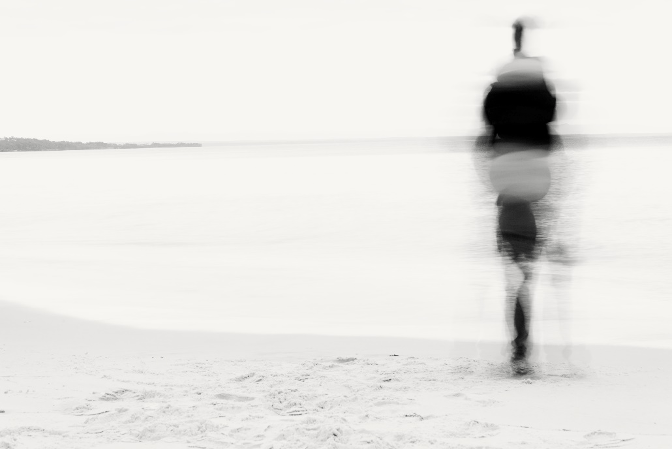
Featured image: ‘Uprooted’ by Archee Roy (she/her), a queer visual artist based in Kolkata. Ink and water colour on paper, 16th October 2022 

Seeing Violence, Seeing Gender 

Thinking about gender is thinking about “normalcy”. One does not “see” gender if one is comfortable in one’s gender identity. Thus, people who see themselves within the cis-hetero-sexist nexus need not think about gender as a system of power. It is precisely this invisibility of normality that is any powerful system’s route to domination.   

Under these circumstances, an event of violence, in a flash, gives us a glimpse into what was always already at play. Like a scanner revealing the inner structure of the body, it allows us access to the violently structured world of power. Thus, it is not surprising then that the everyday of queer and trans* lives marred by violence opens up the process of gendering.   

On 22nd July and 1st September 2022, India saw a torrent of social media posts by the queer and trans* community about violence against transgender persons. In both the instances, Aditya and Shyam, two adult trans men from Uttar Pradesh were forced to leave their violent natal homes. They took refuge in shelter homes for transgender persons, run by Non-Governmental Organizations based in Delhi and Gurugram respectively. While Aditya found shelter in Garima Greh, a government-aided shelter home run by the Mitr Trust, Shyam sought shelter in Aasra run by The Transgender Welfare Equity and Empowerment Trust (TWEET) Foundation.  

21st July, post mid-night, Aditya was abducted from Garima Greh by the UP Police based on the “missing diary” lodged by his parents. At the same time, on 1st September afternoon, Shyam’s father, who was himself working with the UP Police, barged into Aasra searching for him. However, unable to find Shyam, his father forcefully brought the co-chairperson and the board member at TWEET, who also identify as trans men, to a Gurugram police station. At the police station they were physically assaulted, detained without documents and were threatened while the local police remained silent.    

Gender-based violence perpetrated by the institutions of family, education, medical sciencehealth care, judiciary, legislation, law and so on take diverse forms.

In this piece, we concentrate on the often methodically orchestrated violence leading to forced migration and resulting homelessness of trans* masculine persons. Such violence might be routine for various groups marginalized by gender and sexuality. However, even amongst less documented queer groups, the lived experiences of trans* masculine persons is striking. Their relative epistemic and ontological invisibility makes the world miss them as a category.   

Forced Migration and Homelessness 

Forced migration and homelessness among trans* masculine persons are often reported to be systematically orchestrated by natal families through physical violence or severe lack of support. For example, in both the cases we discuss, the trans men were forced to leave their natal homes because their family members refused to accept their self-identified gender and unleashed severe violence on them. Aditya was reported to be under house arrest for more than two years because his parents were ashamed of him; while Shyam, in his application for his stay at Aasra mentioned that his family members were planning to kill him or marry him to a cis–man against his consent.  

In most cases, family resistance starts when the trans* masculine persons either assert their non-normative gender identities and/or their non-normative sexual desires. Many parents at the initial stage try to hush this up fearing social stigma and the shame stemming from deep rooted trans negativity and homo–negativity. Further, parents and other family members might also take recourse to conversion therapies, performed by modern medical professionals or traditional healers with a hope to “cure and control their unruly daughters”.  

Gender–based violence unleashed on trans* masculine persons by their families entail psychological, physical and sexual violence, for example, denying their gender-sexual identities and desires, blackmailing in the name of family honour, house arrest, separating them from their romantic partners, forcing them to marry cis–men, restricting their mobility and access to resources such as food, education, communication, beating and “corrective” rape. There are also reported instances where trans masculine persons, unable to withstand societal and familial pressure, had even been forced to end their lives

Conclusion: Network of care, community spaces and their challenges 
There are glimmers of hope in alternative narratives amidst the deluge of violence against trans* masculine persons. Occasionally, some find acceptance from their natal families. More often, they find safe spaces and care networks among friendships, community members and also within intimate relationships.  

Strangely, we find some stories of acceptance to be embedded within patriarchal ideas of gender. In our society, intrinsically steeped with son preference, trans masculine persons—post–medical and legal transitions—taking up traditional masculine gender roles sometimes receive acceptance from natal families. However, most of the time, this acceptance comes at the cost of erasure of their gender-sexual transgressive past and hiding their gender-sexual journey. Moreover, in such cases, migration often becomes not just the trans person’s burden but that of the entire family. There are stories of entire families relocating to different localities, sometimes in the same city.   

The emerging shelter homes for queer and trans* persons across the country should be seen as possibilities of safe spaces institutionally. But the stories for existing shelter homes for cis women and children do not give much hope. Till date, friendships and informal networks within the community remain safe spaces for trans migrations. However, such friendships and care networks are still precarious.   

To conclude, one can see migration in trans* masculine persons’ lives, forced or otherwise, as stemming from unbearable violence within families and others whom young trans people might interact closely with. Under these circumstances, migration is both a cry for help and at the same time, the indomitable human urge to survive.  

Authors’ Bio 

Sutanuka Bhattacharya/ Suto (they/ them) is an activist-researcher based in India. They are pursuing a Doctor in Philosophy in Women’s and Gender Studies, Ambedkar University Delhi. Their doctoral thesis, titled ‘Writing Trans Subjectivities: Re-thinking gender-sexuality through identities and relationalities’, revolves around understanding contemporary trans masculine subjectivities in the context of India. At present, they are located in Kolkata and have also been associated with feminist, queer and trans* activist spaces in the city since 2005. Suto identifies as a non-binary queer person. 

Dr. Bindu K. C. (she/her) is an Assistant Professor in Gender Studies Programme, Dr B R Ambedkar University Delhi. 

DAY EIGHT: Bodies at the Border: reflections on LGBT+ Ugandan refugees in Kenya 

Through their research project ‘Bodies at the Border’ funded by the British Academy, Bompani, Camminga, and Marnell reflect on the different forms of care, religious experiences, and support that are needed by Ugandan LGBT+ displaced communities in Kenya.

Barbara Bompani, B Camminga, John Marnell

Featured image credits: Nature Network in Nairobi

The last decade has witnessed a sharp rise in homophobia and transphobia in Africa, including the adoption of discriminatory legislation and the emergence of government-initiated crackdowns. This politicisation of sexual and gender rights is often presented as a moral crusade[1] and is enacted with the support of many religious and cultural leaders across the continent[2]. Consequently, an ever-increasing number of lesbian, gay, bisexual and transgender (LGBT+) people are leaving their homes to seek protection elsewhere.  

Image credits: John Marnell
Ugandan sexual discrimination and LGBT+ displacement in Kenya 

In the aftermath of the passing of the Anti-homosexuality Act (AHA) in March 2014 in Uganda[3], the first group of LGBT+ Ugandan asylum seekers in Kenya made themselves known to the United Nations High Commissioner for Refugees (UNHCR).

Their existence highlighted a significant geo-political tension: Kenya’s domestic legislation does not recognise LGBT+ rights, while the UNHCR – through its mandate of international protection – does.

To resolve this, the UNHCR established what can be understood as a parallel legal regime, providing financial support and safe housing for LGBT+ claimants and fast-tracking them for resettlement. Expedited resettlement meant that the government and local communities were not too concerned with the lasting cultural impact of recognising these refugees and were even less concerned with providing support. However, in the wake of COVID-19, the heightened securitisation of borders in the Global North and diminishing places abroad for resettlement, these refugees must now remain in Kenya for extended periods. In the absence of access to the already strained structures of support which non-LGBT+ refugees rely on, such as in-country ethnic communities, religious groups or family, findings from our project suggest that LGBT+ refugees have had to create and foster new forms of care with what little resources they have available to them. 

Home and homemaking  
Image credits: Nature Network in Nairobi

A strategy in which this is visible is the self-funding of safehouses. Unable to reside in Kenya’s refugee camps due to discrimination[4], some LGBT+ refugees and asylum seekers in Kenya have been able to team up and rent houses on the outskirts of Nairobi through self-organisation and fundraising on platforms such as GoFundMe[5]. Difficult to reach, behind high walls, and often at the very end of dirt roads with a distinct absence of neighbours, these spaces have become critical safe havens for the LGBT+ refugee community in an otherwise largely hostile environment.

Safe houses, however, are not just homes where residents wait out their time. They are microcosms of possibility as they transition from meeting spaces to arts-based therapy centres to makeshift churches to ballrooms to boardrooms to fashion houses. Crucially they are places of nurture and community care existing only as long as the period of time between police raids or the next eviction by a suspicious landlord[6].

Image credits: Nature Network in Nairobi
Spirituality and religion 

Another important care strategy in the everyday lives of Ugandan LGBT+ refugees, a community coming from a highly religious country, is the spiritual and religious sphere. This can be complex given religion is in part a cause of their displacement[7], but at the same time something which they do not always abandon; although how their understand and practice their faith may transform. Religion in this context is neither entirely ‘positive’, a source of social capital as often articulated by development and migration studies[8], nor ‘negative’, a critical component of the worldview that institutionalises and normalises homo- and transphobia[9],

These complexities mean that displaced people may reject their own religion or develop more personal forms of spiritual identity without joining formal religious communities. Most of the displaced LGBT+ people who participated in this project described themselves as remaining religious but divorced from organised religion because of the fear of being exposed again to trauma or further persecution.

Individual prayer and reading of sacred texts in their transitional (but often lengthy) time spent in Kenya were described as an opportunity to rebuild a joyful relationship with God, something that ‘was taken away from them’ in their country of origin, but they remained distant from and wary of attending churches and mosques.  

Pushing our thinking further  

The transient and precarious situation of Ugandan LGBT+ displaced people in Kenya create conditions that necessitate the building of different forms of care and support that in some ways challenge conventional ideas of family, social networks, and of religious experience with regards to those communities. This gives us fresh perspectives on new forms of kinship, domesticity and care within displaced communities affected by sexual and gender-based violence.


[1] Kintu D. 2018 The Ugandan morality crusade: the brutal campaign against homosexuality and pornography under Yoweri Museveni. Jefferson: McFarland & Co.

[2] van Klinken & Chitando E. (eds) 2016. Public Religion and the Politics of Homosexuality in Africa. London: Routledge. 

[3] Nyanzi S. & Karamagi A. 2015 ‘The social-political dynamics of the anti-homosexuality legislation in Uganda’. In Agenda. Empowering women for gender equity, vol. 29, issue 1, 24-38. 

[4] Camminga, B. 2020. ‘Encamped within a Camp: Transgender Refugees and Kakuma Refugee Camp (Kenya)’. In Invisibility in African Displacements, edited by Jesper Bjarnesen and Simon Turner, 36–52. London: Zed Books.

[5] Camminga, B. 2021. ‘“Go Fund Me”: LGBTI Asylum Seekers in Kakuma Refugee Camp, Kenya’. In Waitinghood: Unpacking the Temporalities of Waiting and Irregular Migration, edited by Christine M. Jacobs, Shahram Khosravi and Mary-Anne Karlsen, 131–49. London: Routledge.

[6] Camminga, B. 2020. ‘Encamped within a Camp: Transgender Refugees and Kakuma Refugee Camp (Kenya)’. In Invisibility in African Displacements, edited by Jesper Bjarnesen and Simon Turner, 36–52. London: Zed Books.

[7] Bompani B. 2016. ‘For God and for My Country’. In edited by van Klinken A. and Chitando E. Public Religion and the Politics of Homosexuality in Africa. London: Routledge. 

[8] Sanchez M. et al. 2019. Immigration Stress among Recent Latino Immigrants: The Protective Role of Social Support and Religious Social Capital’. In Social Work in Public Health, vol. 34, issue 4, 279-292. Hagan J. & Ebaug HR. 2003. ‘Calling upon the Sacred: Migrants’ Use of Religion in the Migration Process’. In International Migration Review, vol. 37, issue 4, 1145-1162. Saunders J. et al (eds) 2016. Intersections of Religion and Migration. Issues at the Global Crossroads. London/New York: Palgrave MacMillan.

[9] Kaoma A. 2018. Christianity, Globalization, and Protective Homophobia: Democratic Contestation of Sexuality in Sub-Saharan Africa. London: Palgrave-MacMillan. 

Authors’ Bios

Bodies at the Border: Hostility, Visibility and the Digital Voices of LGBT+ Refugees in Kenya  is a research project generously funded by the British Academy (January 2021- December 2022) that brings together researchers from the Centre of African Studies at the University of Edinburgh and from the African Centre for Migration and Society at the University of the Witwatersrand in Johannesburg.  

Barbara Bompani (she/her) is a Reader in Africa and International Development at the Centre of African Studies at the University of Edinburgh. Her work focuses on the intersection between religion, politics and development in Africa and on the many ways religion shapes the lives of African citizens.  

B Camminga (they/them) is a postdoctoral researcher at the African Centre for Migration and Society at the University of the Witwatersrand. They work on issues relating to gender identity and expression on the African continent with a focus on transgender migrants, refugees and asylum seekers.  

John Marnell (he/him) is a researcher and PhD candidate at the African Centre for Migration and Society at the University of the Witwatersrand. His research uses creative methodologies (visual, narrative and embodied) to explore the everyday lives of LGBTIQ+ migrants, refugees and asylum seekers.  


DAY FIVE: No justice without healing; no healing without justice: Pathways to care for sexual and gender-based violence in Somalia and DRC 

The authors from the Displacements Project draw attention to the different pathways of care that sexual violence victim-survivors take to address their needs. Focus groups were conducted across four sites in DRC and Somalia.

The Displacements Project 

Featured image credits: SIDRA from the Displacements Project website

Decades of conflict in the Democratic Republic of Congo (DRC) and Somalia have displaced millions within and across borders. This has been exacerbated by natural disasters such as floods, tsunamis, droughts, famine, and even locust infestations. Internally displaced persons (IDPs) have settled in urban and rural areas, in segregated camps, or have been integrated in ‘host’ populations. These conflicts have severely eroded the state’s capacity to provide healthcare as well as administer justice and rule of law, making sexual and gender-based violence (SGBV) difficult to address holistically. In the state’s absence, people turn to alternative ‘social connections’ including international and local NGOs, indigenous healers, and community elders.  

Interested in mapping out these social connections, we conducted focus groups separated by gender across four sites in South Kivu, DRC, and five sites near Kismayo and Garowe, Somalia. We asked the participants where people go if they experience deep sadness, persistent physical pain, or SGBV.i  

Participants noted that SGBV was perpetrated at the household/domestic level by spouses or close family members; at the community level by somebody outwith the household yet known in the community; and in DRC, by armed combatants, which leads to severe physical harm, often requiring hospitalisation. In response, victims turn to different pathways to address their needs. Proximal pathways can include friends, families, or neighbours, who may witness violence, offer material and/or emotional support, although they may also be the perpetrators of violence. This discussion among women about domestic rape in Katogota, DRC demonstrates the complexity of proximal pathways: 

Woman 1: ‘You go to a friend because talking with someone frees you up and makes you feel better.  

Woman 2: ‘I think we should tell the mother who is the president of the church because at least she can’t tell everyone in the village your secret because she is wise and God-fearing.’  

Woman 3: ‘I think it’s best to turn to your parents because they will always be there with you despite your decision.’  

Woman 4: ‘A neighbour—’ 
 

[People in the group yell and interrupt and say telling a neighbour is a bad idea because they will tell everybody your secret.] 

Healthcare pathways include a spectrum from care for life-threatening injury to treatment for things such as STIs. Both DRC and Somalia have access to care for extreme violence. However, due to stigmatisation and costs, there is less uptake for ongoing health support. Through local organisations such as the Mukwege Foundation, DRC has more access to professional psychosocial support, although this is difficult to access in rural peripheries. In both countries, victims access informal emotional support through proximal pathways as well as religious or informal financial groups.  

Justice pathways are the means to seek amends or redress for SGBV harms. In the DRC, international actors are heavily involved in the justice system, yet impunity for armed combatant perpetrators is often the norm.

A woman in Kavumu, DRC made this clear by saying, ‘I would advise them to go to the state, but we know that the state will not give any help.’ In the absence of the state, when domestic or community level sexual violence occurs, informal, customary, or clan-based justice is applied.

In DRC this often means that sexual assault is addressed by family or ethnic leaders resulting in mediated marriages, which are unwelcome to the women victims. In Somalia, clan elders agree on material compensation, known as xeer in Somali, whereby wealth is transferred to families/clans, but not the victims. Participants in both countries said this gendered justice system did not lead to a sense of justice, which exacerbates mental health harm from SGBV. A woman in Kismayo made clear their exasperation with justice when reflecting on a rape case involving a young girl, which went through clan elders:  

When a case like this happens, the traditional leaders take over the case, and the case is not taken up by the rule of law agencies. This needs to change. The perpetrators must get harsh punishment so that it will be a lesson for those who are inclined to do similar horrible crimes. 

Despite the erosion of the state in DRC and Somalia, there are still state and local organisations and institutions providing health, mental health, and justice services. In Somalia, this is ad hoc, and not systematically integrated. In South Kivu, the Panzi Foundation, founded by Nobel Peace Prize winner Dr. Denis Mukwege, administers Panzi Hospital, which incorporates locally-based wraparound economic, medical, psychosocial, and justice support and advocacy, offering a model for post-conflict situations. This ‘one-stop’ model provides free trauma sensitive medical and psychosocial care to victims and families; advocates to state actors and local community leaders; gives legal aid; and provides livelihood training and start-up funding. We contend that supporting healing for SGBV victims requires similarly holistic syncing of pathways of health, mental health, and justice, which must involve the state, international, and indigenous institutions and actors. This necessitates a comprehensive understanding of local milieus, including the cultural logics behind where people actually turn to for care. It is not enough simply to address the barriers to formal systems.   


Authors’ bio 

This blog comes from the recently published article, ‘Pathways to care: IDPs seeking health support and justice for sexual and gender-based violence through social connections’. The co-authors—Clayton Boeyink, Mohamed A Ali-Salad, Esther Wanyema Baruti, Ahmed S. Bile, Jean-Benoît Falisse, Leonard Muzee Kazamwali, Said A. Mohamoud, Henry Ngongo Muganza, Denise Mapendo Mukwege, Amina Jama Mahmud—are based at the Somali Institute for Development and Research Analysis in Somalia, the Université Evangélique en Afrique/Centre d’Excellence Denis Mukwege in DRC, and the University of Edinburgh and are collaborating on a ESRC/Global Challenges Research Fund (GCRF) project aiming to help Somali and Congolese displaced people to access healthcare associated with protracted displacement, conflict, and sexual and gender-based violence (displacement.sps.ed.ac.uk/). 

A special thanks to research assistants supporting data collection in DRC: Arcene Kisanga, Naomie Amina Mirindi, and Blandine Mushagalusa Ndamuso; and in Somalia: Mohamud Adan Ahmed, Omar Yusuf Ahmed, Mohammed Fahim Bishar, Muna Mohamed Hersi, Anisa Said Kulmiye, Ahmed Mohamed Mohamoud, and Amina Mohamed Nor. 

DAY FOUR: Sacrificeable bodies: gender-based violence against LGBTIQ+ people and displacement

Within debates around displacement, gender-based violence is conflated with violence against cisgender and heterosexual women. In this piece, Tina Dixson argues for the need to meaningfully engage with LGBTIQ+ communities’ experiences of displacement.

Tina Dixson (formerly co-founder Forcibly Displaced People Network)

Featured image credits: Renee Dixson

Sexual and gender-based violence are manifestations of power and an enforcement of the patriarchal order where rigid and harmful gender norms and binaries permeate relationships, and racial hierarchies are created. Perpetrators, mostly men, use their power and control to create a world where all women exist to serve their needs, and where toxic masculinity allows no divergence from a rigid sex binary. Violence is inflicted on LGBTIQ+ communities as a tool of punishment for defying this patriarchal order.

Yet in the context of displacement, gender-based violence is often conceptualised as violence against women, meaning those who are cisgender and heterosexual.

Queer and trans refugee women are rarely seen as legitimate victims of displacement. Their experiences are marginalised and their gender and sexuality are deemed private or irrelevant, if not the very cause of their displacement. In describing drivers of displacement of LGBTIQ+ people in their Age, Gender and Diversity policy, the United Nations High Commissioner for Refugees (UNHCR) writes that violence against this community happens “due to their sex, sexual orientation, and/or gender identity”. In other words, a victim is blamed for causing violence by simply being who they are, and not because violence is inflicted by the racist, homophobic and transphobic patriarchy.

There is evidence that LGBTIQ+ people experience familial (eg. forced marriages, ‘honor’ killings), societal (eg. conversion practices, stoning or ‘social cleansing’) and state violence (eg. imprisonment, perpetrator impunity or death penalty), which are drivers of displacement. Despite this violence continuing throughout their displacement  and in settlement, LGBTIQ+ refugees exist in the “zone of nonbeing”.

Françoise Vergès writes that “trans people, queer people, male and female sex workers are simply bodies to rape, traffic, torture, kill”. They are sacrificeable. They are blamed for the violence they endure. Their extinction becomes the norm.  

While gender-based violence marks the everyday for LGBTIQ+ people, especially those who are displaced, paradoxically they are excluded from how displacement is imagined. In writing about sexual and gender-based violence against refugee women, Jane Freedman categorises women who are traveling alone in the following heteronormative way: “women are travelling alone because they are single, or because they have lost their husbands during the war”. This indifference to experiences of gender-based violence against LGBTIQ+ people spans from community organisations to the UN. In 2011, I was an NGO delegate presenting a shadow report on the human rights violations against of lesbian, bisexual and trans women in Ukraine in front of the Committee operating under the Convention on Elimination of all Forms of Discrimination against Women. A day before, a Committee member from Brazil approached me during breakfast in my hotel. ‘Lead with stories, explain the impacts violence and discrimination has on women, only then mention their sexuality, and only in passing’ she said to me. Thinking about violence inflicted on these women (and very soon myself), we cannot and should not separate their gender from their sexuality. Both constitute the experience of violence.

Years after and now in my own displacement, UN rhetoric has not changed. In 2017, I was invited to join a Gender Audit team, led by the University of New South Wales (UNSW) Forced Migration Research Network, to take part in the development of the Global Compact on Refugees. What offered a unique opportunity to finally make LGBTIQ+ displacement visible became an experience of silencing. Many countries never mentioned this cohort. When Western countries did, this was seen as an imposition of their values and issues that are not relevant to some bigger cause. It is no surprise that this issue became one of the first to be dropped during the negotiations process. It did not matter where you were in the room as an LGBTIQ+ refugee. You were always not the right kind of a refugee.

As a result, the final text of the Global Compact on Refugees not only omits any references to these communities but importantly creates a normative understanding of concepts such as ‘vulnerable groups in displacements’, ‘survivors of gender-based violence’, ‘specific needs in displacement’ and so on. It moves away from allowing to fit yourself in as an LGBTIQ+ refugee when your experience is mentioned as ‘other status’ in a long list of diversity characteristics to a complete silencing and fixed definitions. For example, persons with specific needs are defined as: “children, including those who are unaccompanied or separated; women at risk; survivors of torture, trauma, trafficking in persons, sexual and gender-based violence, sexual exploitation and abuse or harmful practices; those with medical needs; persons with disabilities; those who are illiterate; adolescents and youth; and older persons”. You do not have access to words, let alone protection.

Trying to bring attention to the issues of LGBTIQ+ displacement and the extent of gender-based violence inflicted, you always hit a brick wall. Within mainstream feminism in a country such as Australia, most morning teas, report launches and parliament events during the 16 days of activism will neglect to meaningfully engage with anything other than whiteness, heterosexuality, cisgenderism and citizenship.

Within displacement activism, again heteronormativity will prevail. Still so much research on displacement that always claims to offer new and comprehensive ways of looking at this issue neglects including sexuality and gender as inherent and constituent parts of one’s selfhood, one’s displacement journey, and most importantly one’s feeling of safety and belonging. Neither acknowledges that homo- and transphobia are a feminist issue and are in turn an anti-racism and decolonial issue, and that neither of these social justice struggles can be completed in isolation.

Where LGBTIQ+ displacement is mentioned, it is either reduced to an anomaly (something so rare that it is not worthy of attention) or racialised communities are being blamed for their ‘backwardness’ when it comes to LGBTIQ+ equality.

What is missing is an honest reflection on the impact of colonisation and the importation of homophobia and transphobia onto communities who used to celebrate and honour sexual and gender diversity.

Mikki Kendall writes that “entitlement, intolerance, homophobia, misogyny, aggression and sexual violence inside and outside marginalised communities are the antisocial behaviours that patriarchal systems create” regardless of the countries location. Instead of achieving safety, marginalisation is being perpetuated. For as long as we think of some as more deserving of protection than others simply because of who they are, violence and domination will prevail and we will not achieve justice for anyone.

***

You can learn more on how to work inclusively and meet the needs of LGBTIQ+ forcibly displaced people by passing this free training: https://fdpn.org.au/lgbtiq-settlement-training/

Author’s Bio

Tina Dixson is a PhD candidate at the Australian National University researching the lived experiences and construction of narratives on queer and trans women’s forced displacement and violence. Tina’s research focuses on trauma theory, gender studies, migration studies and queer theory. She has contributed to a range of work on LGBTIQ+ displacement within Australia and internationally.

In 2012 Tina and her partner Renee Dixson became displaced due to their LGBTIQ+ human rights work in Ukraine and settled in Australia. Tina co-founded Forcibly Displaced People Network, the first registered LGBTIQ+ refugee-led organisation in Australia, with her partner Renee Dixson in 2020. When Tina stepped down from her role with the Network, Renee Dixson became the current chair.

DAY THREE – Women’s labour migration: A journey fraught with violence

Migrant work is often gendered. In this piece, Joyce Wu and Patrick Kilby share their findings from a qualitative study with 112 women in Nepal – the gendered violence they face and their incredible courage, resourcefulness and resilience.

Joyce Wu and Patrick Kilby

Featured image: “Women lead an oath to protect women migrant workers” by ILO in Asia and the Pacific is licensed under CC BY-ND 2.0.

Across the world, there are an estimated 169 million migrant workers, with women representing 41.5% of this group. Women and women-identifying migrant workers are everywhere and in every sector, from domestic work, retail and hospitality, the garment sector, offices, to the agricultural sector and more.

Women migrant workers are diverse in their identities. They can be a European backpacker who works at a Melbourne café, or a Nepalese woman who is well-versed in serial migration: six months in Saudi Arabia as a housemaid, three years in Lebanon as a freelance migrant worker, negotiating for the best contract as a domestic worker, shopkeeper and nanny. It is the story of the latter that we have been researching for the past three years, through a UK Government funded project to evaluate the impact of the International Labour Organization (ILO) project, Work in Freedom Phase II, which seeks to create a safer migration pathway and safer working conditions for migrant women in South Asia.

Through our research, we have found that women migrant workers are incredible in courage, resourcefulness and resilience, but that they constantly face gendered violence throughout the entire migration journey.

In a qualitative study with 112 women in focus groups and as key informants in Nepal, these are our findings:

At Home and in the Community

As of 2020, Nepal receives 24.5% of its GDP from remittances. Although Nepalese women make up a small percentage at 5% of the Nepalese overseas migration, it is a number that is steadily growing.

  • The key factors driving migration are poverty and the need to support families and children, compounded by the lack of decent jobs locally due to the government’s lack of a gender-sensitive education policy which means Nepalese girls have fewer qualifications compared to boys.
  • Family and intimate partner violence (especially drug and alcohol addiction) also serve as a push factor, with 25% of Nepalese women experiencing violence during their lifetime  and 32.8% experiencing child marriage.

In our interviews with Nepalese women, working overseas thus represents an answer to poverty, as well as an escape from abusive situations.

Trafficking: A Wicked Problem with No Easy Solution

The government’s response to migrant women has been mixed. On the one hand, there are official migration agencies (locally referred to as Manpower agencies) that facilitate the process. On the other hand, Nepal vacillates between banning women from migrating or supporting them. However, limiting women’s mobility and job options overseas pushes up undocumented migration and trafficking, whereby women actively find people (sometimes it is their own family and friends who are familiar with migration procedures) who can help them.

This is a perilous journey, with India used as a transit hub to go on to the destination country.

Nepalese women have told us that during this “transit” some were forced to work in brothels for several months before being allowed to leave. This form of sexual violence and indentured labour goes unreported because Nepalese women are fearful of legal punishment if they admit to undocumented migration, as well as the stigma of being a sexual violence survivor.

At the Destination Country

For many, it is a work experience fraught with physical, sexual, emotional, verbal and financial violence. Middle Eastern countries that operate the Kafala system enables employers to withhold migrant workers’ visa and passport, thus having enormous power over them.

Women have reported being underpaid or not at all, having to work 18 hours and sleep in noisy, public areas of the house, being subjected to sexual violence and harassment from the men and boys in the household, as well as beatings and berating over small mistakes.

In Lebanon, the combination of COVID-19 and the Beirut Port explosions left migrant workers destitute as some found themselves dumped by their employers on the roadside.  

However, for some women, overseas migration means higher income, the opportunity to learn new languages and cultures, and gaining self-confidence and new skills. They were able to network and work together with other migrant women to negotiate better contracts and work conditions with employers, as well as sending money back home. Children’s education and a better prospect for them is one of the key motivations for migrant women, although a number of them also expressed worry that their children are not looked after properly by their partner and/or family back home, with reports of children being teased for having a “migrant woman” as a mother. Children dropping out of was also a concern.

Ending Gendered Violence against Women

Migrating overseas for work in the hope of better outcomes will continue to be a push factor for migrant women globally. Gender inequality, globalisation and the feminisation of certain labour mean that there will be a constant demand for female migrant workers. Governments need to recognise that this is a complex issue with no quick fixes, and ending gender inequality and eliminating violence against women need to be at the centre of any policy lens.

Authors’ bios

Joyce Wu is a Senior Lecturer in Global Development at the School of Social Sciences, University of New South Wales. She is a Fulbright Fellow and Deputy Editor of Development in Practice.

Patrick Kilby is an Associate Professor in the School of Archaeology and Anthropology, Australian National University. Patrick is the Chief Editor of Development in Practice.