DAY SIX: Young Survivors of Gender Based Violence: Innovation and Impact

We stay on the theme of child survivors of domestic violence today. Read about the innovative and creative projects young survivors in Scotland have organised to reach out to others experiencing domestic violence while mobilising support for domestic violence survivors.

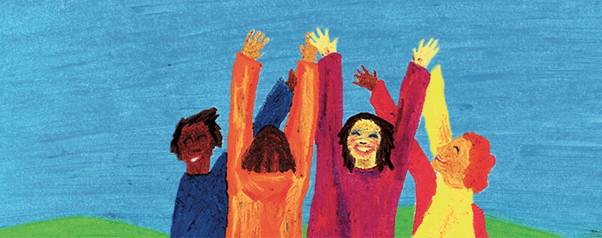
Picture above: Artwork above from the Everyday Heroes arts collaboration with students. Reproduced by permission

Ruth Friskney and Claire Houghton

Young survivors of gender-based violence are at the forefront of innovative responses to Gender Based Violence in Scotland. National young people’s participation projects like Voice Against Violence, Power Up Power Down, and Everyday Heroes have transformed Scotland’s understanding of gender based violence through young people’s perspectives. The projects’ creative, relationship-building approaches are rooted in the skills of support workers in empowering children to speak about abuse. Young survivors themselves innovate in speaking directly to people in power and reaching out to other children and young people experiencing GBV, including during Covid-19.

Voice Against Violence led this campaign, co-produced with Government, about young people’s experience of living with domestic abuse alongside their mothers.

Young survivors have worked to see children and young people recognised as victim-survivors of all forms of gender-based violence. A Voice Against Violence film was used by young survivors to critique the lack of recognition of children in legislation about domestic abuse.  A key step forward was achieved in the Domestic Abuse (Scotland) Act 2018 to finally recognise that the perpetrators’ ongoing psychological, physical, sexual and financial abuse adversely affects children as well as women.

Super Listener, designed by the children involved in Power Up, Power down, to set out what children want from the adults who work with them. Now available in nine languages through Improving Justice in Child Contact. Slide the arrows left and right for English (left) and German (right).

Key messages  are consistent across projects: young people don’t know how to seek support, support is inadequate, training is needed and specialist workers are invaluable. Young survivors have taken action on this, using fabulous innovative and creative methods: websites by young sexual violence survivors for support and information, training videos and resources like Super Listener for professionals and a national online platform currently being co-developed (That’s Not OK) to take forward survivor’s recommendations to Government.
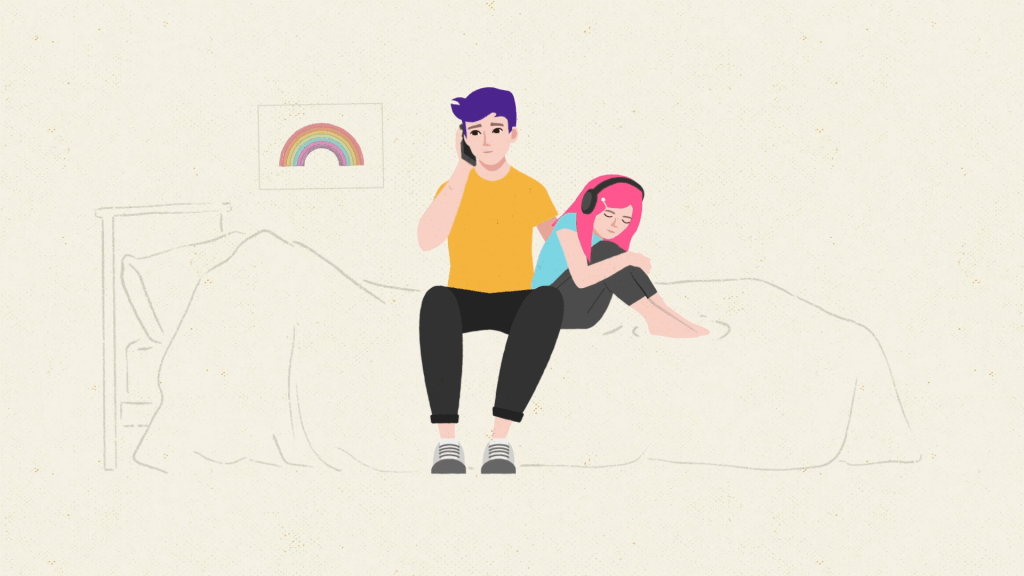
Still from You are not alone!, an animation designed by young people affected by domestic abuse for young people affected by domestic abuse. Watch different language versions from the Improving Justice in Child Contact media channel.

When COVID-19 hit, and evidence began to build about the ways in which the pandemic helped perpetrators of domestic abuse to harm women and children, Yello! a group of young advisers to Improving Justice in Child Contact (IJCC),  felt that

we had to do at least something small to help out – or at least let someone out there know that they’re not alone and what they’re going through will pass. [1]

What it was like to make the animations, from Yello’s blog: We knew we had to help

Yello! wanted to make sure that children and young people knew that there was help and how they could get to it. They worked on two animations (“You are not alone” and “If home is not safe”) and supported partners across the five countries of IJCC to tailor animations for their own languages and contexts.

Locally, young experts from AWARE, Angus Women’s Aid’s Young Expert group, created their own film about what young people affected by domestic abuse might be feeling and the questions they would be asking during COVID. The film signposts sources of help, to make sure that young people affected by domestic abuse – in their own relationships or alongside their mother – know, even in COVID, that “You are not alone”.
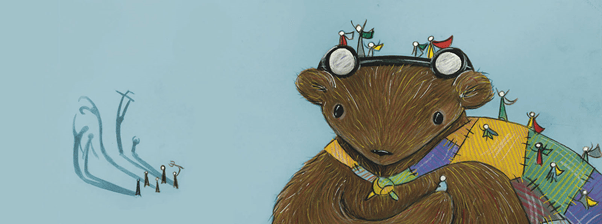
Artwork from the Everyday Heroes arts collaboration with students

A key message from all these projects is that the justice response to young survivors needs improvement – in particular for children and young people’s views to be given due weight and for the perpetrator, not the woman or child survivor, to be held accountable. Everyday Heroes’ call for action expressed through displays in Parliament and creative dialogue with key decision-makers resulted in a pledge for collaborative action by Ministers.

Child contact remains a key area of concern – one being considered by the Improving Justice in Child Contact project including Yello!, its young advisers. Evidence from young survivors indicates that domestic abuse continues even if a mother and child are able to separate from a perpetrator. Child[1]  contact can be defined as communication, such as phone calls or spending time, with a parent that the child does not usually live with, and its type and frequency can often be set by the Courts. Child contact is often used by perpetrators to continue to harm mothers and children. COVID-19 has provided perpetrators with additional opportunities to enhance their abuse.[2]

“Don’t dismiss us – we experienced it, and we know what we’re talking about.”

From Yello!’s evidence to the Justice Committee

In Scotland, Yello! have been instrumental in the development of the Children (Scotland) Act 2020, meeting with the Minister, submitting written evidence, and taking part in person in a session with the Justice Committee. One young woman worked with Scottish Women’s Aid to write a case study of her experience of the child contact system – with the aim of giving decision-makers a glimpse of what it is like for a young person not to be listened to, and to be told to spend time with someone she feels unsafe with.

Yello!, the young advisers to Improving Justice in Child Contact, dressed up as ghosts to meet the Scottish Minister for Community Safety in Parliament. Their key message was that young people affected by domestic abuse feel invisible in court processes that decide child contact.

Internationally, IJCC have inspired partner organisations and the young people they work with to reach out creatively to share their experiences and to meet directly with people in power. For example, young people working with the IJCC partners in Portugal have been invited to meet directly with judiciary and other key stakeholders. Maria, a young person working with the IJCC partner in Romania, has written a blog, including poetry, about her experiences:

It was only one wish I have had,

I asked not to see him again

And it is such a sombre thing

You demand that I must visit him.

I read and a tear slipped my face

Because in danger you have put me

You told me I need to stay with him

As if it was a little thing.

Note to my judge
‘Maria’, 13 years old, working with the Romanian partner in the IJCC project, writing about the experience of reading the child contact court order

Young survivors of abuse have transformed policy and practice responses in Scotland through participation – and are inspiring young people internationally with what progress is possible. Such innovation needs resources and the support of competent adults to fully harness the wonderful power, talent, expertise and passion of young survivors.

“I think projects like ours are important because not that many children and young people have a say in their lives, because people think we are too young to know better.”

Yello!, on the experience of taking part in participation work

[1] There is a large academic literature on the impact of domestic abuse on children and the particular issues around child contact such as: Katz, E. (2016). Beyond the Physical Incident Model: How Children Living with Domestic Violence are Harmed by and Resist Regimes of Coercive Control. Child Abuse Review 25(1), 46–59. Callaghan, J., Alexander J., Sixsmith, J and Fellin, L. (2018). Beyond “Witnessing”: Children’s Experiences of Coercive Control in Domestic Violence and Abuse. Journal of Interpersonal Violence, 33(10), 1551–1581 Holt, S. (2017). Domestic Violence and the Paradox of Post-Separation Mothering. British Journal of Social Work 47 (7), 2049–2067; Mackay, K. (2018). The approach in Scotland to child contact disputes involving allegations of domestic abuse. Journal of Social Welfare and Family Law 40(4), 477-495. Morrison, F, Tisdall, E.K.M., and Callaghan, J., (2020), Manipulation and Domestic Abuse in Contested Contact – Threats to Children’s Participation Rights. Family Court Review, 58 (2), 403-416.

[2] You can read Improving Justice in Child Contact’s response on COVID-19 to the UN Special Rapporteur on Violence Against Women

This blog was written by Dr Ruth Friskney and Dr Claire Houghton from the University of Edinburgh. Ruth is a Research Fellow on the Improving Justice in Child Contact project (funded through the European Union’s Rights, Equality and Citizenship Programme 2014-2020), working to improve participation in child contact processes for children affected by domestic abuse. Claire is a Lecturer in Social Policy and Qualitative Research working to improve young people’s impact on gender equality and gender-based violence policy, through Voice Against Violence (ESRC/Scottish Government funded), Everyday Heroes (Scottish Government) and the new ESRC UK project CAFADA. In writing this blog Claire and Ruth have drawn on the inspirational and creative work of the young people leading and taking part in the projects described in this blog, as well as the organisational partners: with thanks to them all.

Their twitter handle is @CYSRG1


DAY THREE: Returning Home And Violence Within The Home: COVID-19 and multiple gendered violations

This post, while engaging with some of the reasons around the rise of domestic violence, will primarily look into the multiple meanings and metaphors associated with home that the pandemic has made us confront.

Rukmini Sen

The COVID 19 public health crisis and the subsequent lockdown has generated discussions about the ‘shadow pandemic’ of the rise of gender based domestic violence. This post, while engaging with some of the reasons around the rise of domestic violence, will primarily look into the multiple meanings and metaphors associated with home that the pandemic has made us confront. As a part of the 16-day activism against GBV, and the UN Women theme ‘Orange the World: Fund, Respond, Prevent, Collect’ with a special focus on pandemic induced heightened domestic violence, I  will briefly assess what are the multiple ways in which home has been confronted the pandemic. I see contestations around five meanings of home emerging in this crisis all of which have gender based implications and consequences.

All of us by now have been made conscious about the need to stay at home to reduce the spread of the virus. In India, which this post focuses on, the first advisory came on March 16, directing closure of schools, regulations on mass gathering, ensuring physical distancing of minimum 1 metre between tables in restaurants, postponement of examinations, avoidance of non-essential travel. It was only a matter of time before we understood that the implications of stay at home in conjunction with work from home was going to be serious for gender based household work over and above the impact of professional work space moving inside the home.

The public discourse of Stay at home meant the homeless and the urban pavement dweller were excluded from the discussion

It has also had hierarchical implications depending upon the space inside an individual home—how many rooms, how many people in each room, how many members having their own electronic gadget to connect to the world outside the home? Space, privacy, personal phones all have gendered implications and there have been specific studies about women’s inadequate access to smartphones in India, before the pandemic.

Work from home for most of urban upper middle class women in India has meant a disproportionate increase in domestic labour. Finding  work life balance becomes difficult if not impossible because the increase in care work, in addition to the professional work all from the confines of the home. Middle class professional households were without assistance from paid domestic helps for at least the first two months of the lockdown and this impacted on women’s lives in manifold ways.

Traveling to the workplace is an important liberating journey for most women, including college going women students.

These sites, however gendered in themselves, still create the possibilities of travel, self time, friendships, conversations—away from caste-kinship determined existence within the home. While this situation is experienced by professional service sector women, the pandemic has increased the gender gap in employment. According to Ashwini Deshpande women employed in the pre-lockdown phase were 23.5 percentage points less likely than men to be employed post-lockdown.

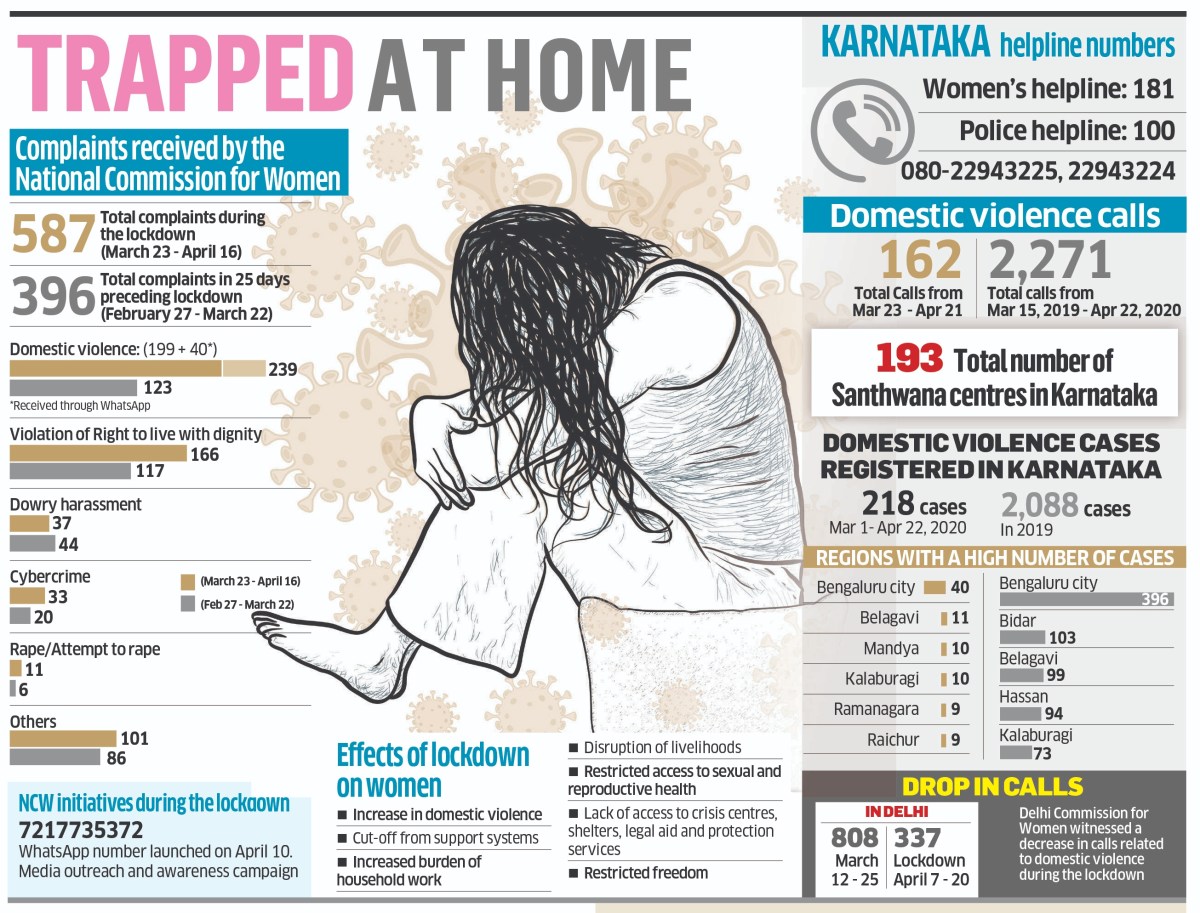
A third type of discussion around the home has happened in regard to violence within the home or domestic violence. It is necessary to remember that the stay at home, work from home advisories and experiences were clearly creating a condition for increase in domestic violence. According to National Commission for Women, domestic violence could have increased by 2.5 times during the lockdown. Some of the reasons for physical as well as verbal abuse as reported are ‘not managing resources properly’, ‘not serving food on time’, and also ‘not being able to procure rations/relief material’.

Specifically, in Tamil Nadu the reasons for increase in violence within the home were arguments arising out of sharing household work, suspicion over time spent on social media, unemployment resulting in a cash crunch at home etc. One of the main strategies for tackling COVID 19 -related rises in domestic violence has been to increase helpline services by various women’s rights, child rights and sexuality rights organisations in different Indian cities and a WhatsApp helpline number set up by the National Commission for Women. However, finding the opportunity to report cases with most members of the household also indoors has become even more difficult.

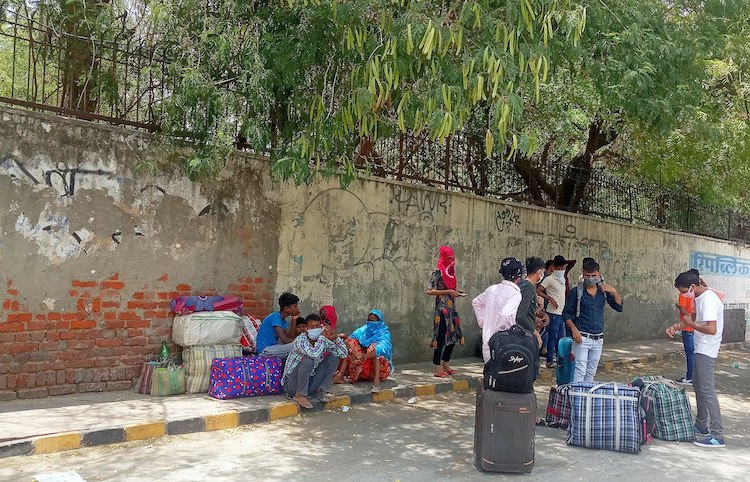
Indian migrant workers during the COVID 19 pandemic. Source: Wikimedia Commons

Images of migrant workers—a bulk of whom were women with children walking back home, travelling unimaginable distances by foot due to the sudden announcement of nation wide lockdown, are now global. What this clearly demonstrated is that big cities do not become homes for migrant labourers, they come there to work, mostly as construction workers and short term migrant workers face a complete sense of precarity if there is no daily work in the city. It is impossible to survive in the metropolis, to pay rent, buy food without wages. Seasonal migration for construction, migration in the city for sex work or bar dancer, migration due to agricultural purposes are to be understood as conditions where the worker comes back home when the work ends or goes to another place in search of work. Thousands of migrant workers walking back several days to reach home—where they could at least find food and the security of other members of the community —signify which is really shelter.

Finally, the anxiety and hope of home coming for many students who stay in halls of residence away from their parents, or in rented apartments in cities where they work, within or outside the country, away from their original natal or marital homes. Travelling back home for a certain class of people, takes a flight or an AC train to ‘come’ home/country of original residence has been disrupted and shaken up in ways that has never happened in the recent past. People of all genders are affected by this, but for women students or professional single women, the isolation during these months and its deep psychological impact are sure to have far reaching consequences.

The pandemic crisis opened up a sociological insight to the gendered site of the home as contested between the metaphors of caged, sheltered, violent and secure.

Rukmini Sen is Professor of Sociology, School of Liberal Studies, Dr B R Ambedkar University Delhi. You can contact her at rukmini@aud.ac.in

DAY TWO: Museum of Rape Threats and Sexism

Museum of Rape Threats and Sexism is a digital installation created with crowd-sourced screenshots of rape threats and sexist comments that women have received online for raising their voices for social justice.

Isha Yadav

Museum of Rape Threats and Sexism is a digital installation created with crowd-sourced screenshots of rape threats and sexist comments that women have received online for raising their voices for social justice.

 It is a crowd-sourced project where over 70 Indian women have contributed screenshots of harassment, rape threats, violence, sexist comments and incidences of receiving unsolicited images of genitalia. 

It memorializes the verbal violence and visualizes the effect of violence and addresses the global menace of violence threats. Museum is part of a growing movement against sexual harassment and solidifies all women and their courage to speak against it, and in broader terms, the #MeToo movement. 

On-line harassment including rape threats  has become a new age mass crime that exists privately and is faced by a large number of women. These are not isolated incidents, and often the perpetrators escape from the clutches of law with impunity, through deliberate failure of mechanisms to address these crimes. Suffering in silence deprives women of their citizenship rights guaranteed by the constitution.

Museum is a form of social movement: it exposes structural violence and seeks to create an intervention into rape culture; not only displaying the threats but also the responses and resistances of women, many of whom have internalized the abuse as the new normal.

In a demonstrative sense  it creates an ongoing, peaceful and democratic conversation about the digital violence women endure, and women can keep contributing their screenshots to the same. 

Some documentation of the in-process museum creation. Screenshots crowd-sourced from anonymous women, a tapestry of imagination on cloth material, screenshot of Google form link how it was crowd-sourced, the Facebook post created to advertise this project

This is my attempt to memorialize our collective past that delves into political violence. This memorialization and remembrance and our phone galleries become the spaces of contestation of our radically gendered histories, ideologies, subjectivities and imaginaries. The number of screenshots that women have contributed towards this project demonstrate the urgent need for such an intervention. The exhibition seeks to explore the dynamic ways through which affected communities can speak for themselves. 

Created with screens and slides of rape threats and sexist comments that women receive on-line, for raising their voices for social justice, these have been crowd-sourced through a Google Form Link. Screenshots of verbal assaults, violence and harassment, incidences with pornographic images, unsolicited genital pix that women receive in their inboxes through social media are curated into motion graphic videos and projected simultaneously using 3 projectors. The screening viewers/visitors are given a Trigger Warning Note at the door, to protect them from viewing triggering content without their will. On entering the exhibit, the viewers roam around the exhibition-room, the room is vacant with nothing other than projectors placed. 

It is an experiential walkaway. There is no sound. The tone of the exhibit is serious, yet calm.

I invite the viewers to experience a sense of trauma, yet only passively. The screenshots, although sourced over time, and through different individuals, when collated together evoke a sense of repulsion, outrage and hostility. The installation titled as a ‘museum’ presents itself as a visual archive of the subject, the vast expanse of not only data, proofs and records but also of inflicted emotions like trauma, pain, shame, conflict, rage, and verbal violence. 

I began this project by writing a social media post on Facebook and Instagram, crowdsourcing screenshots from women around me. I forwarded a Google form link, and sent personal messages inviting screenshots and making conversation about this, it is an ongoing project. Several of them said they deleted, several of them engaged in conversations with the senders about the affect of the verbal abuse and did not let the incident traumatize them. A few of them did not want any conversation till they were comfortable recalling the incident, and a complete new category of women laughed off at the commonality of these incidences. 

My idea was to explore connection, and create a lens for memorializing violence. The ethnography, overall, triggers action for the cause and becomes a strong indicator of where rape culture lies. It excavates the verbal violence from the normalization. 

The visual media here not only brings the digital artifact (screenshot) into the physical space of the exhibition but also transcends the private into public. The messages and comments that are often received on private chats are enlarged and publically displayed (names of the senders are concealed). The act of viewing somebody else’s private chat and trespassing into somebody’s moment of shame and rage points out to how much more is hidden and endured. The metaphor of museum is then evoked to point out to the large amount of facts hidden. 

Museum of Rape Threats and Sexism is a project that expands our understanding of sexual violence, gender based violence, victimhood and resistance and urges us to seek constitutional justice for the same.

Isha Yadav is Founder and Curator of Museum of Rape Threats and Sexism and PhD candidate in Women and Gender Studies at Ambedkar University Delhi.  In her doctoral thesis she is exploring some of the art installations created around the world that report and challenge violence against women. 

DAY ONE: Introducing the 16 Days Blogathon 2020!

Welcome to our annual blogathon to mark the global 16 Days of Activism Against Gender-Based Violence Campaign.

Photo: UN Women/Patrick Reoka licensed under CC BY-NC-ND 2.0

Welcome to our annual blogathon to mark the global  16 Days of Activism Against Gender-Based Violence Campaign. We are now in our fourth year of bringing together voices from civil society, academia, art, activism, and government around the world as our contribution to this ongoing struggle. The blogathon marks a continuing collaboration between GenderEd at the University of Edinburgh, the Australian Human Rights Institute at UNSW Sydney and Ambedkar University, Delhi

Gender-based violence – including domestic violence – is rooted in gender inequality, the abuse of power and harmful norms and cultural practices. One in three women worldwide experience physical or sexual violence.

We know that during times of crisis and instability, the threat of GBV increases. In 2020 the COVID-19 pandemic has had wide ranging consequences globally and has exacerbated economic and social inequalities. The pandemic and subsequent lockdowns have also thrown into sharp relief the longstanding hidden pandemic of gender based violence.  And it has underscored the grim feminist insight that ‘home’ can be a dangerous, sometimes deadly, place for women and girls – and for people with marginalised gendered identities.  As the UN Secretary General has noted:

“Accompanying the crisis has been a spike in domestic violence reporting, at exactly the time that services, including rule of law, health and shelters, are being diverted to address the pandemic.”

Gender-based violence – including domestic violence – continues to be an urgent and intractable issue that blights the lives of women and girls and diminishes their rights. Along with the writers whose work you will read over the coming days, and the more than 6,000 organisations who run 16 Days campaigns across 187 countries every year, we are united in our commitment to women’s equality and share a desire to see a world free from sexual and gender-based violence.

From Monday 25 November (the International Day for the Elimination of Violence against Women) to 10 December (Human Rights Day), we will be posting blogs that explore pressing issues in gender-based violence. 

Through their blogs, we travel from Scotland to South Korea; from Australia to South Africa via India and beyond. We see how gender-based violence exists in all spheres – from past to emerging and ongoing conflicts, historic injustices, in houses and on university campuses, in villages and cities. And increasingly, overwhelmingly, in virtual spaces. 

Our remarkable contributors look at digital violence and resistance; they interrogate the multiple meanings of home and the role of art and design based practices to rethink gendered space.  We report on ten years of ‘counting dead women’ in the UK one of the first femicide censuses in the world. And we learn about the power of art  (visual, performance, music and dance) to resist, expose and survive gender-based violence; to provoke a reckoning and to seek justice and change

As well as artists and performers, this year we have amplified student voices and we are delighted that our contributors in 2020 include current and recent students of AUD Women and Gender Studies, Social Design and Sociology, Edinburgh College of Art and SOAS,UK .

We will be posting updates on Twitter from @UoE_genderED and @HumanRightsUNSW and look forward to sharing these stories with you over the next 16 days. We hope that you will share them further.  

Opening our 2020 blogathon is Jo Clifford  – playwright, trans performer and activist – and creator of The Gospel According to Jesus, Queen of Heaven  an extraordinary piece of work which has been transforming lives – and provoking hate for ten years. She writes about the experiences faced by the Brazilian production in a country which is the most dangerous in the world for trans people.

Signed, Co-curators of the 16 Days blogathon

  • Fiona Mackay, Director genderED, University of Edinburgh
  • Louise Chappell, Director Australian Human Rights Institute, University of New South Wales
  • Rukmini Sen, Director Center for Publishing, Ambedkar University Delhi
  • Aerin Lai, student editor, University of Edinburgh
  • Jessica Shao, student editor, University of New South Wales