DAY EIGHT: Livelihoods Collectives – A safe space for refugee women in India 

Hamsa Vijayaraghavan from Migration and Asylum Project writes about refugee women’s needs to find a safe space and the small livelihoods projects, such as Silaiwali, a local social enterprise that employs refugee women as artisans.

Hamsa Vijayaraghavan

Featured image: Refugee women creating handmade artefacts as part of the small livelihoods project by Hamsa Vijayaraghavan

“We are all refugees here, our lives in this country are difficult. When we come out of our homes to work at the centre, we sit and laugh and work together, and learn from each other…it makes our troubles lighter”. 

In India, the world’s largest democracy, a country that has prided itself on its warm treatment of its guests, refugees continue to be persona non grata. In the absence of a specific law that regulates asylum, they are simply “illegal aliens” with no legal status or socio-economic rights. Women make up over half of the total refugee population and are even more vulnerable within this group; they are often traumatized by past experiences of sexual violence and conflict during transit. It is often only much later that they find the words to speak about their past, if at all. In the aftermath of the global pandemic that has increased the burdens of isolation, increased the risk of exposure to sexual and gender-based violence, and reduced access to support networks and services, these women are now more vulnerable than ever.  

The most immediate challenge for refugee women is that of providing for their families. For many of these women, they find themselves to be in a position of caretaker as well as provider for the first time. Many arrive in India as single heads of families, having been forced to flee their countries after the death or disappearance of male family members. The factors that drive sexual exploitation – engendered patriarchal norms, poverty, low literacy, lack of human rights protections, and personal history of gender-based violence – are all amplified for refugee women. There have been recorded instances of refugee women and girls forced into survival sex in the country of asylum due to the almost total unavailability of work avenues for them.  

Against this backdrop, the opportunity to find a safe place where they can earn a decent living is an almost unachievable dream for these women. Most of these women, raised in conflict-ridden countries, have not had the opportunity to go outside the house to earn the formal qualifications that almost all employers in India ask for, nor can they demonstrate the work experience that might help them make up for lack of a degree nor the language skills to articulate their suitability for available jobs. However, at my organisation, Migration and Asylum Project, we have the opportunity, as legal advisors, to interact closely with them; we see that these are women who have survived despite the odds, and need but a small push in the right direction to thrive.  

In the course of our work, we have spoken to over 2000 survivors of gender-based violence, women who have risen above their trauma and are now raising their families in a foreign land that offers so little by way of support, driven by nothing more than sheer determination to ensure that their future children have better opportunities than they were given.

We hope to encourage this spirit with a very small livelihoods project that we run in collaboration with Silaiwali, a local social enterprise that employs refugee women as artisans to produce high-quality handmade artefacts out of waste fabric sourced from clothing manufacturers.  

Our objective simply is to provide a healing space for the women, a place that they can come to for safety and comfort, while also ensuring that they can engage their own creativity and strengths to acquire the skills and earnings that they need to live with dignity and to rebuild their lives, one stitch at a time. Many of these women already come with skills in traditional crafts such as embroidery, handed down from previous generations. At Silaiwali, they get to use their talent to provide for their families and also receive training to enhance ancillary skills such as tailoring, business and management.  

Needless to say, most are thankful to step out of their homes – often cramped spaces with too many people and too few resources – and into a space where they are amongst friendly faces that know what it takes for them to show up and carry on. There are also many empirical studies that suggest a mindfulness practice such as embroidery can have a therapeutic effect on the mind and body, and is effective in reducing the stress, anxiety and depression induced by severe trauma.  

This project, small in scale and huge in impact, has been no less gratifying for us than for the artisans. It has taught us that, while we tend to speak in numbers about refugees, there is an individual story of resilience – made up in many words, in many languages – behind each one. The satisfaction provided by seeing a finished product emerge from this exercise is definitely worth every bit of time and effort we put into ensuring we can all keep at it, artisans, program staff and funders alike.

Author’s Bio

Hamsa Vijayaraghavan completed her law degree from India and her Masters from the University of Rouen, France. She has nearly 2 years of work experience with the UNHCR field office in India. Hamsa has previously worked with Bail for Immigration Detainees and with Refugee and Migrant Justice, both in London. She has also worked as a consultant with the Ministry of Women and Child Development of the Government of India and UNICEF on drafting child protection laws. Hamsa is currently the Chief Operating Officer at Migration and Asylum Project, India’s first law centre dedicated to the study of forced migration issues, where she manages all the refugee legal assistance programmes including those for legal representation in the UNHCR asylum project. She has expertise in dealing with claims involving displaced women and children. 

DAY SEVEN: The sisterhood – reflections on the challenges and strengths of working with First Nations women’s experience of personal trauma – colonisation, displacement and violence 

Today’s piece features an interview with Mareese Terare and Rowena Lawrie, who work with First Nations women and their personal trauma of colonisation, displacement, and violence. Their powerful interventions demonstrate the enduring impacts of coloniality, displacement among First Nations’ community, and the strength from stories of women resisting violence everyday.

An interview with Mareese Terare and Rowena Lawrie

Featured image credit: Mareese Terare

What does this year’s Blogathon theme mean to you?

Rowena: What it means when you don’t have basic human rights like a safe landing place, sense of belonging and security is disconnection, increased safety risks and no safe place. There is an assumption that Australia is the “land of the lucky”, the “land of the free”, but we know that Australia is also a country stained with murder, genocide, child trafficking and racism. Not everyone has a “safe landing” in Australia either – I am also considering the number of people that were trafficked to Australia in the last year, women who are exploited for labour and sex crimes. Women of colour and culture.

Displacement has been a long theme for Aboriginal people, including families like mine. It impacts on connection, safety, security, parenting, relationships and a sense of belonging, which is a fundamental human need, and culturally important.

This Blogathon creates a safe and necessary space for many narratives, for many voices – that is so important. It is vibrant and revolutionary to have lots of voices talking about gendered violence.

Mareese: Many women looking for safety are forced to move from their country, town and family, and are displaced as a result. Women who have migrated often experience racism in this country, and this directly affects First Nations women. There are also challenges of intersectionality – multiple intersecting experiences of discrimination in the lived experience of these women. From a First Nations perspective, having a voice when you don’t have those connections is hard. This Blogathon gives voice to so many women who don’t have a voice.

How has colonisation, displacement and family violence affected your lives and the lives of the women you work with?

Rowena: In our ways of being, kinship systems and lore protect women and we had criminal sanctions to deal with people who harmed. Those sophisticated systems of safety in our cultures were impacted by colonisation and legislations that offered no safeguarding again violence– we know this because the violence has not decreased, but has gotten worse.

In a colonised world my safety is compromised. In a colonised world, there are increased risks as family kinships systems are impacted. In a world of displacement, I can become isolated from my family.

Violence operates well in contexts of isolation and racism. The systems that are now in place to protect women from violence are flawed and are certainly not always culturally safe. If I seek support from the structures that exist, I can experience further discrimination and access issues. The systems that are designed to help are also the systems that harm Aboriginal people. I see women trying to navigate these systems, and sometimes they are judged and fear further consequences such as “intervention” by child protection services. Sometimes women will live in violence and keep their children safe at the same time. It’s a tremendous burden on victims, who need support, not judgement.

Mareese: Knowing about the prevalence of gendered violence in our lives gives me the capacity to make women’s needs visible. We did a First Nations women’s workshop two weeks ago and heard horrendous stories of human rights violations. What came through was the fire these women have in their bellies – they won’t tolerate it. This is tribal and comes from our ways of knowing.

When women connect, and their philosophy is about coming together as sisters to fight domestic and family violence (DFV), they are very strong. It is so important when working with DFV to have spaces to connect to resist the violence and the impacts of colonisation. Women have been doing this forever and they are powerful in it.

What are some of the strengths and challenges of doing this work?

Mareese: We were exhausted when doing this workshop, but it is through survivor stories that we can continue this work. It’s a challenge having lived experience, but listening to those women’s stories and their strength is empowering. When you have lived experience, you have empathy, but it is important to honour your own story and not allow it to influence that engagement. Getting to that place comes with good therapy and good supervision. There is always a challenge to separate the two.

Rowena: The challenges of doing this work are enormous for services and women. It is hard to know where to start. There is:

  • a lack of national commitment and adequate resources for women and children who are escaping violence
  • a lack of consistency in regulations across jurisdictions. This means when women travel over state or territory borders for safety, they do not get the same response from systems
  • racism and discrimination that means difficulty for women to access services – we need funding for culturally safe and trauma-informed service design and delivery. And to add to Mareese’s earlier point about intersectionality – violence in same sex, transgender relationships, and those who live with different abilities, needs additional and specialist services.
  • services that re-traumatise through replicating dynamics of power and abuse resulting in isolation
  • the allocation of resources. It is critical that we have cultural safety and acknowledge that women need safe spaces to connect with other women. It is in these circles of sisterhood and solidarity that safety is valued.

I am often very grateful to work alongside survivors of violence and the services that support them. There are amazing stories of women resisting violence every day – who are constantly assessing their safety and the safety of their children – they live with a sense of terrorism daily and yet are courageous and formidable in their ways of being and how they care for their loved ones. I see Elders, Aunties and strong Aboriginal men stand up to violence and keep families safe,  in line with Aboriginal ways of being, knowing and doing. I see health practitioners, clinicians, counsellors, Aboriginal specialists, lawyers, child protection workers, policy makers and educators, making phenomenal efforts and doing exceptional practice all the time. It inspires me so much. This work has grown me as a woman – I have always worked in this space and will always do so.

What needs to change?

Mareese: I started my work in refuges in 1985 and watched refuges grow in regional towns. Since 2001, I have watched those refuges disappear. Now we question high rates of homicide when government and laws have taken away safety. I would love to see more research into whether an increase in domestic homicides correlate with reduction in safe refuges. We need to look at the reasons why the systems are not responding to First Nations peoples. How many more women need to die? We need safe spaces for women to connect to make sure no one is displaced by violence again. A recent ABC 4 Corners documentary How many more? is a call for action.

Rowena: I think the concerns around national regulations, legislation, and swift responses can be interrogated through a Royal Commission. Right now, we have a government acting like a perpetrator of violence – withholding resources, keeping the harm minimised, holding the narrative and power, weaponizing services against each other. It’s truly disturbing and needs a massive overhaul. What happens when people don’t follow the existing legislations and policies – not very much. There’s no accountability. I think a Royal Commission can really zoom in on what needs to happen nationally.

Authors’ Bios

Rowena Lawrie is the Director (and founder) of Yamurrah, a collective of First Nations clinicians, educators, academics, consultants, who specialise in professional development, supervision, therapy, training, project consultancy and research. Rowena has over 25 years experience as a clinical social worker, has a background in law and justice and a passion for neuroscience. Rowena works with survivors of complex and collective systemic trauma and the clinicians who work with them, and also an interest in research and systemic change. Rowena was raised and lives on Darkinyung country and is a descendant of Wakka Wakka and Wiradjuri nations with her matriarchal lines – Longreach extending to the Gulf of Carpentaria.

Mareese Terare is a Bundjalung Goenpul Woman. Her creation story extends from Brunswick Heads NSW to North Stradbroke South East Queensland. Bundjalung from Tweed Heads both sides of the river; Minjungbal northern side and Pooningbah southern side. Goenpul from North Stradbroke Island. Mareese was raised by her mothers who are proud Goenpul/Bundjalung women who taught her the importance of family, love and connections. She is committed to a lifelong journey of embracing and learning about her worldview, by unpacking colonial structures that have impacted greatly on her personal life and the lives of her families.

DAY SEVEN: Shayma’s story – Early marriage among Syrian refugee women from rural backgrounds 

As part of the FIELD SONGS project, Ann-Christin Zuntz and her colleagues conducted two workshops with middle-aged Syrian women in Gaziantep, Turkey to document Syrian refugees’ agricultural heritage. Read about Shayma’s story and the complexity behind early marriages among refugees.

Ann-Christin Zuntz

Featured image: Syrian women’s homemade cooking in Gaziantep, Turkey (Zuntz 2022)

During the Syrian conflict, the spectre of early marriage has become a staple of humanitarian discourse and NGO-run awareness-raising sessions. Humanitarian actors such as Save the Children and UNICEF ascribe early marriage to a combination of added livelihood pressures and Syrians’ patriarchal “culture”. The reality, of course, is not that simple. In this blog post, we reflect on how Syrian women in Turkey navigate changing gender roles, economic losses, and new income-generating opportunities in exile, and we consider the implications of their experiences for how we conceptualise and combat gender-based violence. 

In March and August 2022, we conducted two workshops with middle-aged Syrian women in Gaziantep, Turkey, for our FIELD SONGS project.i Through these conversations, we sought to document Syrian refugees’ agricultural heritage. In recent years, humanitarians have taken an interest in the skills that refugees acquire in host countries, and that they could later benefit from when rebuilding their homes. By contrast, in our work, we focus on the agricultural expertise and traditions that refugees bring, and that still matter for their present-day survival in Turkish agriculture, but also shape their sense of identity.

During our workshops, it soon became clear that Syrian women had very distinct, gendered experiences of working in farming: many considered women as the “pillar” of rural families, as they used to work on the fields, but also cook, weave baskets, and sew clothes inside their homes. For many participants, productive labour in agriculture was closely linked to reproductive activities, such as marriage and childbirth.  

We first heard from Shaymaii, a married woman from Palmyra, in March of 2022. She spoke movingly of her youth in rural Syria. Growing up under the watchful eyes of her father, she was not allowed to leave the family home or attend high school, even though some of her female cousins enjoyed greater freedoms. Instead, she often helped her father with agricultural tasks; these shared activities forged a strong bond between them and are now some of her fondest childhood memories. As a teenager, Shayma fell in love with a neighbour, but had to fake disinterest when he asked for her hand in marriage – admitting that she had feelings for the young man would have been shameful. Heartbroken, she turned down several more suitors, until her father threatened to divorce her mother if she refused to get married.  

Image above: Syrian women working in a greenhouse in southern Turkey (Zuntz 2022) 

At the age of 17, Shayma thus became the wife of an older man. While this was far from a love match, her husband introduced her to her greatest passion: painting. She lived a comfortable and busy life managing their growing household until the onset of the Syrian conflict, when Shayma and her sister lost several of their children in an airstrike. In Gaziantep, the family now gets by through Shayma’s work in a care home; she also regularly takes part in NGO activities. During workshop breaks, Shayma proudly scrolled through pictures on her phone: of her oldest child, a 16-year old daughter, and of beautiful artwork that she had made herself. 

In August 2022, Shayma told us that she and her husband had decided to betroth their adolescent daughter. We were surprised: had she not resented her own experience of an early and arranged marriage? But for Shayma, the passage of time, and life as a refugee, had changed her perspective. “I now understand my father better”, she explained. “He was only trying to protect me.” The reasons behind Shayma’s decision were complex: having already lost one child, she feared for her daughter in the urban sprawl of Gaziantep. She also believed that there were no other possible futures for her daughter in Turkey. In the same discussion, Shayma advocated for teaching Syrian children about agriculture, even if they now lived in Turkish cities, as white-collar jobs remained out of reach even for highly educated refugees. Finally, Shayma felt that displacement and new urban lifestyles were threatening the tight-knit rural communities that she had grown up in and sorely missed. But she thought of her agricultural heritage – including particular gender roles – not only as a bridge to the past, but also to the future: holding on to traditional expertise and family structures could later facilitate refugees’ return to Syria.

Agricultural work is family work, as evidenced by Shayma’s own memories of farming alongside her father. To her, working the land came with a deep sense of connection, encompassing nature, parenthood, and the family – aspects of life that make it “complete”. In Shayma’s version, marriage would thus not prevent a fulfilled and active life for her daughter, but rather make such a life possible within the framework of their community of origin. 

Shayma’s story does not fit humanitarian narratives about how stopping early marriage could magically unlock women’s potential as economic and even development actors. In her version, fathers and husbands are not simply oppressors, but also loving and encouraging. Similarly, women are not fully devoid of agency. Shayma has worked very hard for her entire life, first as an unpaid helper in her father’s and husband’s households, and now as a salaried nurse in Turkey. Paid or unpaid, her work has been always been meaningful to her, and she takes great pride in it. While she had no say in arranging her own marriage, as a matriarch, she now gets to decide on her children’s future.  

Practices such as early marriage that may look like “unchanging traditions” are highly fluid and given new meaning by refugees struggling to survive in unfamiliar socioeconomic contexts.

Behind sensationalists reports on rising numbers of Syrian “child brides” lie complex truths about what jobs displaced men and women used to work and now have access to, and how economic pressures, but also love and hopes for the future, shape families’ decision-making around marriage. As researchers working on refugee labour rights, we find that fighting gender-based violence against refugee women requires an integrated approach that does not single out “the patriarchy”, “refugee culture”, or “refugee men” as the usual suspects, but rather sheds light on displaced people’s gendered positioning in restrictive asylum regimes and exploitative global economies, and on their own expectations about what a “good life” may look like. 

[1] The FIELD SONGS project, led by Prof Lisa Boden from the University of Edinburgh, is a collaboration between social and agricultural scientists and musicians from the University of Edinburgh, Syrian Academic Expertise and Douzan Art & Culture, two Syrian-run organisations based in Turkey. For a full list of all team members, please consult the project website: https://www.onehealthfieldnetwork.org/field-songs

[2] All names changed.

Author’s Bio

Dr Ann-Christin Zuntz is a British Academy Postdoctoral Fellow in the Social Anthropology department at the University of Edinburgh. She is an economic anthropologist, with a focus on the intersections of labour, migrations, and gender in the Mediterranean. Ann does collaborative research with Syrian agricultural scientists, humanitarian, and cultural practitioners within Edinburgh’s One Health FIELD Network. 

DAY SIX: Displacement: Narratives of Contestations and Negotiations

Tanya Chaudhary’s piece follows from Sunalini Kumar’s as part of a broader discussion on displacement and the disproportionate effects it has on women. In particular, the reorganisation of urban space has gendered effects that lead to the further exclusion of women from public spaces.

Tanya Chaudhary

Featured image above: Author’s own

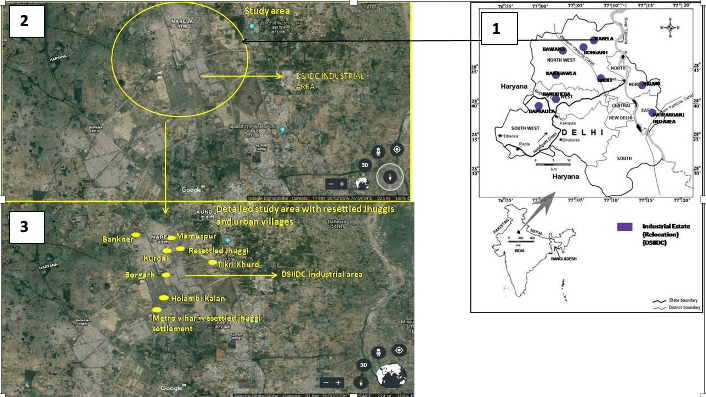
In the background of consequences of reorganization of urban space, this blog highlights the aftermath of the displacement of the working-class to the periphery. It uses the case study of a peripheral region of Delhi, called Narela, to show that this new site was marked with contestations and conflicts. Narela is located in the northern part of Delhi, situated 30-40 km from the centre of the city (Figure 1). I discuss one important aspect of displacement, which the field-stories offered – that of ‘Placelessness’ amongst a displaced community and how it is – produced and reproduced at places of residence and work.

Figure 1: Study area
1: Location of places to which industrial relocation took place after 1996 Supreme Court Order of industrial relocation
2: Location of Narela
3: Location of resettled Jhuggis and urban villages in Narela, where workers were interviewed.
Source: Author, Field Study, 2017-19

Resettlement always has its own contestations and there was a restructuring of the social lives of people of the Narela resettled basti (slum) dwellers, especially with the absence of basic infrastructure.

Through the creation of resettlement colonies, albeit through processes of displacement, the ‘urban poor’ was included into the legal/formal ambits of city. However, these ways of inclusion intensified a certain kind of exclusion - struggling for livelihood, basic infrastructure, housing and social dignity. An intense impact on women’s lives was seen resulting in loss of their employment and an added burden of household activities residing in an area with no access to basic resources such as water, electricity, ration or proper housing.
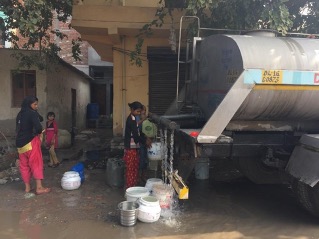
After two decades of resettlement, there is still no access to tap water in all the houses, most houses depend on municipal water tank, mostly fetched by women of the household.
Placelessness post Displacement

The built environment of resettlement colonies with poor housing structure, no proper drainage and sewerage, water facilities, and narrow roads signified poverty and therefore was translated into the ways they were perceived by the already existing local communities (Varga, 2013)[1]. The resettlement colonies were not able to provide these people with a sense of security because of a sense of disorientation and placelessness after displacement. On my pilot field-visit in December 2017, I witnessed a commotion post an episode of brutal violence against an ASHA (Accredited Social Health Activist, who are always women) worker in Pocket 11, who retaliated and filed a complaint against illegal selling of alcohol in Narela, because the men would spend most of their income there. There were a few women in the resettlement colony with the ASHA worker who went ahead and filed a police complaint. Later during the conversation about this incident with women, respondents of Pocket 11, opened up about alcoholism becoming a household problem for which the ASHA worker and a few others rightly raised their voice.

The women revealed that alcoholism and drugs have made it difficult for them to walk freely in their own neighbourhood streets and use public spaces. It not only had increased financial burden on women of the households but had also pushed young girls to dropout from school and take home-based work, which brought them to the judgement of the community members.

Hence in many cases of harassment or violence the women and young girls get no support from the community members. While narrating the whole incident, a woman mentioned, ‘Everyone was recording the incident but not one came in her support while it is everyone’s problem’. Alcoholism was exacerbated as a problem post resettlement because of a lack of community support to women to speak out against it in contrast with the support of community members they received when they were in ‘Delhi’ (the term used by resettled workers for core areas of Delhi from where they were replaced). Men of Pocket 11 had their own perspective about alcoholism, explaining that they mostly fell off the wagon and gave in to addiction because of loss of earlier employment opportunities and a long duration of struggle while resettling. 

Besides the above factors, the vacant and unregulated spaces in Narela  provided further opportunities to young men for using it to consume alcohol or drugs, which they could not do on the streets of resettlement colonies. The men from the local community also used these spaces for consuming alcohol and hanging out.

The Delhi Development Authority commercial complexes and community spaces in Narela resettlement colony were public spaces which have become highly masculine spaces while women are usually left with home spaces and streets of resettlement colonies to socialize with no safe spaces around for their mobility.

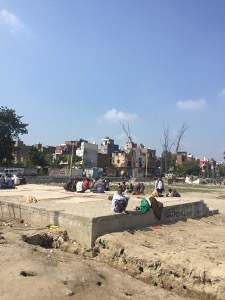
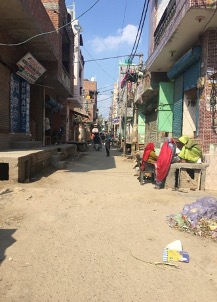
On asking women about usage of Baraat Ghar (community space) in the resettlement colony of Pocket 8, women said they used it for teaching stitching and embroidery to young girls for a while, but because men and young boys started using it for drugs in the evening or late at night, parents stopped sending the girls. The space is now vacant and is only used by men and young boys. The park in Pocket 4 was used by boys to play or to smoke marijuana which made the space inappropriate for girls and women. The women only felt safe on the streets of the resettlement colonies or inside their homes.

Men occupying park outside the resettlement colony of Metro Vihar, in Narela
while women occupying streets inside the resettlement colony

The women of the resettled household found no work as domestic workers, which they had lost due to resettlement. The households of the local community did not prefer to employ women from the resettlement colony. Aware of this bias, women from the displaced community therefore preferred working in industries or home-based work. Violence associated with the resettlement colonies is inherently linked with the moral geography of Narela, which feeds into the process of how this space is perceived and further conceived. In an interview, Neeldaman Khatri, Member of the Legislative Assembly for Narela, had spoken about pushing for better law and order situation in Narela for assuring safety of women, which otherwise is known for not being safe for women. The violence, illegalities and everyday politics of space were not often resisted by the residents because of severed ties and a lack of solidarity amongst community members after resettlement. The moral panic was not only about the working-class community but also about certain religious and ethnic communities. The locals in Narela believed that the resettled slum dwellers used the place ‘inappropriately’ and their behavior, eating habits, religious practices would harm the meanings associated with the place. The presence of the working class in industry spaces, however, was not met with any tension, because that was assumed to be their place.

The displacement of working-class communities to resettlement colonies in the periphery of Delhi became a part of Delhi’s Resettlement and Rehabilitation Scheme. However, as evident from the above accounts drawing on lived experiences of women, the displacement has not only placed them in a space which harbours resentment, conflict and violence but has also weakened their networks and access to support of their community. Lack of government schools (ibid), accessible public spaces and employment opportunities for educated girls and land uses designed with no coherence, restrict the mobility of girls and make the place unsafe for women. The resettlement had an opportunity to set an example for co-creating safe spaces for working-class women. The failure of planning policies to adequately plan for inclusive spaces is also an inevitable result of the lack of effort to involve communities in the planning process.

References

[1] Varga, J. J. 2013. Hell’s Kitchen and the Battle for Urban Space: Class Struggle and Progressive Reform in New York City, 1894-1914. New York: NYU Press

Author’s Bio

Dr. Tanya Chaudhary is presently working as an Associate Fellow at the Institute for Human Development. She has a PhD in Development Studies from Ambedkar University Delhi and was a recipient of Junior Research/Senior Research Fellowship from UGC during her PhD. Prior to this she had pursued Master’s in Geography from Jawaharlal Nehru University followed by another Masters in Regional Planning from School of Planning and Architecture, Delhi. She had briefly worked at Town and Country Planning Organisation, Delhi as a Research consultant before joining a full-time PhD course. She has been a PhD exchange student at the Department of Geography, Indiana University Bloomington.

Her research work and publications contributes to the discipline of Urban Studies, Labour Geography, Migration Studies and Gender and Development. At IHD, Delhi she is managing and researching on a project on Tribal Migration from Rajasthan. She has also contributed to other projects on Social Security in the organised sector, UNICEF project on Cash Transfer Scheme for girl child and upcoming Delhi Human Development Report.

DAY SIX: Migration, mobilities and displacement: A view from the ground in Nithari, India

Sunalini Kumar writes about displacement and the disproportionate effects of migration on women in Nithari, a village of thousands of ‘urban villages’ in the industrial suburb of NOIDA (New Okhla Industrial Development Area) in India.

Sunalini Kumar

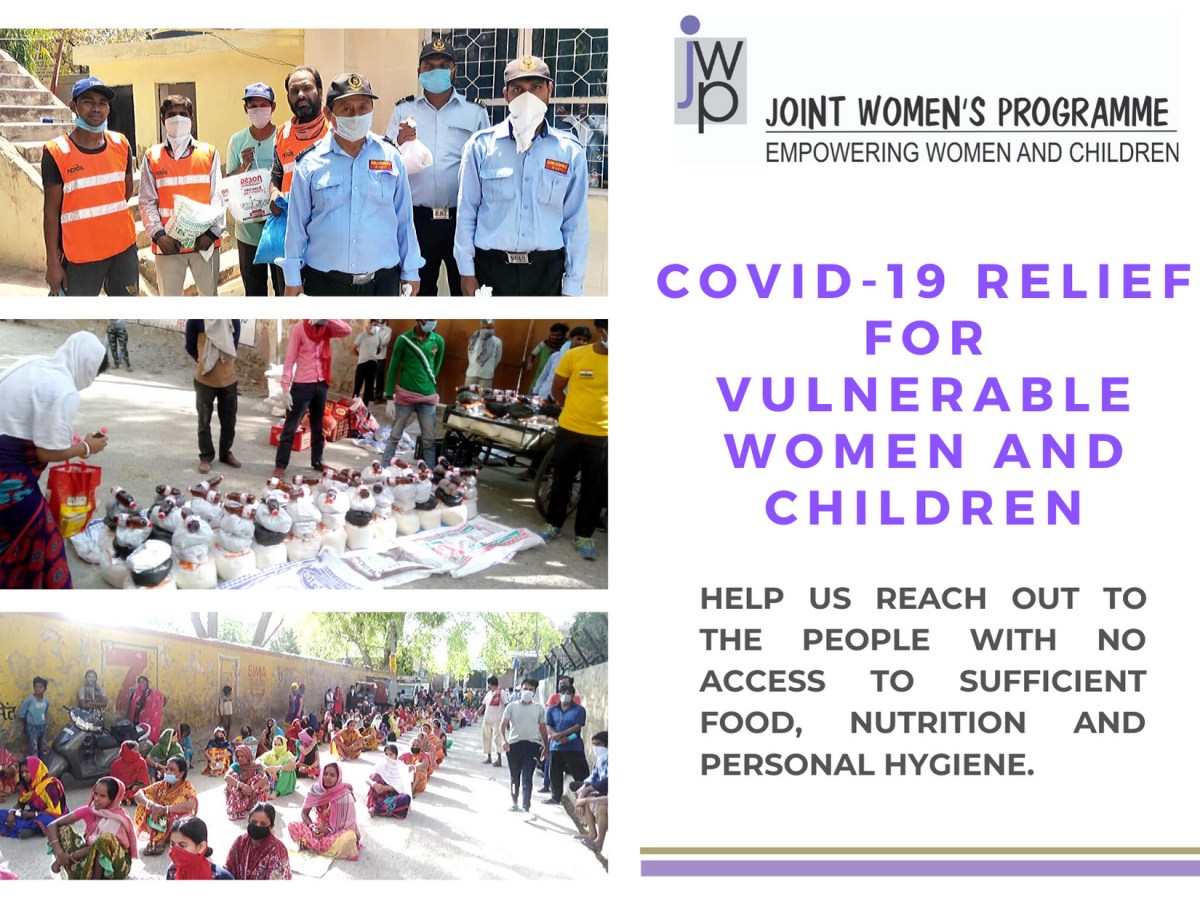
Featured image credits: Joint Women’s Programme

Nithari village is one of thousands of ‘urban villages’ in the industrial suburb of NOIDA (New Okhla Industrial Development Area), just outside India’s national capital, Delhi. Nithari presents a picture of congestion, overflowing sewage, narrow galis (streets in Hindi) and ramshackle, hastily erected tenements. Nevertheless, over the decades Nithari has become home to thousands of marginalised and poor Indians from North India and beyond.  

In the popular press – both Indian and foreign – economic liberalisation brought prosperity to the country and expanded opportunities for the poor. However, the underbelly of this growth has been devastating especially for those who were suddenly defined as ‘unskilled’. Women form a huge section of the category of the especially vulnerable, ‘unskilled’ poor in a phenomenon termed the ‘feminisation of poverty’ by economists.

Often illiterate, jobs like babysitting; elder care; and employment in hospitals and factories, which were previously open to them, are now denied under the modern, ‘corporate’ organisation of labour.  

Therefore, urban migration for women is different from the experiences of men who are generally literate and have a higher bargaining status. Migrant women find themselves caught in a vicious cycle of low wages and a sudden decline in status compared to their lives in the village. In Nithari, the Joint Women’s Programme – an autonomous women’s organisation established in 1977 – reports that despite their lower status, migrant women have become the primary breadwinners of their families. This is either due to destitution; domestic violence; or because their male partners are afflicted with physical and mental health issues. However, persistent cultural factors in these communities simply don’t acknowledge the reality of women as workers. Due to these long-term factors, the effects of the 2020-22 COVID-19 pandemic have been especially devastating in Nithari. Padmini Kumar of the JWP shared some examples of migrant women’s distress during the pandemic: 

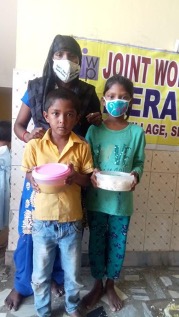
‘Food on plate’ Image credits to: Padmini Kumar

A migrant labourer from Bihar, Rani was stranded in Nithari with her children. Her husband had gone to another district in search of work and lost contact with the family. With no money in hand Rani would stand in front of the gate of the emergency food ration service organised in the school run by JWP. One of the teachers asked her if she was looking for someone. She started crying and confessed that she and her children had not eaten for three days. They did not have a phone to contact anyone in their village and were staying under a stolen old polythene banner to protect themselves from the hot sun. JWP continued to give her food till the end of lockdown but lost touch with her post-pandemic.  


Omvati was working as a construction labourer along with her son after her husband had died due to a workplace accident. The contractor paid them a small token amount to cremate the body. With grief weighing them down they preferred to go back to their village. But the sudden lockdown had left them with debts and the contractor refused to give them their earlier payments. The single room they had rented needed to be cleared of dues. They were left locked inside the work site, with very little to eat and with no access to a clean toilet. After four days when they ran out of groceries, they started waving their clothes to try to catch the attention of passers-by but due to the lockdown there was hardly anyone in the vicinity. Out of hunger and exhaustion they were found semi-conscious by one of JWP’s community workers. Emergency first aid was given and they were taken to hospital. It was ensured that they were given food every day until the end of the lockdown. Later the JWP volunteers met the contractor to redeem a major part of their wage dues and the family was sent home as per their own wishes. 

There are many such stories in Nithari, like the ones shared above. The COVID-19 pandemic and the ongoing economic fallout of it in India has elevated the ordinary marginalisation of migrant women in Indian cities to widespread destitution. This is a silent crisis that has not received the kind of attention from the government and the media that it needs.

In Nithari, migrant women are in danger of losing what little they had before the pandemic; and yet they remain the fragile pillars, on which their children and others depend. Without sustained intervention by the state, these women will become one of the long-term casualties of the pandemic, without even the formal acknowledgment accorded to other victims. Gendered violence takes many forms; Nithari’s women experience it not only directly, but also in its most insidious form through the uncaring patriarchal state.  

Author’s Bio

Sunalini Kumar is Associate Professor at the School of Global Affairs, Dr B R Ambedkar University Delhi. She was educated at Delhi University, JNU and Cambridge University. She has previously been Visiting Fellow at CSDS, Delhi and Fulbright Nehru Postdoctoral Fellow at MESAAS, Columbia University.

Sunalini’s research interests centre around urban and regional politics; gender and political theory; and the global south. Her publications are included in Critical Studies in Politics: Sites, Selves, Power (Delhi, Orient Blackswan 2013) and Urbanising Citizenship (Delhi, London and Thousand Oaks, Sage 2013). She is a contributing member of the widely read blog http://www.kafila.org.