DAY SIX: I Sing of Arms and the Woman: Gendered Violence in Modern Mythic Reinterpretations

Hazel Atkinson

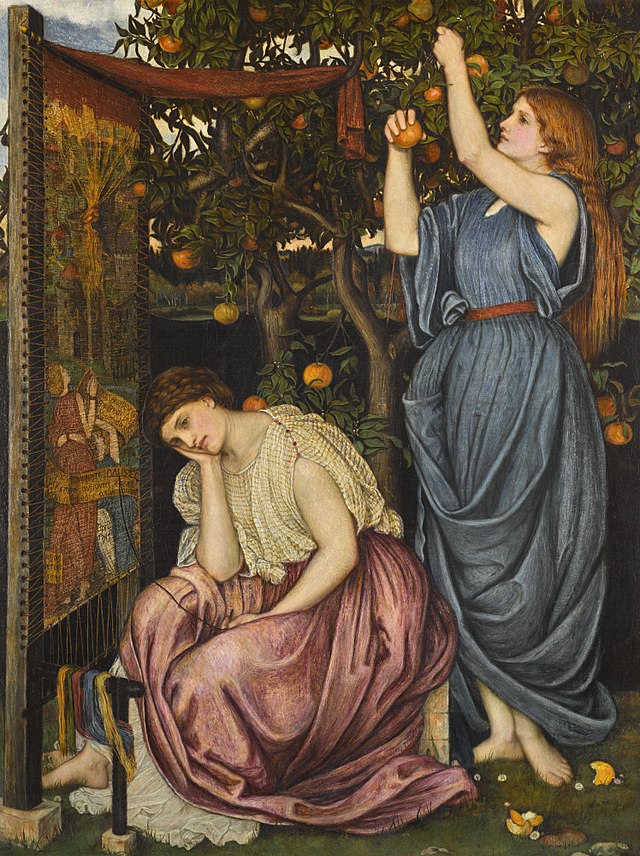
Featured image above: “Penelope at her tapestry loom with a handmaiden picking apples.” by John Roddam Spencer Stanhope. Source: Wikimedia Commons.

Mythic reinterpretations are a hot topic. Specifically, ‘feminist’ reinterpretations, which attempt to give a voice to the women of ancient tales who have, until now, largely been watching from the sidelines. The success of Circe (Madeleine Miller), The Silence of the Girls and The Women of Troy (Pat Barker), A Thousand Ships (Natalie Haynes) and Ariadne (Jennifer Saint) among others demonstrates the current appetite for such stories. We are ready, it seems, to hear something new.

But just how successfully have these myths been ‘reclaimed’? In one respect, it is refreshing simply to hear these old stories retold from a female perspective. To hear Circe’s voice bellow over that of Odysseus, or Ariadne speak for herself; to be addressed by the chorus of Trojan women. But does merely placing words in the mouth of a woman amount to a reclamation?

Gendered violence insistently pervades these retellings, whether in the horrific descriptions of sexual assault, or the casual murder of women as a consequence of wars fought by men. How have contemporary authors wrestled with this?

For Briseis, the narrator of Pat Barker’s Silence of the Girls, the answer is no. Barker’s novel does not shy away from the brutal treatment of women as a result of the Trojan War; Briseis watches a ‘woman raped repeatedly by a gang of men who were sharing a wine jug’, and gazes upon the corpse of Polyxena, sacrificed so that Greek men might return to their homeland: ‘the deep gash in her throat made her look as if she had two mouths, both silent. Silence becomes a woman’. Even after Achilles’ death, she acknowledges that it is his tale she has been playing a part in: ‘His story. His, not mine. It ends at his grave.’

Natalie Haynes’ A Thousand Ships shifts between perspectives, encompassing all of the women embroiled in the Trojan War, but returning frequently to Calliope, the traditional muse of epic poetry, as her main narrator. Calliope bites at Homer for his reluctance to narrate the demise of women, lest he slip from his chosen genre: ‘Men’s deaths are epic, women’s deaths are tragic: is that it?’ She too dwells upon the pain endured by the various female characters, and throughout the book achieves her objective of making the ‘hidden women appear in plain sight’, as do all these authors who seek to bring their stories to light. But when those stories are still filled with the violence of war, of rape, of enforced childbearing, how helpful, indeed how ‘feminist’, are they for us as readers today?

As a young, female writer, these are issues that concern me directly. My work in progress is a collection of short stories, which also seeks to rehabilitate several of the women from Greek mythology. In this I have grappled not only with how to address the violence dealt out to these women whilst they are alive, but also with the fact that many of their stories end with suicide. The men who originally penned them were claiming to give them a voice. Written during the first century BCE, the most famous classical example is Ovid’s Heroides, a series of letter-poems, addressed from multiple women of Greco-Roman mythology to their respective male partners. Yet, because the endings of these women have overwhelmingly written by men, it is the male pen which therefore deals out such violence to them again and again. This violence is highly relevant in contemporary society, in which the string of murdered women in modern thrillers or crime dramas mirrors reality: on average, one woman is killed every three days by a man in the UK. Does repeatedly depicting the violence women face, even with the best of intentions, challenge or contribute to it?

My personal response has been to treat these myths as malleable, to reshape them into something which feels relevant to our modern world. Sometimes changing a story can draw attention to issues just as effectively as keeping it the same.

This is the power of ‘what if?’. What if Penelope grew bored of waiting, and decided to deal with the troublesome suitors herself? What if Canace did not hang herself from the rafters? What if Dido threw her memories of Aeneas onto that pyre instead of her own body? What if, what if, what if.

There is perhaps no right way to tackle the subject. In many ways, there is something more honest about the work of Pat Barker compared to the ‘softer’ approach of others; her novels may be bleak, but they are unafraid in their depiction of the realities faced by women in the ancient world. But I believe there has to be change, too. There has to be hope that if these women’s stories can be altered, their violent futures un-carved, then so can our own. That, after all, is the enduring allure of myth. That is the whole point of a retelling.

References

Pat Barker, The Silence of the Girls, (Hamish Hamilton, 2018)

Pat Barker, The Women of Troy, (Hamish Hamilton, 2021)

Natalie Haynes, A Thousand Ships, (Mantle, 2019)

Madeleine Miller, Circe, (Bloomsbury, 2018)

Jennifer Saint, Ariadne, (Wildfire, 2021)

Author’s Bio:

Hazel Atkinson is a recent history graduate and writer, currently working on her first book of short stories: a re-interpretation of Greco-Roman myth and is currently represented by Jenny Savill of Andrew Nurnberg Associates. She spends her days working in a bookshop and pottering around Edinburgh. You can find her on twitter @hazel_el_rose
DAY SIX: At the centre and yet forgotten: Violence against women in Oral Narratives

Tanuja Kothial discusses the portrayal of marginalised women and gendered violence in oral narratives and Hindu epic literature.

Tanuja Kothiyal

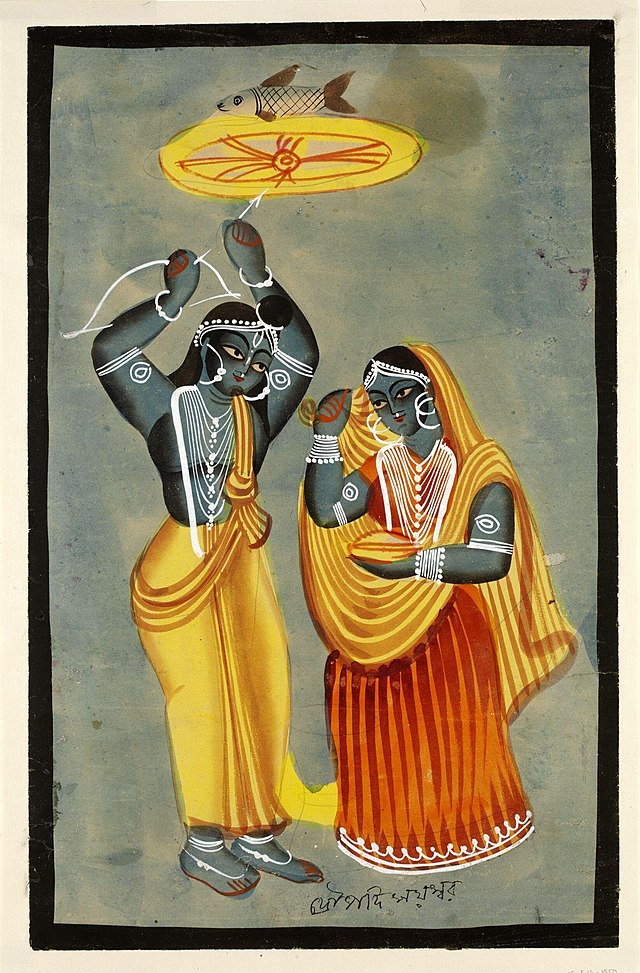
Featured image above: “Arjuna shooting at the eye of a fish to obtain Draupadi in marriage” source: Wikimedia Commons

Every year I teach a course in Oral Epic traditions in India, aiming to explore the processes through which identities shape up in the performance of traditions among different communities. In the course of teaching, we usually conclude that oral epics provide space to identities which are elided over in the written sources controlled by the dominant groups. However, what we come to see is that hierarchy and dominance remain embedded even in the most marginalized of traditions.

In most oral narratives, often belonging to marginalized groups, portrayal of women and of gendered violence remains caught in stereotypical frames: either benevolent goddesses, mothers, wives who protect families or wronged women, often located outside of marital structures, who become the cause and means of destruction of societal harmony.

Women’s lives are often rendered meaningful through their devotion towards men in their families like that of Sadu Mata in the Devnarayan epic, the mother in the Anananmar epic or Damayanti in the Dhola epic. When denied motherhood or marital spaces, or located outside of familial spaces, women unleash their wrath upon the world and destroy it, like Kannagi from Cilappatikaram, Jaimati from Devnarayan epic, Deval from Pabuji epic, Tankal from Annanmar or Bela from Alha. Then there is the ‘free’ woman, invariably tribal, lower caste or working-class, who is often depicted as ‘loose’, lascivious and sexually available. In the epic traditions all these women are at the receiving end of cycles of gendered and sexual violence irrespective of their social locations.

Among the multitudes of narratives drawing upon the Hindu epic literatures we often find references to women like Menaka, Rambha, Shakuntala, Ahilya, Satyavati, Kunti, Draupadi, among many others subjected to lustful gaze of men, violated and then subjected to a life of guilt and suffering for abandoning children born out of violence. Sometimes, they are erased out of narratives like in the oral epic of Pabuji, where his mother is depicted as a heavenly nymph who vanished when a promise was broken. Alternate readings of the epic suggest the possibility of the mother having been a tribal woman whose identity was erased to create an upper caste identity for the Rajput deity Pabuji.

In several oral narratives we find similar references to forced marriages to tribal or lower caste women, as part of protection treaties. Daughters and sisters were often used as collateral in political treaties. In narratives from Rajputana, women are portrayed as willing participants in the ritual suicides by fire.

Though we do get some references to women refusing to follow men to death, the fear of sexual violence as well as a life of hardship and neglect in absence of any rights outside of marriage, could well have motivated women to seek death over life.

In some narratives where marginalized groups seek revenge it is through inflicting sexual violence upon women, and yet in other narratives it is the danger of sexual violence towards women that is used to justify suppression of lower caste communities.

While the Mahabharata contains numerous references to sexual conquests of the Pandavas, in the Bhili Bharat, an epic of the Dungri Bhils of Gujarat, an episode depicts the rape of Draupadi by the Naga king of the netherworld to spite her husband Arjuna after tying him up. Only in some rare narratives, often referring to goddess traditions, do women faced with sexual violence retaliate, like the Charani goddess Avad of western India who, angered by a king’s insistent marriage proposal, shifted the course of a river rendering his kingdom a desert. In rare instances like in the Bhili Bharat, they emerge as possessors of wisdom and knowledge, as gurus, witches and goddesses, who navigate the events in the face of collective lack of wisdom among the men.

Thus, while we expect oral traditions, which provide voice to marginal communities and groups, to create space for women’s voices, even in these traditions women’s locations remain marginal and mostly with respect to the male figures.

Women’s marginality is ‘invisibilised’ even in the narratives of marginality. The only manner in which they become visible is as ‘bodies’ whose violation or preservation provides cause and context to the actions of men.

Women characters do not escape the cycles of gendered sexual violence. Dominance as well as retaliation to it takes the form of sexual violence upon women’s bodies, imagery of whose brutalization further perpetuates cycles of violence. Women exercise no control over these cycles of violence, irrespective of the side they are located on, as violence is unleashed upon other women to protect their bodies. Women’s bodies are placed at the centre of narratives and yet remain marginal.

Author’s bio:

Tanuja Kothiyal is Professor of History in the School of Liberal Studies, Dr. B. R. Ambedkar University Delhi. She is the author of Nomadic Narratives: A history of mobility and identity in the Great Indian Desert (Cambridge University Press, 2016) and co-edited a book ‘South Asian Borderlands: Mobility, History, Affect, CUP 2021) Her recent research project https://www.saltindiahistory.com/people will be published in 2022.

DAY FOUR: Bringing back hope

In working towards a domestic and family violence free Australia, Muslim Women Australia (MWA) use faith as a tool for empowerment.

Maha Krayem Abdo OAM

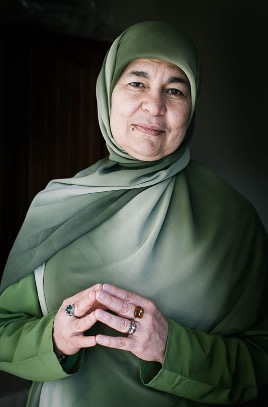
Featured image: Photograph of Maha Krayem Abdo OAM

Imagine you are a gardener, and you love spring. You are sowing the seeds to enjoy your garden in spring and maybe summer. You select the right seed and plant that can give you that satisfaction when the right season comes. But we also know we have autumn and winter, so we have to plan how and when to use different seeds and plants for a different purpose.  

Muslim Women Australia (MWA) is that garden, and I am bestowed and entrusted with a position of the gardener by my seniors. Together we plan, develop and implement the ways we can make a difference, just like how gardeners plan for different seasons.  

Together we are making a garden where people who want to enjoy peaceful retreat visit us, those who want a safe space visit us, those need some shade that can take their mind off the heat of stressful life visit us. 

Since its establishment in 1983, MWA has led the way in centring the needs of Culturally and Linguistically Diverse (CALD) and faith-based communities, advocating for holistic, culturally and religiously competent, community led and trauma-informed practice. In working towards a domestic and family violence (DFV) free Australia, MWA’s highly experienced and professional staff, highlight the healing and therapeutic nature of utilising faith as a tool for empowerment, with a client-centred focus to maintain a client’s dignity at every stage of support. 

Background 

Early on in the work of MWA, it was identified that while support and counselling could be provided to women and their children dealing with DFV, the issue of accommodation needed a more permanent solution. Thus in 1988 the first ever Muslim women refuge was established, the Muslim Women’s Support Centre (MWSC), which operated for over 25 years. 

This unique service was the first of its kind to be set up in Australia that catered specifically to the cultural and religious needs of Australian Muslim Women. The Centre provided clients with crisis accommodation, support to women and children escaping domestic violence, experiencing homelessness, marital disharmony, financial and other hardships. 

It gave women the autonomy to choose how to deal with their issues, by facilitating safe and neutral spaces for mediation and family restoration, where there was no continued risk of physical harm; as well as to provide a service that was culturally and religiously inclusive.  

MWA made a conscious decision to deal with DFV effectively by involving the whole community.

DFV is not simply a woman’s problem. The community must be involved and aware that no violence in any form or shape can be tolerated. The responsibility of dealing with DFV lies with every member of the community, including men.

A collaborative coordinated community approach to dealing with DFV was developed. 

The main focus of the MWSC was with providing women with choices and in empowering them with information and skills to enable them to make decisions. Muslim women had no access to appropriately tailored services which took into account their religious and cultural needs. They were now being provided with choices and options from which to make a decision which responded to needs appropriately, not what someone else perceived their needs to be.  

An integrated, holistic co-case management model was developed throughout the 25 years of operation. MWSC established collaborative partnerships with the police, the local courts, government departments, local hospitals, schools and other DFV service providers as part of ongoing improvement processes to streamline referral processes and to facilitate better access. 

After 25 years of operation, the changes from the NSW Government State Reforms saw an end to the MWSC as a specialist homelessness service. However, the best practice model used throughout its operation, its foundational principles and the sincerity and integrity of the experienced caseworkers for over two decades made an impact across the sector.  

MWA’s Linking Hearts Multicultural Family Violence and Homelessness Support Service is an actualisation and continuation of this history. When we connect heart to heart, and deal with causes, not just symptoms, real healing, connection and understanding can happen. 

Sowing Seeds of Hope 

Learning, understanding, and acknowledging the personal experiences of women informs a people-centred program design by bringing awareness of the impact of trauma as well as the complex paths to healing and recovery.

Therefore, our contribution to knowledge is an elaborative explanation of using culturally and religiously informed faith-based practice using trauma-informed expertise and experience. 

We cannot change the past, but we can certainly change the present for the future, and to do that we need to come together, we need to sincerely gather to recognize there needs to be healing. 

By enabling change to take place in all aspects of our lives, where hope is embedded in our framework, in our interaction with one another and most importantly, in the sector itself, through reforms, regulations, beginning the change within the sector, by the sector, for the health and wellbeing of women, children and society at large. 

We must begin from a place of sincerity, translating into words, then into action, while recognising the importance of transformation, just like the varying blooms of the garden. We allow people to evolve in their own colours and ways, supporting people to be who they are.    

Without healing, there is no hope. If we continue to sow the seeds of hope, they will be passed on and allow for growth and healing.  

The garden shows us that hope is clear, knowing that together we will walk the path of healing, with the hope of change taking place. 

We are all gardeners, aiming to grow, and showing that an individual is part of the community. Just like the garden itself, the different parts interact with one another. The individual as part of the community demonstrates that we rely on each other, for certainty, in being safe. 

For change is real, and reality is hope, and hope in uncertainty creates that change that we all look for.

Author Bio

Maha Krayem Abdo OAM is a passionate advocate for social justice and uses the common language of faith to bring healing and hope to people of all backgrounds. She serves as the CEO of Muslim Women Australia (MWA), a representative body for Muslim women working to enrich humanity, advocating for equality and the rights of all women, through authentic leadership based on Islamic principles.

DAY THREE: Can victim-survivors of violent crimes find justice through true crime podcasts?

Lili Pâquet discusses how Trace and The Teacher’s Pet can act as informal justice beyond police and courts.

Lili Pâquet

Featured image ‘Albert V Bryan Federal District Courthouse – Alexandria Va – 0016-2012-03-10’ by Tim Evanson is licensed under CC BY-SA 2.0

True crime podcasts investigating historical ‘cold’ cases where women and children are victims of gender-based violence are increasingly popular. Two recent Australian true crime podcasts, Trace and The Teacher’s Pet, discovered new witnesses in unsolved murder cases, which led to arrests and coronial inquests.

My research aims to discover if these kinds of podcasts can offer informal justice to victims who feel dissatisfied with the formal police and court systems of Australia. These podcasts have similarities to true crime podcasts from countries around the world with adversarial justice systems, like the USA, the UK, and Canada.

Trace

Trace Season 1 (2017-2018) is a seven-episode podcast narrated by Rachael Brown for the Australian Broadcasting Corporation (the free national broadcaster). The podcast reinvestigates the unsolved 1980 murder of single mother, Maria James.

During the podcast, it is revealed that the local parish priest, Father Bongiorno, was sexually abusing James’s youngest son and that James was murdered the day she confronted the priest. A witness saw Bongiorno covered in blood. Police told James’s sons that Bongiorno was ruled out by DNA evidence. The podcast reveals that the exculpating DNA was from an unconnected police investigation and had been mistakenly mixed into the evidence from James’s murder. Following the podcast, the coroner opened a new inquest into James’s murder. James’s two sons state on the podcast that their voices had finally been heard, in a way they weren’t during the investigation.

Video above: ‘Invasion of the Pod People: Trace’ with Myf Warhurst, Rachel Brown, Ron Iddles, and Mark James at The Wheeler Centre, Melbourne.

The Teacher’s Pet

The Teacher’s Pet (2018), narrated by Hedley Thomas for The Australian, was downloaded over 28 million times. Over 16 episodes, Thomas investigates the 1982 disappearance of Lynette Dawson from Sydney. Thomas explicitly suggests Dawson’s husband killed her and buried her on their property. Chris Dawson’s teenage girlfriend, a student at the high school where he taught, then moved in with him and his two daughters. During the podcast, Thomas uncovers new witnesses and a disturbing culture of sexual abuse by teachers at the school, which led to a police strike force and the 2018 arrest of Chris Dawson. He is currently on trial for Lynette Dawson’s murder and the podcast has been removed for download while the case is before the courts.

Informal Justice

Definitions of ‘justice’ within formal institutions are based on successful convictions and punishment of offenders. However, this form of justice may not give victim-survivors and secondary victims a sense that justice has been achieved. Informal justice occurs outside police, courts, and legislation. According to Bianca Fileborn’s research, victim-survivors achieve a sense of justice if they have:

  • real participation
  • an active voice
  • vindication of harm they experienced
  • accountability by the offender.

Ideas of ‘justice’ should extend beyond outcomes in law and policy to include changes in social attitudes and representations of violence. Clare McGlynn and Nicole Westmarland argue that victim-survivors and secondary victims seek validation from their communities, which could include validation by podcast audiences. Academics such as Tanya Serisier argue that narrators of media about violent crime shape its representation and audience’s understanding of it.

By speaking about their victimisation to a public audience, some victim-survivors may feel they have achieved justice through true crime podcasts and, importantly, have been vindicated and validated by their communities.

Limitations of podcasts

While some podcasts allow victim-survivors or secondary victims to narrate their own stories, other podcasts have harmful representations of women. The Teacher’s Pet is empathetic toward Lynette Dawson, but its depiction of Joanne Curtis—a teenager groomed by her teacher into an unequal and controlling relationship—is problematic.

The language used, such as naming her ‘a teacher’s pet,’ is harmful. Thomas also uses audio recordings of her interviews by police, without any clear consent, replicating the abusive relationship she discloses in those interviews for the titillation of a public audience. Often, true crime podcasts also focus on certain kinds of victims: female, white, middle class, and heterosexual. Podcasts such as Bowraville challenge this stereotype in a promising way.

Some people might argue that true crime podcasts could cause unfair trials, which concerned some listeners of The Teacher’s Pet, but it is doubtful that these investigations would be reopened without the interest caused by the podcasts.

Trace and The Teacher’s Pet are examples of how true crime podcasts can act as informal justice beyond police and courts, but there are limitations. If the podcasts attempt to offer victim-survivors a sense of justice, they should give those people a chance to describe their experiences in their own voices and to feel vindicated through connection with their communities. In future, true crime podcasters could work in tandem with police, giving them access to community grapevines.

Author’s Bio:

Lili Pâquet is a Lecturer in Writing at the University of New England, Australia. Her research is in the areas of rhetoric, crime, environment, and digital media.

To get in contact:

Facebook: https://www.facebook.com/UniNewEngland/

Twitter: https://twitter.com/UniNewEngland

Instagram: https://www.instagram.com/uninewengland/

LinkedIn: https://au.linkedin.com/school/uninewengland/

DAY THREE: Voices of Resistance: Women’s Folksongs and Response to Domestic Violence

Garima Singh engages with the everyday resistance posed by women’s folk songs to the dominant social structure and their response to domestic violence in their own melody. 

Garima Singh

Featured image: A group of women assembling to sing together

Ek chup sau sukh

Silence can yield hundredfold happiness

This popular North Indian idiom is often employed to curb women’s free voices. I remember this coming from my mother and my aunts, to my habitually defying objections against patriarchal conduct. Time and again they reminded me and other women around of being subservient to the dominant order and finding happiness as dictated by patriarchal forces.  The memories of this idiom have compelled me to scrutinize the patriarchal world as a seemingly stubborn and in-flexible mechanism but at the same time an easily threatened order that finds risks in women’s free expressions and often works to silence them.  

The motivation of the patriarchal values placed on women’s silence often impelled me to look at women’s voices that the social structure has been so fearful of. In my attempt to recover such voices of rural North Indian women, particularly Haryana, I was driven to recognize the power of women’s voices contradicting the submissive and repressed images that they are often portrayed in. While silence may be a conscious or a non-conscious strategy of self-representation deployed when it is expedient to do so, resistance often comes at multiple avenues.

Far from representing themselves in ways dictated by the dominant, women often imaginatively analyze and critique the social order that they experience and give voice to it in subversive expressive traditions or actions, some more blatantly defiant than others.  

James Scott in his work Weapons of the Weak: Everyday Forms of Peasant Resistance’ (1985) highlighted the relevance of everyday hidden resistance posed by the dominated Malay Peasants by often inoffensive behaviour such as false compliance, clandestine sabotage, slander, and other hidden ways that ultimately posed restraints on dominant structures and debilitated their ability to extract resources from the oppressed.

In my analyses of finding women’s resistance against the patriarchal order, it was interesting to discover that women in their everyday life extend their limited boundaries and challenge the patriarchal society in their own melody.

Women voices can be heard unhesitantly offering firm criticisms to social structure in the local folklores. These collective voices may not pose an apparent threat or an overt rebellion against the dominant but they are the lens to find the women’s deeper consciousness and willingness to lament or resist the patriarchal order in its own way. 

While there is ample evidence of women being subjected to violence within the home and more so coming from a hegemonic masculine society like Haryana, it is exciting to note that women’s voices are not muted to the injustices that they so receive.

Resiliently recognising the wrongs and countering them, women’s songs are a way to understand how instances of domestic violence are often spoken about and addressed in solidarity, with a warning message, although in a different tone. One such song, where a woman resists against the advancements of her brother-in-law, highlights her assertion to respond to such household threats.  

Aadhi raat sikar mein ae mera jeth jiman aaya,

Roti ghal k deyan lag gyi, ae I tedi nazar lakhaya,

Thali bhi mari ae , mane bela bhi marya,

Gail patila uthaya,Rota rota gya bhai dhore, bolya teri bahu ne dhamkaya

My brother-in-law came to have food in the middle of the night,

I served him the food, but he had malign intentions,

I threw plates at him, I threw a rolling pin at him,

And I also picked up another big utensil, Crying he went to his brother to complain against me.

Addressing violence within these melodies not just hints at the women’s domestic miseries, but the voices of revolt show that such responses are registered individually as well as collectively. 

Image above: women assembled together to sing songs during wedding ceremonies

Another such song is sung like a crying narration by a woman who, besides being compliant to the patriarchal expectations, has to face regular violence by her mother-in-law. After her husband leaves for work, she duly performs all the duties expected out of her, but is treated with violence at home. Lamenting over her destiny, she finally lashes out at the mother-in–law and wishes for her family to be cursed.

Hey aape tahe jala naukari digar gaya chodh saas k bharose

Hey saanjhe te mere jetha keh gaya, tadke einkh nalana

Hey neend fikar mein aai kona, saanjhe chaakki jhoyi

Hey atharan ser maine gehun pise, fir makki piswai

Hey pis khot ke gayi khet mein, suraj mandare aai

Hey saara te maine einkh nalaya, pher mirch nalwai

Saanjh hui jab ghar ne aai, saasu ne kari pitai

Eb lagte sasu teri sunu thi, eb sunle tu meri

Sare te thare danger Mario, bhaisayan ne leja kasai

Charo te tere bete Mario, Mario tera jamaiBuddi ri tera Buddha Mario, huio rand lugai

My husband left for his job leaving me under my mother-in-law

My elder brother-in-law in the evening told me to go for weeding of sugarcane

I was not able to sleep due to tension, I started grinding from the evening itself

I grinded 18 kg wheat and then I grinded the corn

After grinding I went to the field, sun was on my head

First I weeded the sugarcane, and then I weeded the Chillies

In the evening when I returned home, my mother-in-law hit me,

It’s enough of you, now you listen to me my mother-in-law,

May all your animals die and may butcher takes away your buffaloes,

May all your four sons die, may your son-in-law die too.

These lamenting voices of women against violence inflicted on them signifies how women have been conscious of their everyday struggle and time and again, consciously and unconsciously, individually and in solidarity, pose a potent threat to the dominant.

These small acts of rebellion may not count as open revolts, but are still visible and loud enough protests to mark women’s expression in a society where voices are given to man alone.

Author’s bio:

Garima Singh is an Assistant Professor at the Vivekananda Institute of Professional Studies, Vivekananda School of Law and Legal Studies in Delhi. She has a keen interest in gender studies, particularly gender and language. She has published on the topics of caste and exclusion and has undertaken ethnographic work on the folk culture of Haryana. Her PhD awarded by the University of Delhi was entitled, The Gender and Politics of Language: Voice of Jat women in Rural North India.