DAY FOUR: Sacrificeable bodies: gender-based violence against LGBTIQ+ people and displacement

Within debates around displacement, gender-based violence is conflated with violence against cisgender and heterosexual women. In this piece, Tina Dixson argues for the need to meaningfully engage with LGBTIQ+ communities’ experiences of displacement.

Tina Dixson (formerly co-founder Forcibly Displaced People Network)

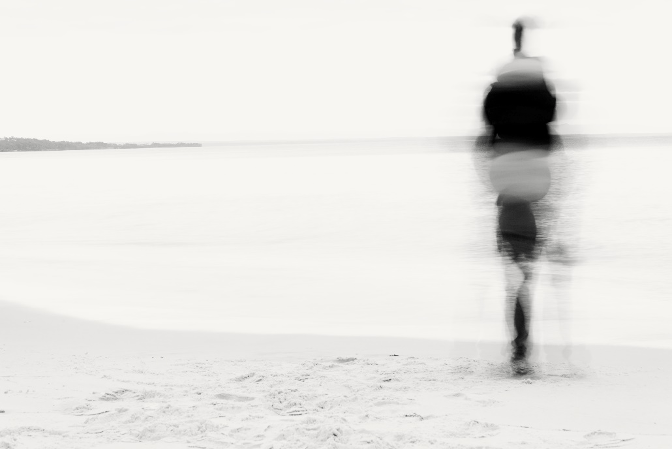
Featured image credits: Renee Dixson

Sexual and gender-based violence are manifestations of power and an enforcement of the patriarchal order where rigid and harmful gender norms and binaries permeate relationships, and racial hierarchies are created. Perpetrators, mostly men, use their power and control to create a world where all women exist to serve their needs, and where toxic masculinity allows no divergence from a rigid sex binary. Violence is inflicted on LGBTIQ+ communities as a tool of punishment for defying this patriarchal order.

Yet in the context of displacement, gender-based violence is often conceptualised as violence against women, meaning those who are cisgender and heterosexual.

Queer and trans refugee women are rarely seen as legitimate victims of displacement. Their experiences are marginalised and their gender and sexuality are deemed private or irrelevant, if not the very cause of their displacement. In describing drivers of displacement of LGBTIQ+ people in their Age, Gender and Diversity policy, the United Nations High Commissioner for Refugees (UNHCR) writes that violence against this community happens “due to their sex, sexual orientation, and/or gender identity”. In other words, a victim is blamed for causing violence by simply being who they are, and not because violence is inflicted by the racist, homophobic and transphobic patriarchy.

There is evidence that LGBTIQ+ people experience familial (eg. forced marriages, ‘honor’ killings), societal (eg. conversion practices, stoning or ‘social cleansing’) and state violence (eg. imprisonment, perpetrator impunity or death penalty), which are drivers of displacement. Despite this violence continuing throughout their displacement  and in settlement, LGBTIQ+ refugees exist in the “zone of nonbeing”.

Françoise Vergès writes that “trans people, queer people, male and female sex workers are simply bodies to rape, traffic, torture, kill”. They are sacrificeable. They are blamed for the violence they endure. Their extinction becomes the norm.  

While gender-based violence marks the everyday for LGBTIQ+ people, especially those who are displaced, paradoxically they are excluded from how displacement is imagined. In writing about sexual and gender-based violence against refugee women, Jane Freedman categorises women who are traveling alone in the following heteronormative way: “women are travelling alone because they are single, or because they have lost their husbands during the war”. This indifference to experiences of gender-based violence against LGBTIQ+ people spans from community organisations to the UN. In 2011, I was an NGO delegate presenting a shadow report on the human rights violations against of lesbian, bisexual and trans women in Ukraine in front of the Committee operating under the Convention on Elimination of all Forms of Discrimination against Women. A day before, a Committee member from Brazil approached me during breakfast in my hotel. ‘Lead with stories, explain the impacts violence and discrimination has on women, only then mention their sexuality, and only in passing’ she said to me. Thinking about violence inflicted on these women (and very soon myself), we cannot and should not separate their gender from their sexuality. Both constitute the experience of violence.

Years after and now in my own displacement, UN rhetoric has not changed. In 2017, I was invited to join a Gender Audit team, led by the University of New South Wales (UNSW) Forced Migration Research Network, to take part in the development of the Global Compact on Refugees. What offered a unique opportunity to finally make LGBTIQ+ displacement visible became an experience of silencing. Many countries never mentioned this cohort. When Western countries did, this was seen as an imposition of their values and issues that are not relevant to some bigger cause. It is no surprise that this issue became one of the first to be dropped during the negotiations process. It did not matter where you were in the room as an LGBTIQ+ refugee. You were always not the right kind of a refugee.

As a result, the final text of the Global Compact on Refugees not only omits any references to these communities but importantly creates a normative understanding of concepts such as ‘vulnerable groups in displacements’, ‘survivors of gender-based violence’, ‘specific needs in displacement’ and so on. It moves away from allowing to fit yourself in as an LGBTIQ+ refugee when your experience is mentioned as ‘other status’ in a long list of diversity characteristics to a complete silencing and fixed definitions. For example, persons with specific needs are defined as: “children, including those who are unaccompanied or separated; women at risk; survivors of torture, trauma, trafficking in persons, sexual and gender-based violence, sexual exploitation and abuse or harmful practices; those with medical needs; persons with disabilities; those who are illiterate; adolescents and youth; and older persons”. You do not have access to words, let alone protection.

Trying to bring attention to the issues of LGBTIQ+ displacement and the extent of gender-based violence inflicted, you always hit a brick wall. Within mainstream feminism in a country such as Australia, most morning teas, report launches and parliament events during the 16 days of activism will neglect to meaningfully engage with anything other than whiteness, heterosexuality, cisgenderism and citizenship.

Within displacement activism, again heteronormativity will prevail. Still so much research on displacement that always claims to offer new and comprehensive ways of looking at this issue neglects including sexuality and gender as inherent and constituent parts of one’s selfhood, one’s displacement journey, and most importantly one’s feeling of safety and belonging. Neither acknowledges that homo- and transphobia are a feminist issue and are in turn an anti-racism and decolonial issue, and that neither of these social justice struggles can be completed in isolation.

Where LGBTIQ+ displacement is mentioned, it is either reduced to an anomaly (something so rare that it is not worthy of attention) or racialised communities are being blamed for their ‘backwardness’ when it comes to LGBTIQ+ equality.

What is missing is an honest reflection on the impact of colonisation and the importation of homophobia and transphobia onto communities who used to celebrate and honour sexual and gender diversity.

Mikki Kendall writes that “entitlement, intolerance, homophobia, misogyny, aggression and sexual violence inside and outside marginalised communities are the antisocial behaviours that patriarchal systems create” regardless of the countries location. Instead of achieving safety, marginalisation is being perpetuated. For as long as we think of some as more deserving of protection than others simply because of who they are, violence and domination will prevail and we will not achieve justice for anyone.

***

You can learn more on how to work inclusively and meet the needs of LGBTIQ+ forcibly displaced people by passing this free training: https://fdpn.org.au/lgbtiq-settlement-training/

Author’s Bio

Tina Dixson is a PhD candidate at the Australian National University researching the lived experiences and construction of narratives on queer and trans women’s forced displacement and violence. Tina’s research focuses on trauma theory, gender studies, migration studies and queer theory. She has contributed to a range of work on LGBTIQ+ displacement within Australia and internationally.

In 2012 Tina and her partner Renee Dixson became displaced due to their LGBTIQ+ human rights work in Ukraine and settled in Australia. Tina co-founded Forcibly Displaced People Network, the first registered LGBTIQ+ refugee-led organisation in Australia, with her partner Renee Dixson in 2020. When Tina stepped down from her role with the Network, Renee Dixson became the current chair.

DAY THREE – Women’s labour migration: A journey fraught with violence

Migrant work is often gendered. In this piece, Joyce Wu and Patrick Kilby share their findings from a qualitative study with 112 women in Nepal – the gendered violence they face and their incredible courage, resourcefulness and resilience.

Joyce Wu and Patrick Kilby

Featured image: “Women lead an oath to protect women migrant workers” by ILO in Asia and the Pacific is licensed under CC BY-ND 2.0.

Across the world, there are an estimated 169 million migrant workers, with women representing 41.5% of this group. Women and women-identifying migrant workers are everywhere and in every sector, from domestic work, retail and hospitality, the garment sector, offices, to the agricultural sector and more.

Women migrant workers are diverse in their identities. They can be a European backpacker who works at a Melbourne café, or a Nepalese woman who is well-versed in serial migration: six months in Saudi Arabia as a housemaid, three years in Lebanon as a freelance migrant worker, negotiating for the best contract as a domestic worker, shopkeeper and nanny. It is the story of the latter that we have been researching for the past three years, through a UK Government funded project to evaluate the impact of the International Labour Organization (ILO) project, Work in Freedom Phase II, which seeks to create a safer migration pathway and safer working conditions for migrant women in South Asia.

Through our research, we have found that women migrant workers are incredible in courage, resourcefulness and resilience, but that they constantly face gendered violence throughout the entire migration journey.

In a qualitative study with 112 women in focus groups and as key informants in Nepal, these are our findings:

At Home and in the Community

As of 2020, Nepal receives 24.5% of its GDP from remittances. Although Nepalese women make up a small percentage at 5% of the Nepalese overseas migration, it is a number that is steadily growing.

  • The key factors driving migration are poverty and the need to support families and children, compounded by the lack of decent jobs locally due to the government’s lack of a gender-sensitive education policy which means Nepalese girls have fewer qualifications compared to boys.
  • Family and intimate partner violence (especially drug and alcohol addiction) also serve as a push factor, with 25% of Nepalese women experiencing violence during their lifetime  and 32.8% experiencing child marriage.

In our interviews with Nepalese women, working overseas thus represents an answer to poverty, as well as an escape from abusive situations.

Trafficking: A Wicked Problem with No Easy Solution

The government’s response to migrant women has been mixed. On the one hand, there are official migration agencies (locally referred to as Manpower agencies) that facilitate the process. On the other hand, Nepal vacillates between banning women from migrating or supporting them. However, limiting women’s mobility and job options overseas pushes up undocumented migration and trafficking, whereby women actively find people (sometimes it is their own family and friends who are familiar with migration procedures) who can help them.

This is a perilous journey, with India used as a transit hub to go on to the destination country.

Nepalese women have told us that during this “transit” some were forced to work in brothels for several months before being allowed to leave. This form of sexual violence and indentured labour goes unreported because Nepalese women are fearful of legal punishment if they admit to undocumented migration, as well as the stigma of being a sexual violence survivor.

At the Destination Country

For many, it is a work experience fraught with physical, sexual, emotional, verbal and financial violence. Middle Eastern countries that operate the Kafala system enables employers to withhold migrant workers’ visa and passport, thus having enormous power over them.

Women have reported being underpaid or not at all, having to work 18 hours and sleep in noisy, public areas of the house, being subjected to sexual violence and harassment from the men and boys in the household, as well as beatings and berating over small mistakes.

In Lebanon, the combination of COVID-19 and the Beirut Port explosions left migrant workers destitute as some found themselves dumped by their employers on the roadside.  

However, for some women, overseas migration means higher income, the opportunity to learn new languages and cultures, and gaining self-confidence and new skills. They were able to network and work together with other migrant women to negotiate better contracts and work conditions with employers, as well as sending money back home. Children’s education and a better prospect for them is one of the key motivations for migrant women, although a number of them also expressed worry that their children are not looked after properly by their partner and/or family back home, with reports of children being teased for having a “migrant woman” as a mother. Children dropping out of was also a concern.

Ending Gendered Violence against Women

Migrating overseas for work in the hope of better outcomes will continue to be a push factor for migrant women globally. Gender inequality, globalisation and the feminisation of certain labour mean that there will be a constant demand for female migrant workers. Governments need to recognise that this is a complex issue with no quick fixes, and ending gender inequality and eliminating violence against women need to be at the centre of any policy lens.

Authors’ bios

Joyce Wu is a Senior Lecturer in Global Development at the School of Social Sciences, University of New South Wales. She is a Fulbright Fellow and Deputy Editor of Development in Practice.

Patrick Kilby is an Associate Professor in the School of Archaeology and Anthropology, Australian National University. Patrick is the Chief Editor of Development in Practice.

DAY THREE – 37 Years of Struggle: Academics and Refugee Women Working Together to End Rape, Sexual and Gender-based Violence

Linda Bartolomei and Eileen Pittaway reflect on what has been achieved 37 years since the UN’s Nairobi Third World Conference on Women and commitments made by all governments to protect refugee women and girls from sexual abuse and violence. [Content warning: Rape, Sexual Violence]

Linda Bartolomei and Eileen Pittaway (Forced Migration Research Network, UNSW)

We have tried to tell people, but no-one will listen. They don’t want to hear. They say women will not talk about rape because we feel ashamed. Who should be ashamed? Us, or those who raped us? (El Salvadorean refugee woman 1990)

In 1985, the United Nations (UN) held the Nairobi Third World Conference on Women with the goal of achieving gender equality for women everywhere. One of the key areas of concern was refugee women and girls, named as one of the most vulnerable groups in the world with the rape and sexual abuse they face clearly identified. Commitments were made by all governments to improve the protection of refugee women and girls worldwide. Thirty-seven years on, and after almost three decades of joint research and advocacy with refugee women and girls, academics Linda Bartolomei and Eileen Pittaway reflect on what has been achieved.

While progress has been made, in 2022 the majority of refugee and other displaced women and girls continue to suffer from rape and sexual violence.

‘All my sisters, my mother, my friends – all the women have been raped. The military, they rape us. When we try to cross borders they rape us, when we go for water they rape us, when we go for food they rape us, when we go to the bathroom, they rape us. The police, they rape us. Our life is rape’.

(Rohingya refugee women 2019)

Rape occurs at all stages of the displacement journey. It is often part of persecution in homes and villages, as a strategy of conflict, in flight, at borders and in refugee sites. In 2017, a Senior United Nations High Commissioner for Refugees (UNHCR) staff member stated that 100% of the refugee women fleeing conflicts in boats had been raped and sexually abused on their journeys.

Women attempting to escape the horrors of war via smugglers are advised to carry condoms, as rape is inevitable. 

It is perpetrated by military, guards, militia, police, males from host communities and males from displaced communities, sometimes by humanitarian workers. Women are raped in front of husbands, fathers and children. The impacts are profound. Many abused women bear children of rape. Young girls die because they are too young to bear the children conceived from rape. Men are shamed because they cannot protect women and girls, and whole communities suffer collective guilt. It occurs in all aspects of their lives and cross cuts all the areas of the protection they should receive from the international community. Many displaced women are forced to sell sex to feed themselves, their children and their families. Displaced women and girls remain some of the most marginalised people in the world and this culminates in a range of human rights violations and abuses with rape, sexual and gender-based violence being the biggest barrier to gender equality (Collated findings from 33 years in the field, in Pittaway and Bartolomei, Only Rape! Human Rights and Gender Equality for Refugee Women, forthcoming 2022).

Some things have improved. Rape in conflict and refugee situations is now acknowledged and is widely reported.

Rather than being viewed as a ‘vulnerable group’ in need of saving, refugee women are being recognised as leaders in community based-protection and advocacy and the voices of the courageous refugee women and girls who are speaking out are finally being heard. They have proven time and time again that they are resilient, capable, knowledgeable and strong and can contribute sharp analysis of the risks they face, and the solutions required.

This has been demonstrated repeatedly in the Refugee Women and Girls Key to the Global Compact of Refugees Project, funded by Australia’s Department of Foreign Affairs and Trade (DFAT) and being undertaken with refugee woman, academics, NGO and UN partners in Bangladesh, Malaysia and Thailand.

Increasingly refugee women’s voices are being heard on the world stage and in important UN fora including at meetings of the UNHCR. They are now demanding a seat at the policy making table as equal players in the fight for security and justice. This has happened because of their capabilities and determination, and through the work behind the scenes of a multitude of refugee representatives who made this happen. Vibrant refugee networks, such as the Global Refugee led Network (GRN), the Asia Pacific Network of Refugees (APNOR), and Global Independent Refugee Women Leaders (GIRWL), all with strong commitments to human rights, gender transformative and inclusive age, gender, and diversity approaches, are taking the lead in advocacy and work on the ground.

But the fight for safety, justice and gender equality is far from over. Human rights activists, refugee women, and all stakeholders must continue to work together until we stop this horror for all women everywhere.

Authors’ Bio

Linda Bartolomei: Linda is a founder and co-convenor of the Forced Migration Research Network (FMRN) and the convenor of the Master of Development Studies at the University of New South Wales. Since 2002, Linda has been involved in a series of action research projects exploring the challenges associated with identifying and responding to refugee women and girls at risk in camps and urban settings. This has involved research in multiple sites across Africa, Asia and the Middle East and in Australia. Since 2017, with Eileen Pittaway, she has she worked with UNHCR Geneva and a team of refugee women conducting audits of gendered aspects of all meetings relevant to the 2018 Global Compact on Refugees (GCR) and its implementation. She is currently leading a multi-year project in four countries in the Asia- Pacific with colleague Adjunct Professor Eileen Pittaway to support the implementation and monitoring of the commitments to refugee women and girls in the GCR.

Eileen Pittaway: From 1999 to 2013, Eileen was Director of the Centre for Refugee Research, University of New South Wales, and Associate Professor in the School of Social Sciences and International Studies. The major focus of her work has been the prevention of and response to the rape, sexual abuse and gender-based violence experienced by refugee women, both overseas, and following resettlement to Australia. Over the past thirty years, she has conducted research, provided training to refugees, UN and NGO staff in refugee camps and urban settings, acted as technical advisor to a number of projects, and evaluated humanitarian and development projects in 18 different countries. In 2012, she was made a member of the Order of Australia for her work with refugees.

DAY TWO: All in the mind? Neglected experiences of violence during Partition

For day two of our 16 Days of Activism 2022, we return to the theme of sexual violence during Partition, rape as a weapon of war, displacement and forced migration that Butalia’s blog opened with. Pallavi Chakravarty’s piece on neglected experiences of violence adds further to Butalia’s opening piece.

Pallavi Chakravarty

The photo above (which is also the featured image for this post) is from Jugantor newspaper (1952). It reflects the dilemma of migrants in the wake of novel means of restricting influx on one side (passport in this context) and pushing out of minorities from the other side. Interestingly it is the body of the woman who is personifying all refugees here and men who are representing bureaucratic, political and social guardians.


Rape, abduction, and branding or mutilation of female genitals have been means often used as a ‘weapon of war’.

Looking at the South Asian context, it is in the violence accompanying the division of the Indian subcontinent in 1947 where this ‘weapon of war’ was mastered and used on an unprecedented scale. Hindu, Muslim and Sikh women seemed to have only two options before them: violation of their ‘honour’ at the hands of the ‘other’, which was considered a cause of shame and insult to the family, community and nation; and shockingly, ‘honour killing’ at the hands of their own family members, which was hailed as an act of martyrdom. Thus, ‘honour’ was interpreted as being embodied upon the unviolated body of the woman and the violation of the same supposedly brought dishonour to the family, community and nation. What being violated meant to the woman herself held much less significance.

Even today, oral testimonies show how stories of women jumping into the wells or ‘willingly’ offering to be slain by the knives of father, brother and other males of the same community are told and retold with pride by the male survivors of partition violence while the narratives of the women who were abducted and later restored by an arrangement between the two states (India and Pakistan)[1] are silenced or even forgotten.

Through the Recovery and Restoration Act (1949), both the states added further violence by making it compulsory for women to be ‘restored’ to their family of origin if found in the home of the other community, irrespective of their own will.

This caused dual displacement for the abducted women who may have been resigned to their fate or who knew that they would not be welcomed back home because they had been violated -  that too by the other community.

Violence upon the bodies of the women was more commonplace in the western border of the subcontinent. But India was also divided on its eastern border and here the level of violence was ostensibly lower. This was largely due to the presence of Mahatma Gandhi here on the eve of partition thereafter it became possible for the two warring communities, Hindus and Muslims, to live together peacefully a little longer. Consequently, there was no large scale mass displacement here; rather, migration occurred in phases like the ebb and flow of the tide.

The violence at the eastern border was not always so explicit and direct. In fact, it was often dismissed as mere ‘psychological fear’, thereby denying it any degree of seriousness by the State and host community. Yet hereto, the threat to the honour of their women was the biggest concern for Hindu women coming from East Pakistan as refugees. Certain incidents narrated by them highlight this fear in clearer terms. To cite one example: one of them told Hiranmoy Bandyopadhyay, Rehabilitation Commissioner for West Bengal, that when the women went to take a bath in the pond, some Muslim men would often remark, ‘Pak Pak Pakistan, Hindur Bhatar Mussolman [This is Pakistan, the husband of a Hindu will be a Mussalman]’. Another refugee said that one of the Muslims called out to the ladies in the pond: ‘E bibi, bela je bede cholo. Aar deri keno? Ebar ghore cholo. [Oh Bibi, it is evening now, why delay any further, lets go home.]’[2] 

        Upon hearing such incidents, Bandyopadhyay noted that while fear was a genuine factor for migration, it was still all in the mind, i.e. psychological—‘manoshik nipiron’. However, what seemed ‘psychological’ to the distant government and the people of West Bengal, as well as the rest of India, was an everyday reality lived by Hindu women in East Pakistan.

         Asoka Gupta and her husband Saibal Kumar Gupta [3]recorded testimonies of many East Bengal refugees on their own initiative for the purpose of submitting these eyewitness accounts to the enquiry commission set up by the Government of West Bengal in the aftermath of the 1964 Calcutta riots. These include a few testimonies of refugee women as well, who spoke of the gruesome violence they were either themselves exposed to, or which they had heard of. Bhatarani Ghosh stated that her parents, brother and sister were killed by the Muslims of their village (she names them as well) who later occupied their home. When her husband tried to oppose this forcible occupation of their home, he was threatened with dire consequences. In the face of such mounting pressure, they left their village and crossed over to India. Other accounts by refugee men and women identified abduction of women as one key factor that compelled migration to India. These accounts show how insecure the Hindus felt in East Pakistan, and yet their real fears were dismissed as a mere psychological construct.

       It is my argument that when the State recognizes what it regards as ‘real’ violence, it also recognizes the victims of such violence as its direct responsibility. It then extends far-reaching help to these victims. The State recognized mass abductions, sexual violation and forcible conversion as ‘real’ violence. Only those women who were exposed to such violence became the immediate responsibility of the State. [4] Thus, many women coming from East Pakistan would have to face further hardships for they were not always seen as victims of  ‘real’ violence.     

Independence and Partition were marred by violence and women bore the major brunt of it. Undoubtedly, once they migrated to the host country (India or Pakistan), their immediate care and rehabilitation became a task of absolute importance. But in many ways, the distinction between ‘real’ and ‘psychological’ forms of violence left its mark on patterns of migration and final rehabilitation. Thus it can be argued that the  impact of the differing experiences of violence on migration and consequently upon relief and rehabilitation measures for refugees coming into India through its eastern and western borders of India was profound. 


[1] The Recovery and Restoration of the Abducted Persons Act (1948): An act which allowed for an elaborate machinery to operate between the two States, India and Pakistan, to recover women of all age and boys upto age 16 if found in the homes of the other community and to restore them to their original family/community, whether willing or unwilling.

[2] Hiranmoy Bandyopadhyay, Udvastu, Calcutta: Bangiya Sahitya Samsad (1970) p. 16

[3] Saibal Kumar Gupta, Civil Servant and officer in charge of rehabilitation of Bengali refugees in Dandakaranya (Chattisgarh, India) and his wife Asoka Gupta, a social worker who and looked specially into the rehabilitation of refugee women.

[4] She was a prominent Social Worker and was made the Head of the Women’s Section of the Ministry of Relief and Rehabilitation for the partition-refugees.

Author’s Bio

Pallavi Chakravarty is Assistant Professor at the School of Liberal Studies, Ambedkar University Delhi. She is currently Junior Fellow at the Nehru Memorial Museum and Library, New Delhi (July 2021-23).

She has obtained her doctoral degree from the Department of History, University of Delhi (2013) and her doctoral thesis made a comparison of the rehabilitation policies of the Indian state vis-à-vis the partition-refugees coming into the two cities: Delhi and Kolkata, from West and East Pakistan respectively. It is now published as a monograph, Boundaries and Belongings: Rehabilitation of the Partition Refugee in India, 1947-71, New Delhi: Primus Books (2022). Her main areas of research are: partition studies, refugee studies, oral history methodology. 

Cover of Boundaries and Belongings: Rehabilitation of the Partition Refugee in India, 1947-71, New Delhi: Primus Books (2022).

DAY TWO: In darkness we find light 

Artist and educator Masa Hilcisin’s deeply personal reflection on the power of stories and possibilities for healing after the trauma of war.

Masa Hilcisn

Above featured image provided by author

I grew up in war. It shaped my dreams. It shaped my world. It shaped my deepest perspectives about life, people, countries, separations, and identities. It shaped my life path for good. It shaped my deep sense of not belonging, of not wanting to belong to a particular nation state, to a particular flag, hymn, nationality, place. It taught me some of the most valuable life lessons. It taught me that my home is inside of me. It taught me my country is the whole world. It taught me of courage. It taught me of the importance of compassion and love. It taught me that in order to appreciate light in the most profound way I need first to experience darkness. It taught me how to find wisdom in the darkest experiences. It taught me that one of the most profound ways to heal is by producing my own art. 

In order to heal, I knew I had to make distance from that physical place that was and still it is so wounded by war.

I carved my way by forming my own voice, protesting for better rights of women and girls, by stepping out from silence, by voicing personal narratives, by addressing violence, by forming my own aesthetic, by writing, by filming, by recording, by dancing, by endless creating.

Living in a space that witnessed mass rape of women and girls during the war, all forms of sexual violence and use of rape as a weapon of war taught me lessons that will keep marking my personal and professional paths. I wanted to understand the scope of collective and individual narratives that I belong to. I wanted to understand if there is a way out. I wanted to understand if and how healing can take place. I wanted to understand the power of sharing stories.  I wanted to understand my own personal narrative and ways I can share it.  

I found art to be among the most profound tools to tell what is internalized, to express what is not so tangible, to address shadows, suffering, and pain, to scream, scratch, dig layers of stories surfacing from mud. I did not have formal education in art besides music in high school. I learned how to create by using my inner voices, guidance, and deep urge for expressing stories and healing what needed to be healed. I learned from fragments of war, I learned from the first bullets shot into my home, I learned from massacres. I learned from bombs being dropped on people and places. I learned from blood on our streets. I learned from funerals behind our building. I learned from fears/anxieties/ facing/death/abyss/endlessness/isolation/loneliness/hunger/shame/threatening/horror/violence/not-belonging…   

Image above: This image represents a collage of woman and animal with core wounds but enormous power to heal. 

I carved my way by migrating to new worlds both physical and mental, by facing fears and by building my own space in a new country, by allowing myself to be in survival mode, by allowing myself to lose what needed to be lost, by allowing myself to not give up my creative force, by allowing myself to try and experiment with new creative entities. Those entities were personal plains composed from video fragments, documentary elements, real life moments, fractures of daily life, stages and processes of deep personal journeys. They were composed from fears, happiness, anxieties, losses, gains, sufferings, pains, colors, tears, laughter, hugs, mourning, intimacies, birth deliveries. I moved to new places. I moved to the city called Prague that become my new entity of presence, creating, learning, facing, and healing. I’ve been wanting to leave country of my origin, that wounded place, since the age of thirteen. I felt deep down and instinctively that the only way to heal is to make a distance from that wounded place. My new place of living became a new plane to keep learning and creating my own art. 

Image above: A photograph of the water that Hilcisin saw on her way to a workshop. 

I looked for many answers, and after creating enough physical distance from the physical space which was and still is so traumatized by war, I finally started with establishing a dialogue with an internalized past and the outside world through a visual plane. I used that visual plane to articulate some of my deepest and most painful personal narratives. I used that plane to heal my wounded past. I used that plane to learn the importance of sharing: sharing stories we want and need to share. 

The result of that was that I began working on a series of visual narratives constructed through personal images. For the past several years, I have been continuously creating and sharing personal narratives which became the main source of inspiration to develop further visual storytelling work. This work is composed from creating collages, drawings, paintings, singing, performing, filming…creatively expressing personal stories, narratives that we want to share but never did, narratives that we buried deeply inside, narratives that we never had a chance to tell, narratives that we want to heal, narratives that we want to use for the empowerment, narratives that need to be told, narratives that need to be heard. 

There was a strong urge to be of service to other women and girls. There was a deep belief that we experience hardship in order to be able to be of service to other communities around the world.

I established my own professional path by drawing inspiration, courage, and wisdom from my own personal pain and by continuous learning from other artists, creators, survivors: all those who are my endless source of inspiration, learning, and support. 

Image: From Masa Hilcisin’s collection “Inwards” representing the process of facing herself and her own shadow. 

Author’s bio

Masa Hilcisin is an artist and educator.  She teaches film production, and visual storytelling, and holds a PhD in Film Studies and Audio-Visual Culture from the Masaryk University. Masa has been involved in many cultural and artistic projects, including film festival curating and various women artists’ support initiatives. She runs World Community Connect, a platform for personal storytelling which serves women and girls in the Czech Republic and abroad.